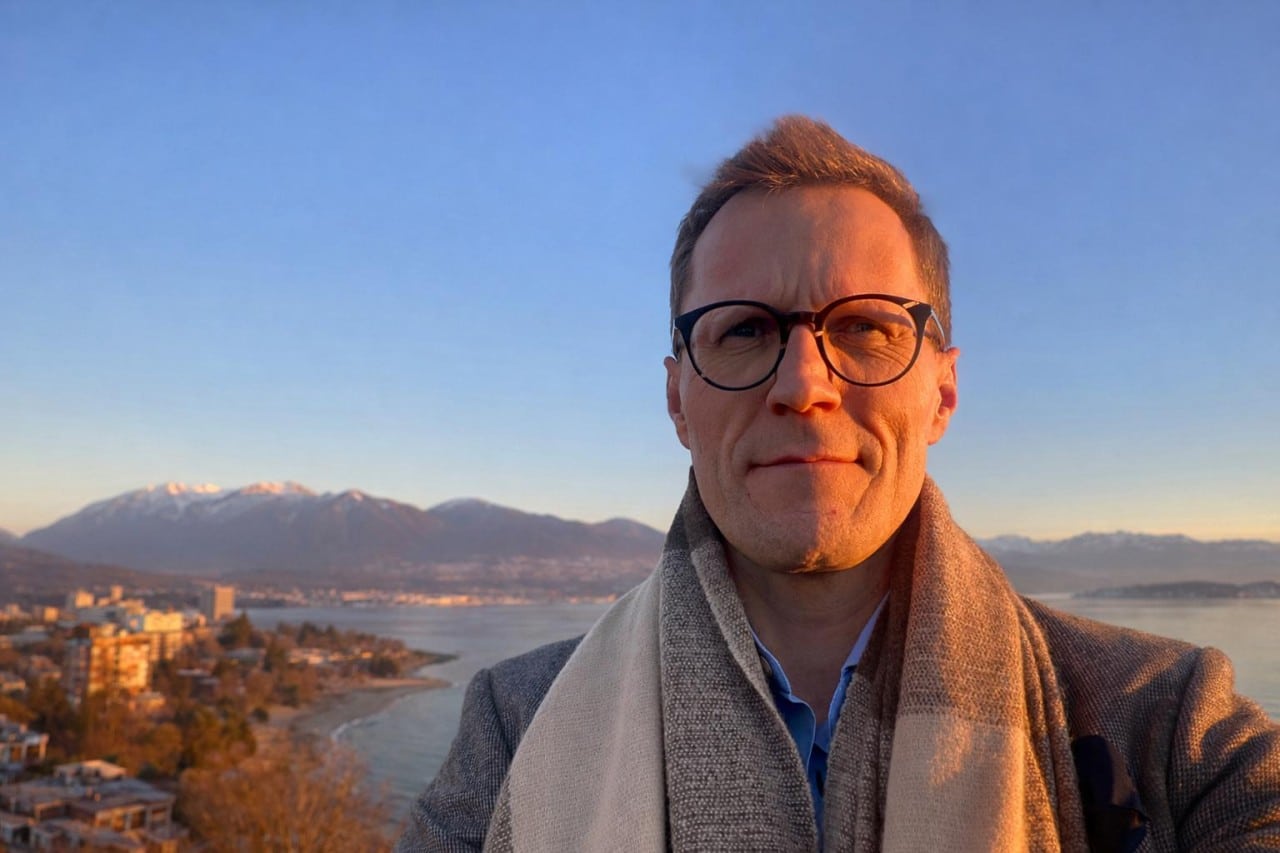
Eric Lefebvre is a seasoned industry expert with over two decades of experience in the insurance and financial sector, who has made a name for himself not only as a managing director and investor, but also as an author who breaks down complex topics for a wider audience. He will be writing weekly for thebrokernews from the beginning of 2026.
In this interview, we take a look at his professional career, his view of the insurance world, his motivation for writing and the topics that move him.
Eric, who are you and how would you introduce yourself in three sentences?
I have spent most of my professional life in the insurance and finance industry, often in positions where theory and practice meet very quickly. I have worked as a managing director, investor and sometimes as the person asked for clarity when situations became complex. Over time, I also started writing, mainly to better understand the systems I was working in and to help others understand them too.
Your professional career spans more than 20 years. Which stages were the most formative for you and why?
My career has certainly been marked by a number of crises, but I look back on it very positively. I entered the insurance industry just before the first major shocks, around the time of the Long-Term Capital Management crisis. Shortly afterwards, the transition to the year 2000 forced insurers to rethink their systems and processes on a large scale. At the time, I was working in the commercial side of insurance, close to customers and brokers, which gave me a very real insight into how decisions made at the heart of an organization can quickly have an impact on the outside world.
This was followed by the collapse of the dotcom bubble, which prompted me to take a step back and do an MBA. Then came the global financial crisis, which I experienced from the inside of a large international insurance company. This period was intense, but it also showed how resilient the industry can be when backed by strong fundamentals, good governance and experienced people.
This was followed by the euro crisis, COVID and, most recently, the energy crisis. I experienced the latter in a much smaller industrial company, which gave me a different but equally valuable perspective. Here, too, it was impressive to see how teams and management adapted pragmatically, kept operations running and found solutions under pressure.
What all these episodes have in common is that we have emerged from them stronger and better prepared. The insurance industry is a remarkably resilient industry. We have inherited very solid tools from our predecessors and have improved them significantly over the last two decades, particularly through technology. Claims are processed faster, systems are more robust, services to customers are better and more transparent. And despite all these changes, the human dimension is still of central importance.
Having gone through these cycles, I am now at a point where I am naturally open to new discussions and new challenges. I value environments where experience can be useful, where change happens and where there is room for deep dialog. This curiosity about what comes next is strongly influenced by everything that has gone before.
How has your international experience influenced your view of markets and business models?
It has made me more cautious and much more attentive to the context. What works well in one country is often not easily transferable to another. Regulation, culture and habits play a much bigger role than we sometimes want to admit, and ignoring this usually comes at a price.
What fascinates you about the insurance industry and what distinguishes it from other financial sectors?
Insurance requires patience. People make decisions today and often live with their consequences for many years. There is no immediate feedback loop. This makes the industry challenging, but also very honest if it is run correctly.
In your opinion, what is often lacking in the industry’s external communication?
Explanations. All too often, communication aims to reassure rather than help people understand what actually leads to the results. When the basics are clearly explained, many complex topics suddenly become much more accessible.
What challenges do managers in insurance companies face today?
They are constantly being pulled in opposite directions. Markets expect short-term results, while insurance risks develop over the long term. Add to this regulation, technology and geopolitical uncertainties and it becomes a real challenge to stay coherent.
As a Frenchman, you have lived in Switzerland for many years. What was the main reason for this move?
It was not so much a single decision as a gradual realization. Switzerland has a strong culture of stability and long-term thinking. For someone who works with risk and capital, this environment feels very natural.
How has living and working in Switzerland influenced your professional development?
It has increased my focus on substance rather than visibility. Credibility is built quietly here, through consistency over a longer period of time. I find that both challenging and healthy.
Are there any cultural or professional differences between the French and Swiss insurance and financial markets that you have noticed in particular?
France is intellectually rich and often very creative, but also more centralized in its decision-making. Switzerland is more decentralized and pragmatic, with a strong instinct for minimizing risk. These differences become particularly clear in difficult times.
You have written several books and numerous articles. What motivates you personally to write?
For me, writing is first and foremost a way of learning. When you write, you have to put your thoughts on paper, structure them and check whether they really fit together. This usually means doing additional research, rechecking data and sometimes even questioning your own assumptions.
Writing is also about sharing. I’ve always enjoyed coaching people and helping them understand complex issues, not by giving them ready-made answers, but by thinking things through together. Writing allows me to extend this process and open up a dialog with my readers.
How do you choose the topics for your texts?
Something often arouses excitement or curiosity. A result that seems convincing but raises questions, a term that is frequently used but rarely explained, or a parallel between industries that suddenly becomes obvious. This is usually the starting point for a topic.
What role does storytelling play in explaining complex financial or insurance issues?
It plays an important role. A well-chosen example or analogy can often explain more than pages of theory. Comparing insurance float with working capital, for example, helps many people to intuitively understand how insurers really manage time and money.
You will be writing regularly for thebrokernews from 2026. What topics do you want to focus on in your columns?
Insurance will be a starting point, but not a limitation. I want to explore broader economic and managerial issues and draw parallels between insurance, industry and other sectors. Issues such as capital, cash flow, incentives and governance often behave in similar ways in very different businesses.
Are there any current trends or developments that you consider particularly important?
Artificial intelligence is clearly one of them, but probably not in the way it is often discussed. I remember the late 1990s and early 2000s when the internet started to transform businesses. At the time, most of us didn’t fully understand what was going on and how profound the change would be. In many ways, AI feels very similar today.
I have often said and written that insurers are actually technology companies with a balance sheet of risk. They will certainly use AI to improve processes, pricing, claims handling and customer interaction. That is inevitable. What is less clear is whether we fully grasp the long-term impact yet.
Behind this lie more profound questions. What happens to roles such as actuaries or large IT functions as models, data and automation evolve? And how do you introduce high-performance technologies in an industry where everything needs to remain robust and reliable for decades?
In the insurance industry, decisions made today can have consequences in ten or twenty years’ time, for better or for worse. This long time horizon makes the discussion about AI both exciting and challenging, not just for insurers, but for any industry facing structural change.
If you had to formulate a sentence that describes the aim of your upcoming articles, what would it be?
Using insurance as a lens to better understand how business, capital and risk really work across industries.
The questions were asked by Binci Heeb.
Eric Lefebvre is a seasoned industry expert with over two decades of experience in the insurance and financial sector, who has made a name for himself not only as a managing director and investor, but also as an author who breaks down complex topics for a wider audience. He will be writing weekly for thebrokernews from the beginning of 2026.
Read also: Three forecasts for the insurance industry – and why they are important
Search:
Sponsors: