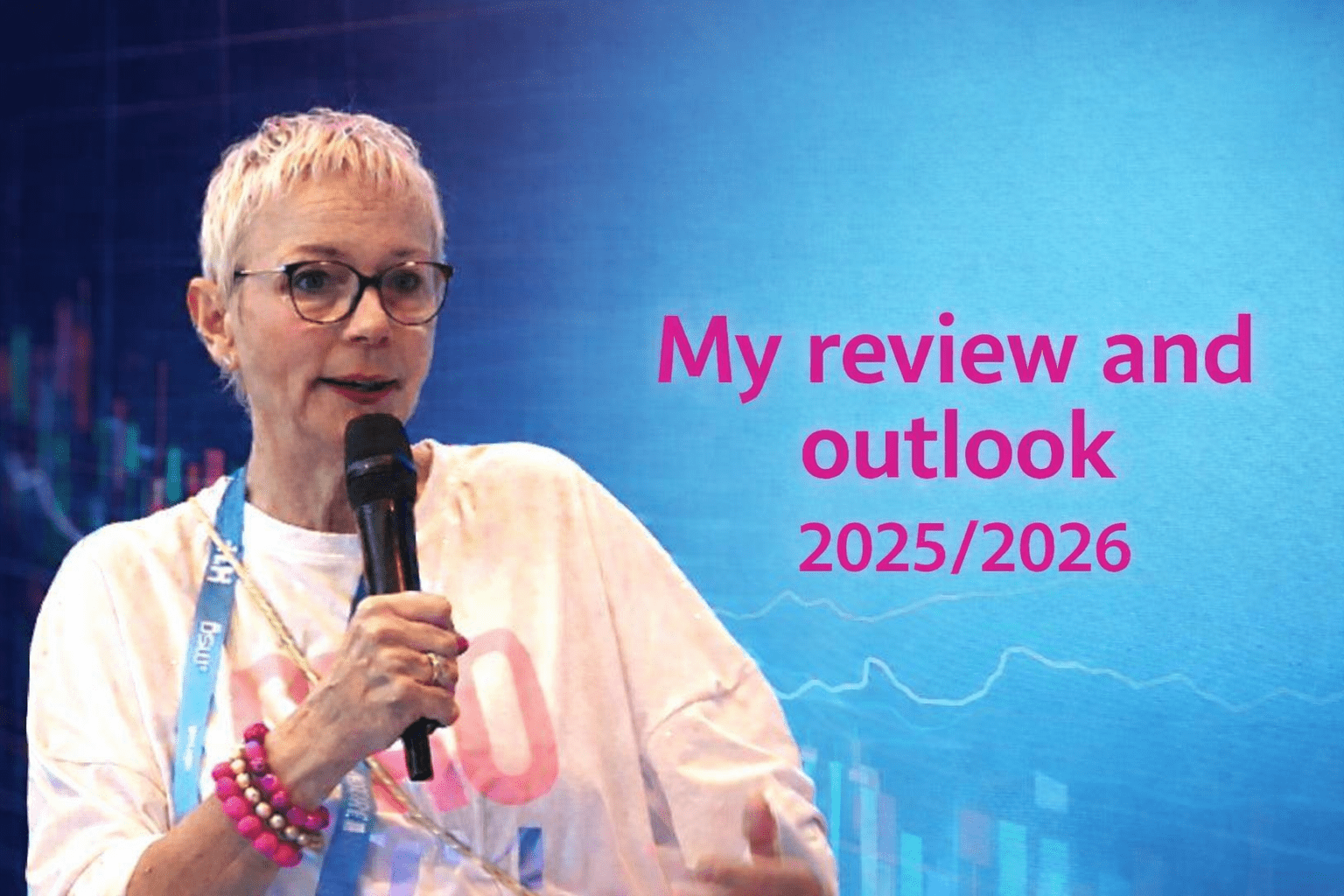
2025 was a year of impositions. Geopolitical certainties eroded, economic tensions increased and technological leaps presented entire industries with new realities. The insurance industry – both globally and in Switzerland – was at the epicenter of these developments. A look back at a difficult year and a sober outlook for 2026.
The past year was characterized by a noticeable shift in the global balance of power. The USA increasingly turned inwards in its foreign and trade policy. Europe not only lost a reliable political pacemaker, but also found itself confronted with new trade barriers. The tariffs imposed by the US president affected not only the EU, but also export-oriented Switzerland indirectly.
The Russian-Ukrainian war began back in 2014 with Russia’s annexation of Crimea in violation of international law and subsequently escalated in the Donbass. From summer 2021, Russia prepared the next escalation step and launched a full-scale attack on Ukraine on February 24, 2022. Russia’s war of aggression against Ukraine continued for another year with massive humanitarian, economic and security consequences. Energy prices, supply chains, inflation and capital markets remained volatile. Planning security became a scarce resource.
Why 2025 was so difficult
The simultaneity of the crises made the year particularly challenging. Political uncertainty, economic slowdown, regulatory dynamics and technological disruption did not act in succession, but in parallel. For companies, this meant Decisions had to be made under high uncertainty, often without reliable historical benchmarks.
For insurers, traditional risk models were also reaching their limits. Geopolitical risks, cyber threats, climate damage and social tensions could no longer be viewed in isolation. On the contrary, they were mutually reinforcing.
The insurance industry worldwide: adaptation under pressure
Internationally, 2025 was a year of strategic readjustment. Reinsurers responded to rising claims burdens with higher premiums and more restrictive underwriting guidelines. Natural disasters, geopolitical risks and cyber attacks led to a reassessment of aggregate risks.
At the same time, consolidation accelerated. Economies of scale, data expertise and capital strength became decisive competitive factors. Insurers invested more in technology, but also in resilience: more robust capital models, diversified portfolios and closer cooperation with regulators.
Switzerland: Stable, but not immune
The Swiss insurance industry was comparatively stable, benefiting from solid capital buffers and a reliable regulatory environment. Nevertheless, it did not remain unaffected. International trade conflicts, currency movements and global claims developments had a direct impact on premiums, reinsurance costs and investment results.
The pressure on business models has also increased: customers expect faster, more digital and more transparent solutions. At the same time, regulatory requirements are increasing. Particularly in the areas of sustainability, data and governance.
Artificial intelligence: big steps, new questions
2025 was a year of learning for AI , both literally and figuratively. In the insurance industry, AI made significant progress in claims processing, fraud detection, risk selection and customer service. Automation became more precise, prediction models more powerful and decision-making processes faster.
At the same time, the limits became clearer. Distorted data sets, a lack of explainability and regulatory uncertainties showed that technological feasibility is not synonymous with social or ethical acceptance. The use of AI in underwriting-related decisions and in performance reviews remains particularly sensitive.
Where we need to be careful
The central challenge lies not in the technology itself, but in its application. AI must not become a black box replacement for responsibility. Insurers must ensure transparency, traceability and human control. There is also the question of dependency: who controls the models, the data, the infrastructure?
For the industry, this means Investments in AI must be accompanied by investments in governance, qualifications and culture.
Looking ahead: what can we expect in 2026?
No rapid easing of global political tensions is expected. The fragmentation of the global economy is likely to continue and geopolitical risks remain high. Europe will be increasingly forced to develop strategic independence in terms of both the economy and security policy. Switzerland will have to continue to position itself between global networking and political neutrality.
For the insurance industry, 2026 will be a year of further transformation. Topics such as climate risks, cyber resilience, retirement provision and healthcare systems will continue to gain in importance. With clearer rules and greater pressure of expectation, AI will move from an innovation project to an operational standard.
My conclusion
2025 was difficult because it shook up old certainties and created new challenges. 2026 will not be easier, but it will be clearer. The insurance industry has the opportunity to position itself as a stabilizing force in an unstable world. Provided it combines technological innovation with responsibility, resilience with foresight.
Binci Heeb
Read also: How Aiana is building Switzerland’s first AI-powered broker
Search:
Sponsors: