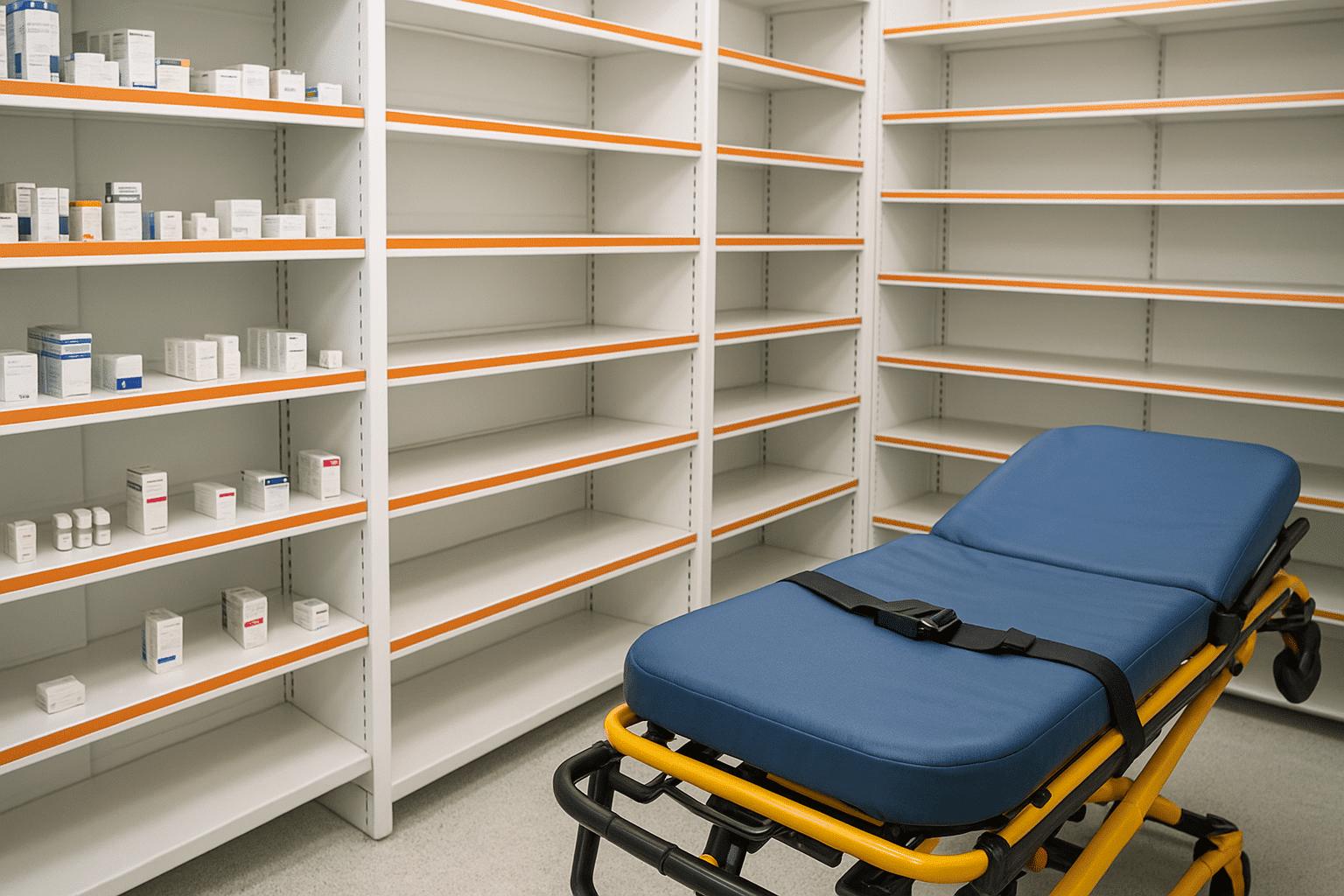
Switzerland is experiencing a worrying shortage of medicines. What used to be the exception is becoming the norm, with consequences ranging from extra work in surgeries to hospital stays just to obtain medication.
According to the Federal Office for National Economic Supply (FONES) of November 25, 2025, the Reporting Office for Essential Medicinal Products for Human Use has been tasked since 2015 with quickly identifying supply bottlenecks or supply interruptions for essential medicinal products and taking appropriate measures if the industry is no longer able to manage the situation independently. The aim is to identify bottlenecks at an early stage. If there is also a compulsory stockpiling obligation for the reported medicinal product, a supply disruption can be bridged at short notice by releasing stock from this compulsory stockpile. Depending on the type of medicine, compulsory stocks can cover a market demand of two to four months.
From cough syrup to heart therapy
Pharmacies, hospitals and doctors are sounding the alarm: there is a widespread shortage of medicines. Everyday preparations such as painkillers, antibiotics, thyroid or blood pressure medication are affected, but increasingly also vital drugs for heart patients, cancer sufferers, the mentally ill or people with rare diseases. The shortages run through the entire supply chain and affect both outpatient and inpatient facilities.
When the next delivery date becomes a mystery
The question “When will this be available again?” is often impossible to answer. Some medicines have been out of stock for months. For others, only vague forecasts exist. Doctors and pharmacists have to improvise: alternative active ingredients, dosage adjustments, pre-registrations with wholesalers, a patchwork that costs a lot of time and makes the supply uncertain. It is particularly problematic for chronically ill patients whose therapy cannot simply be changed.
Drug storage in Switzerland
The situation is also difficult at a national level, because although Switzerland has an ordinance on the compulsory stockpiling of medicines (as of January 2024), many important medicines are missing. In contrast to basic foodstuffs, fuel or basic medical products, the provision of medicines is less strictly regulated. Compulsory stockpiling has been discussed politically in recent years, but has not been sufficiently reduced. Instead, the market was trusted to work for a long time. However, this mechanism is now noticeably reaching its limits.
Inpatient care as a last resort
What sounds like an extreme case is already happening: a patient with a precursor condition to a heart attack had to be admitted to hospital, even though the condition could have been medically treated on an outpatient basis. The reason: he needed nitroglycerin, a vital medication that was no longer available on an outpatient basis. Such cases show how a supply problem can turn into a medical risk.
A global problem with local consequences
The causes rarely lie in Switzerland itself. Many active ingredients are now only produced in a few countries, particularly in Asia. If a manufacturer fails to deliver, everything comes to a standstill worldwide. Pandemics, geopolitical tensions or economic priorities have a direct impact on Swiss warehouses. To save costs, warehousing is tightly calculated, which further increases vulnerability.
Purchase of medicines in neighboring countries
According to Swissmedic, you may take medicines from another country with you on your return journey, for example from Germany to Switzerland, if the quantity is intended for personal use. This typically corresponds to one month’s supply. When crossing the border, the medicine must be legally authorized or at least not prohibited. It must be clearly intended for personal use and not for resale.
However, it is not enough to simply buy a medicine in Germany and import it into Switzerland if the preparation is not authorized in Switzerland or if large quantities are involved. The online shipment of medicines abroad (e.g. orders from Germany to Switzerland) is strictly regulated: Private individuals may only import small quantities, and only if the quantities are clearly for their own use. Otherwise, customs can stop the shipment and there is a risk of administrative costs.
Trust needs security of supply
Switzerland is considered a country with a stable healthcare system. However, the current shortages raise a systemically relevant question: How do you protect security of supply in a globally dependent world of medicines? Initial calls for national stockpiles, greater diversification of supply chains and more transparency in trade are growing louder.
The drug crisis is more than just a logistical problem – it is a warning signal that shows how fragile even tried-and-tested systems can be.
Binci Heeb
Search:
Sponsors: