Health insurer Helsana can look back on a strategically important year in 2025. In addition to a new corporate strategy, the acquisition of software provider Adcubum and strong customer growth, the main focus was on customer satisfaction, digitalization and new social challenges in the healthcare sector.
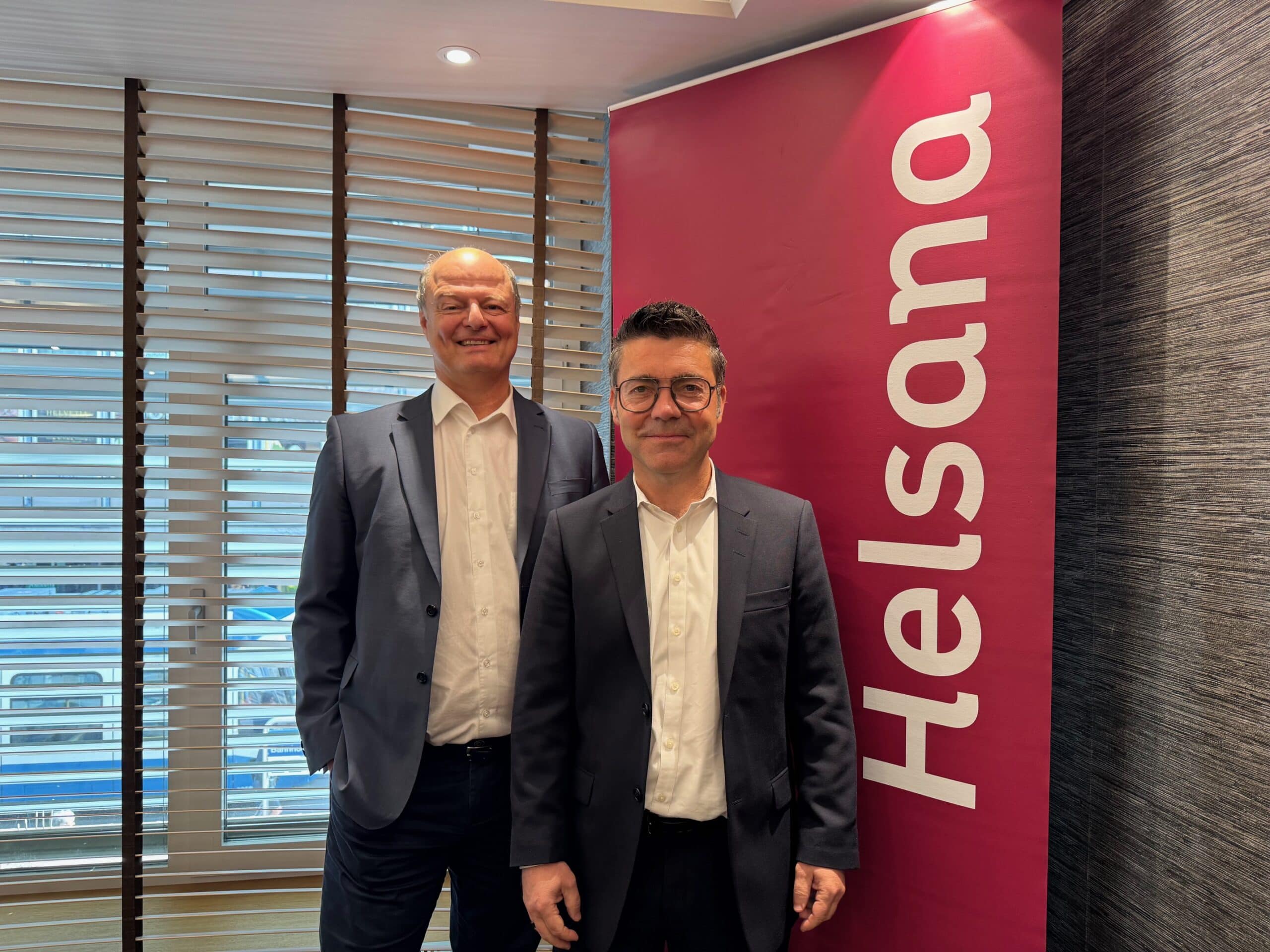
For Helsana, 2025 was a year of decisive developments. At the media conference, CEO Roman Sonderegger described it as an “incredibly important year” for the company. The focus was on the introduction of a new corporate strategy, which was presented together with all employees at the beginning of January 2026. The aim was not only to present the strategic guidelines, but also to anchor them within the company. According to an internal survey, this was achieved: Employees had understood the strategy and knew what contribution they were expected to make.
Another milestone was the acquisition of software provider Adcubum. The company supplies central IT systems for a large part of the Swiss health insurance industry. Helsana bought Adcubum back from an American private equity investor with the aim of securing stability for its own business and for the industry. In Helsana’s opinion, investments in the core systems had been neglected under the previous owner because funds had increasingly flowed into other business areas.
Customer satisfaction as a key success factor
Customer satisfaction remains at the heart of Helsana’s corporate strategy. This is not just about products, but also about service quality, availability and friendly advice. Above all, however, it is the employees who are decisive.
Sonderegger emphasized the connection between employee satisfaction and customer loyalty: satisfied employees lead to satisfied customers and these in turn lead to long-term loyalty. Internal surveys show that around 81 percent of employees would recommend Helsana as an employer.
External studies also confirm the positive development. Helsana performs well in various satisfaction rankings, for example by Deloitte and Comparis. The progress is particularly evident in the Net Promoter Score, which measures the recommendation rate. The company has improved significantly here in recent years and is now one of the leading health insurers.
In the corporate business, Helsana also achieved high scores in broker surveys. The insurer took first place there for the second time in a row.
Growth in customers and premium volume
The company’s financial performance was also positive. The Helsana Group exceeded the nine billion Swiss franc premium volume mark for the first time. The growth is primarily due to additional customers in basic insurance and strong development in the supplementary insurance business.
In basic insurance, Helsana gained around 69,000 net new policyholders. Originally, the company had only expected moderate growth slightly above the market share. In addition to competitive premiums, high customer satisfaction was also a decisive factor in the stronger customer growth.
The supplementary insurance business developed particularly dynamically in the individual customer segment. Helsana recorded targeted growth in selected segments and products.
Stable finances despite challenging environment
CFO Ronny Bächtold described the financial year as very successful overall. The investment success of over CHF 500 million was particularly noteworthy. Internal asset management once again outperformed the market.
Helsana has a broadly diversified investment portfolio with an equity component of less than 20 percent. Alternative investments such as Bitcoin or private equity are deliberately not used. Despite this conservative strategy, the investment return was around six percent.
Part of the profits were set aside in securities fluctuation reserves. These serve to cushion possible stock market turbulence. Overall, Helsana has provisions of more than five billion Swiss francs and further strengthened equity.
The insurer also considers itself well positioned in terms of administrative costs. The administrative cost ratio fell to 6.9% at Group level. In compulsory basic insurance, it is around 3.8%, which is a very low figure compared to the rest of the industry.
Basic insurance remains structurally in deficit
As with all health insurers, the compulsory basic insurance business remains structurally loss-making. Helsana deliberately calculates with an underwriting loss, which is compensated by investment income.
Profits are generated primarily in the supplementary insurance and accident business as well as in the daily sickness benefits area. These areas nevertheless make it possible to achieve a positive technical result at Group level.
In the long term, Helsana therefore continues to expect a balance: losses in basic insurance will be offset by profits in other business areas.
Social trends are changing the healthcare sector
In addition to the current business figures, the managers also addressed the long-term challenges facing the healthcare sector. These include rising life expectancy, increasing mental stress and changing public expectations.
The trend is particularly clear in the case of mental illness. According to Helsana, one in three cases of incapacity to work in the daily sickness benefits sector can now be attributed to mental problems. This development has far-reaching consequences not only for the people affected, but also for companies and families.
At the same time, expectations of medical care are rising. Many people today demand high-quality treatment that is available at all times, preferably in the immediate vicinity. At the same time, there is growing pressure to limit healthcare costs.
According to Helsana, this tension between increasing demands and affordability is likely to shape the healthcare system in the long term.
New tariff systems and regulatory uncertainty
Additional uncertainty arises from far-reaching reforms to tariff structures in the healthcare system. With the new outpatient tariff system Tardoc and the outpatient flat rates, services worth around CHF 13 billion are being reorganized.
For insurers, this means considerable technical and organizational adjustments. Helsana believes it is prepared for this changeover, but notes that not all service providers are yet fully ready.
This sometimes leads to delays in invoices and makes it difficult to calculate future premiums. Especially in a phase with several reforms running simultaneously, planning reliability is limited.
Strategic topics for the future
In addition to its core business, Helsana intends to invest more heavily in new topics derived from social megatrends. These include, in particular, mental health, longevity, the desire to have children and pregnancy, as well as self-determined living in old age.
These areas should not be developed in isolation, but should have a clear link to the existing insurance business. One example is the development of mental health services for companies. The aim is to identify mental health problems at an early stage and reintegrate those affected into the work process more quickly.
Such programs could also reduce costs in the daily sickness benefits business in the long term.
Digitalization and skills shortage
Another focus is digitalization. On the one hand, it aims to automate processes and reduce administrative costs and, on the other, to cushion the shortage of skilled workers.
According to the company’s management, digitalization will be indispensable in the future because there will be fewer and fewer workers available. At the same time, Helsana is working on specific applications for artificial intelligence, initially internally, before they are used in customer contact.
Well equipped for future challenges
Despite the numerous uncertainties, Helsana believes it is well positioned. The company has a strong financial foundation, a clear strategy and motivated employees.
The combination of a stable core business, new fields of innovation and consistent digitalization should help to successfully overcome the challenges in the healthcare sector in the future.
Binci Heeb
Read also: Helsana increases premium volume: review and outlook for Strategy 2025
Search:
Sponsors: