The mission statements of leading AI labs speak of billions, but almost never of an individual. An analysis of the founding documents of OpenAI, Anthropic, and Google DeepMind shows just how consistently the individual has disappeared from the language of artificial intelligence—and why this is more than just a linguistic footnote.
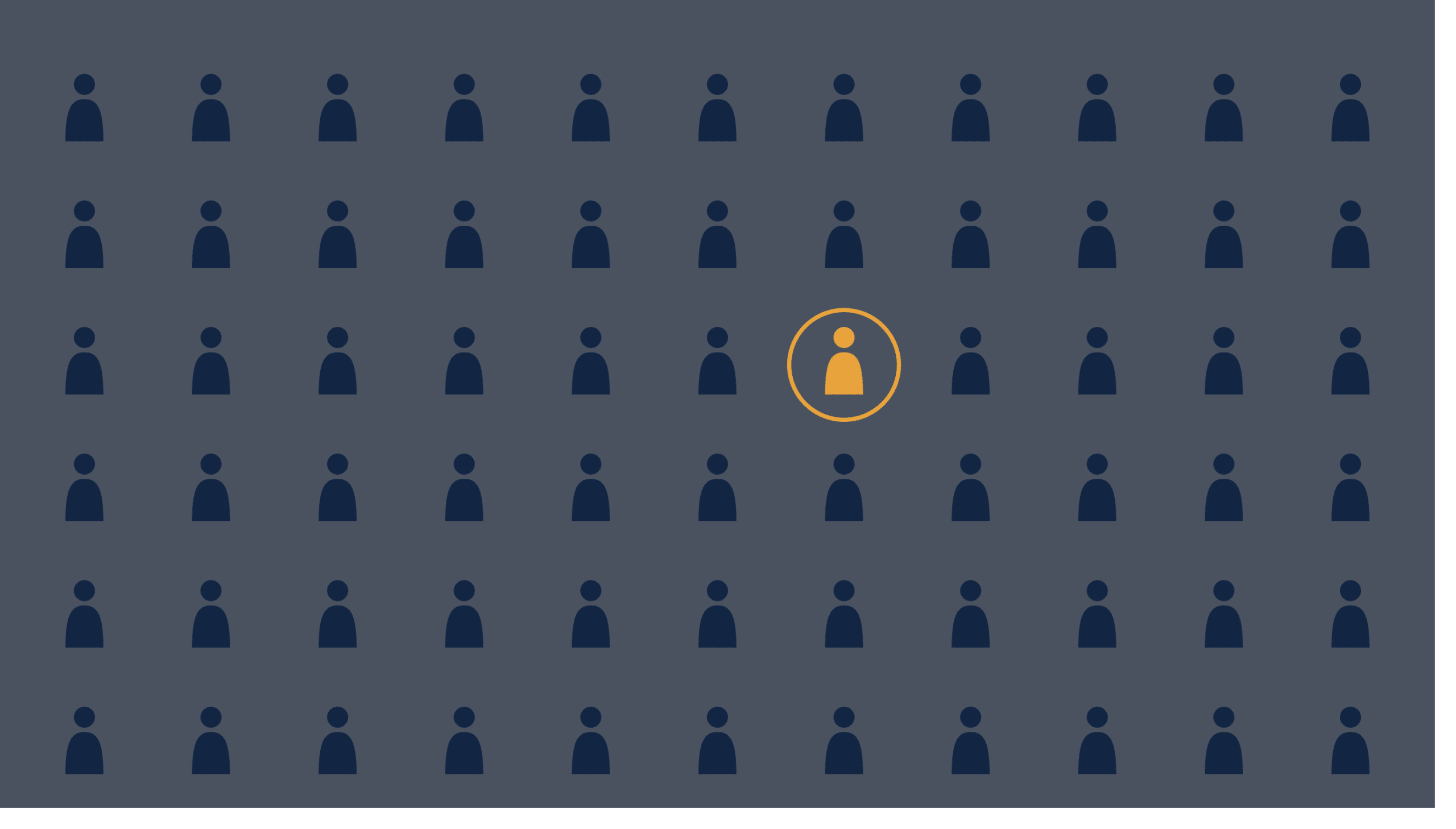
Every major AI lab describes its purpose in almost identical terms: the goal is to develop artificial intelligence that benefits humanity. A noble goal, no question. It appears almost identically in the founding documents of the entire industry. But “humanity” is an aggregate, an average value at the level of the entire species. The term says nothing about the individual reading this text.
What the Founding Documents Actually Say
A look at the primary sources confirms this pattern. In its charter, OpenAI commits to ensuring that artificial general intelligence benefits “all of humanity.” Anthropic defines its mission as the responsible development of advanced AI “for the long-term benefit of humanity.” Google DeepMind, for its part, aims to research intelligence in order to advance science and “benefit humanity.”
The term “individual” or “single person” does not appear in any of the three key texts. Even where “individual” appears on these companies’ broader websites, it does so in operational subordinate clauses—for example, as an illustration of an external effect such as “individuals who are educated.” However, it never appears in the mission statement itself.
The numbers speak for themselves: None of the three laboratories mentions “the individual” in its core mission. All three mission statements focus on “humanity,” “society,” or “the world.” And some eight billion people are summed up in a single word: humanity.
Why this is neither a coincidence nor a scandal
This observation is not necessarily a mistake. Collective formulations of benefit are quite common in mission statements, comparable to the preamble of a constitution, which speaks of “us and our descendants” rather than individual citizens. The dominant mindset in AI development focuses on aggregate benefits: improvements for the species, for the economy, and for society as a whole.
But that is precisely where the real gap lies. Nothing in these founding documents requires an AI system to understand, model, or specifically cater to the psychology, motivation, or decision-making style of an individual. By their very definition, large AI systems are optimized to improve the average of everyone. But who is designed to understand the individual?
From Artificial General Intelligence to Artificial Individual Intelligence
This question brings into play a conceptual distinction that is becoming increasingly relevant: Artificial General Intelligence (AGI) versus what can be described as Artificial Individual Intelligence (AII).
AGI, as pursued by OpenAI, Anthropic, and Google DeepMind, arises from the accumulation of billions of data points and the average of everything humanity has ever created. It is thus, by definition, a reflection of the collective. It is extraordinarily powerful, but has no knowledge of the individual sitting in front of it.
The alternative approach reverses the starting point. Instead of assuming an average for humanity and hoping that this will also apply to a specific person, an individual-centered approach begins with an individual’s own decision-making drivers, motivators, and personality traits, and builds from there.
Best Fit: People as the Starting Point, Not as an Average Value
This is precisely where Best Fit positions itself with its trademarked category AII™, Artificial Individual Intelligence. The company sees itself as the counterpart to the traditional AGI approach: whereas AGI is defined by scale—by billions of averaged data points—AII™ is defined by precision—by the decoded characteristics of a single individual.
The company’s approach involves a gamified sequence of behavior-based questions that takes about 90 seconds to complete, thereby replacing long, tedious questionnaires. It is based on Nobel Prize-winning behavioral science research, not generic personality test heuristics. The result is a decoded profile of a person’s key decision drivers, motivators, and personality traits—essentially, the psychological operating system behind their actual actions, engagement, and decisions. Because the process is designed to be fast and engaging, it is suitable for large-scale use—for example, in recruiting, coaching, matching, and the personalization of financial and healthcare services—without sacrificing depth.
The question remains
An analysis of the founding documents shows that none of the leading AI labs includes the individual human being in its mission statement. Approaches like Best Fit’s aim to close precisely this gap—not by making AI bigger, but by making it more personal: by trying to understand the individual human being whom AGI, by its very nature, has never taken into account.
It remains to be seen whether this will develop into a viable alternative to the aggregated AI logic. The question itself, however—who understands the individual when large systems are optimized for the average—will continue to be a key issue for the industry in the coming years.
Binci Heeb
Read also: Will AGI lead us in the future?
Search:
Sponsors: