The most important moment in an insurance policy isn’t when you sign it. It’s when you need to make a claim. How CBP Finance is rethinking insurance consulting and supporting people exactly when security matters most.
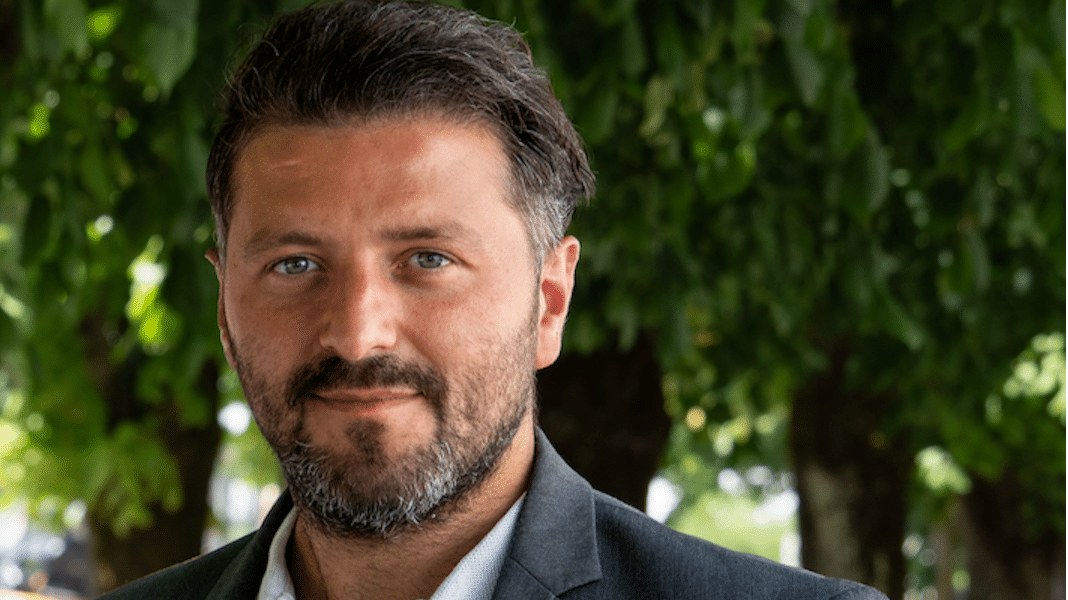
He joined AXA at age 19 and founded two companies of his own in his early thirties. Today, at CBP Finance GmbH, Gürkan Kuyu combines personalized advice with modern technology to create a model that has never existed in this form in Switzerland, and in doing so, poses a simple yet far-reaching question: Why does getting help in an emergency still depend on whether someone answers the phone?
The insurance industry has been debating digitalization for years, usually as a contrast to in-person consulting. Gürkan Kuyu, founder of CBP Finance GmbH and LYA-Icon GmbH, sees things differently. After serving as an agency manager in Rheinfelden and general agent in Aarau—where he was responsible for approximately 80 employees—he developed, together with his longtime colleague Patrick Mahrer, a consulting model that gives customers the choice: in person, by phone, virtually, or digitally. At the heart of the model are a custom-developed app and the high quality of advice provided by the staff. The app combines artificial intelligence with human advice and, in an emergency, provides information even when no one is available at the moment. In this interview, Gürkan Kuyu discusses the transformation of the insurance industry, the future of in-person consulting, the deliberate use of new technologies, and why trust will continue to be built between people in the future.
Mr. Kuyu, what was the deciding factor behind this consulting approach?
Customer expectations have changed fundamentally. Information should be available at all times, and simple questions should be answered as quickly as possible. At the same time, when it comes to important decisions, customers still want to have a personal point of contact.
This becomes most apparent in an emergency. A car breakdown abroad, a hospital admission, water damage. No one wants to start rummaging through insurance documents, looking for a phone number, or getting stuck on hold at a time like that. It’s not about insurance—it’s about peace of mind. And peace of mind shouldn’t depend on whether someone happens to be in the office at that moment.
Our app was developed precisely for situations like these. This is the core of our approach: The customer decides for themselves how they want to receive information—whether digitally, by phone, via video call, or in person.
The focus here is not on technology, but on people. Technology creates flexibility, reduces wait times, and ensures that support is available when it’s needed. Neither the product nor the communication channel determines the nature of the consultation. What matters most are the customer’s needs.
You describe the example of a car breakdown abroad, where the app provides immediate assistance. How does that work from a technical standpoint?
The process is simple, precisely because the situation isn’t. The customer describes what happened in the app. The app knows which policies the customer has on file, checks which ones apply, and tells them what to do next: which benefits are covered, whether and which number to call, whether and where to file a claim, and what they should document. Instead of sifting through files and getting stuck on hold, they’ll have a clear plan of action in two minutes.
We draw the line deliberately and very clearly: The app provides information based on what is stored in it. It does not offer advice.
The difference may seem subtle, but it’s crucial. “Which health plan did I choose?” is a simple inquiry. “Should I change my deductible?” is, on the other hand, a consultation, because it involves your financial situation, your health status, and your plans for the coming years. Such questions are best addressed by an expert and are the result of a consultation.
Before you founded CBP Finance, you held various leadership positions for many years. Which experiences have most shaped your perspective on the industry?
Over the years, I’ve had the opportunity to get to know the industry from a wide variety of perspectives.
I started out in field sales at age 19. That’s where I learned the basics: direct customer contact, needs assessment, the products, the technical expertise, and above all, what good advice means in practice. As an agency manager, I took on responsibility for people—which meant leadership, recruitment, onboarding, building a team, and developing my own network of agents. As a general agent, my perspective expanded significantly once again. You’re no longer just dealing with sales and leadership, but with the entire insurance ecosystem: claims processes, quality management, omnichannel strategies, and the question of how a modern insurance company must be organized to offer customers real long-term value.
I had the opportunity to acquire this knowledge over the course of thirteen years. At the same time, Patrick Mahrer—who had served, among other roles, as deputy general agent, sales manager, and quality manager—and I began to systematically analyze the industry. We weren’t interested in how insurance companies wanted to operate, but rather in what customers actually expected.
Four key needs have emerged:
First: as little hassle as possible. For most people, insurance isn’t a hobby—it’s a necessity. They want simple processes, quick solutions, and minimal red tape.
Second: independent advice. The focus is on the services provided, a fair price, and the assurance that you’re getting the best solution for your specific situation.
Third: a personal point of contact. Artificial intelligence can provide information and speed up processes. But when it comes to important decisions or emotional situations, people want to have an expert they trust by their side.
Fourth: long-term support. Risks and life circumstances change—whether due to starting a family, buying a home, starting a business, or retiring. The expectation is not a one-time contract, but a partner for many years to come.
Our current approach has evolved from these four points. The future of insurance consulting is neither purely digital nor exclusively in-person. It is a smart combination of both.
You led an agency to the number-one spot out of about 300 and were the youngest general agent. What does that say about you, and what does it say about the system behind it?
To be honest, that has more to do with the system than with me.
When I first entered the industry, my circumstances were far from ideal for this profession. That’s exactly why I had to understand sales from the ground up. It became my passion. I analyzed every customer conversation, reflected on successes and mistakes, and consistently documented everything. Over the years, this evolved into a system that I now call the Swiss Sales Clockwork.
I often hear people say things like, “All you need is the right way to handle objections,” or “Sales is all about motivation.” Both of these statements are wrong. Successful sales are not a matter of chance, nor do they depend on a single skill.
But what really made the difference was something else: The system worked not only for me, but for many employees. This enabled us to achieve exceptional results together.
My greatest source of pride, therefore, is neither the top rankings nor the change processes we’ve implemented. My greatest success is the personal growth of our people. Many former employees are now among the top performers in the industry or have taken on leadership roles. I remain in close contact with many of them to this day.
To me, this is the best proof that sustainable success does not depend on individual personalities, but on a system that brings out the best in people. Great companies are not built on individual acts of excellence, but on a culture in which people can grow.
What was your biggest challenge?
By far, the acquisition of the general agency.
At the time, I was faced with a decision: Should I stay at a successful agency that we had built up together over the long term, or should I step out of my comfort zone and take on a much bigger challenge? I made a conscious decision to choose the more difficult path.
To be honest, I found the situation on the ground to be much more challenging than I had expected. It wasn’t just a matter of improving performance. In many areas, there was a lack of structures, processes, and well-established workflows. At the same time, we had a large number of open positions—in leadership, back office, and sales. We had to build everything from the ground up while day-to-day operations continued as usual.
During the first two years, there was hardly a workday that lasted less than 11 to 12 hours. It was an intense period that demanded a great deal of energy, discipline, and passion.
On top of that, our first child was born during this phase. Suddenly, I had to juggle major professional responsibilities with my new role as a father. Balancing the two wasn’t always easy. That makes me all the more grateful to have an understanding wife by my side who has always supported me during this time. Without this family support, many things would not have been possible.
Looking back, I am very grateful for those years. I have learned how important clear structures, consistent leadership, and perseverance are. Above all, I have learned what people are capable of when they take on responsibility, have a clear goal in mind, and are willing to go the extra mile.
By founding CBP Finance, you were able to bring your vision of modern insurance consulting to life. What are you doing differently today by choice?
From the very beginning, we decided not to simply adopt existing processes. Instead, we scrutinized every single step and always asked ourselves the same question: Does this really add value for our customers?
One example is training. In this industry, it’s not uncommon for new advisors to start conducting client meetings on their own after only a short time. We have deliberately chosen not to do this. Before anyone at our company begins working independently with clients, they go through a structured training and onboarding process. The focus is on subject matter expertise, the quality of advice, and understanding people’s needs.
Another difference is the yardstick we use. We don’t measure our success primarily by the number of deals closed, but by our customers’ satisfaction. Customers who receive good advice, are able to build trust, and feel supported over the long term are more likely to recommend us to others. This leads to long-term customer relationships that ultimately benefit everyone.
It’s also important to us that our advice doesn’t end when the contract is signed. Many questions don’t arise until later—when a claim is filed, life circumstances change, or when planning for retirement. That’s when we want to be available.
The future doesn’t lie in selling faster and faster, but in supporting people over the long term. That’s why we consciously invest more time in quality, training, and support.
We don’t believe that trust is built simply by signing a contract. Trust is built through the support we provide afterward. That’s exactly where we want to make a difference.
In today’s insurance landscape, where do customers most often reach their limits?
Not just in an emergency, but also in everyday life. Which franchise did I choose? What coverage applies to this claim? What documents do I need to file a claim? Questions like these are straightforward, but they take time because you have to look up the answers first.
The common thread is always the same: Most people don’t think about insurance until they need it. As long as everything is going smoothly, hardly anyone thinks about their policies.
Safety is one of the most important basic human needs. Especially in situations where uncertainty arises, support must be available easily, quickly, and reliably. Access to important information must therefore not depend on business hours or the availability of a single person.
For us, modern insurance consulting doesn’t begin only when an appointment is scheduled. It begins the moment someone needs support. The key question, therefore, isn’t how we digitize our consulting services, but how we provide reassurance when it’s needed most.
Insurance and financial data are among the most sensitive types of personal information. How do you ensure compliance with data protection and regulatory requirements?
It was clear to us from the very beginning that trust is the most important foundation of our business. Anyone who entrusts their insurance and financial documents to an app must be able to rely on that app to handle this data responsibly.
That is why we did not wait until the end of the development process to address data protection and compliance, but instead incorporated them right from the design phase. Working together with our software developers, external specialists, and legal experts, we structured the entire solution to ensure it meets the requirements of the revised Data Protection Act and the regulatory guidelines for registered insurance intermediaries. The app went live only after all issues had been reviewed and we had received the green light from our legal team.
You mentioned the Swiss distribution network. What exactly does that entail?
The Swiss Sales Framework is the result of over 13 years of practical experience and the analysis of more than 10,000 customer interactions. It is not a theoretical model, but a system that emerged directly from real-world practice—developed for the Swiss and European markets.
Why do I call it the “Swiss Sales Mechanism”? Because, in my view, successful sales work just like a Swiss watch. A watch doesn’t run because of a single gear. Only when all the gears mesh perfectly does the entire system function precisely and reliably.
It’s exactly the same in sales. People often say that success depends solely on handling objections correctly or on a clever closing line. That’s a misconception. Handling objections is just one small cog in the entire system.
Successful sales begin much earlier—with the right mindset, preparation, and first impression. They range from needs analysis, through communication, building trust, and the quality of advice, all the way to follow-up support, long-term customer loyalty, and much more. Only when all these gears mesh together can sustainable sales success be achieved.
We have spent many years developing, analyzing, and continuously improving this very system. Every insight gained from thousands of conversations and from leading sales teams has been incorporated into this mechanism.
The Swiss sales mechanism goes far beyond sales themselves. In addition to the sales function, there are other mechanisms for leadership, recruitment, onboarding, management, marketing, and performance improvement. After all, a company can only achieve sustainable success if not only sales are functioning well, but the entire system behind them as well.
And this is precisely where a crucial key lies: The Swiss Sales Engine is not just a system, but also a clear developmental framework. It shows, step by step, how individual employees can become true top performers. It explains how the journey from a newcomer to a consistently successful salesperson works—and also how good salespeople can become strong leaders who, in turn, can build and expand teams themselves.
This development is no coincidence, but rather the result of a clear path that is firmly anchored in the Uhrwerk system. Each phase builds on the previous one, each skill is developed in a targeted manner, and each level brings the individual closer to their full potential. This is exactly how, over the years, we have seen employees not only improve their sales performance but also develop into top salespeople and, later, successful leaders.
For me, the Swiss Sales Engine is therefore not a course or a single method. It’s a shortcut. It brings together the experience we’ve gained over many years into a clear, tried-and-true system. Instead of every salesperson or entrepreneur having to make the same mistakes on their own, they receive the tools, the structure, and the crucial keys that have already proven themselves in practice—presented in a way that’s easy to understand, well-organized, and immediately actionable.
In addition to CBP Finance, you are the owner of LYA-Icon GmbH. Why was this second step important to you?
Besides the insurance industry, helping people grow in sales is my second great passion.
With LYA, we’re therefore passing on the sales know-how to sales organizations and companies that want to further develop their own sales structures. Looking back, I often think about how valuable it would have been if someone had explained certain concepts to me back then and saved me from taking a few detours. That’s exactly the kind of added value we want to offer.
The LYA is therefore aimed at both sales professionals and companies that wish to develop their organizations in a sustainable manner.
Back then, I felt like I had to find the key to every door myself. Today, we want to help people and companies open those doors more quickly—not by doing the work for them, but by sharing experiences that save them time and help them reach their goals faster.
What will the insurance advisor of the future look like?
I am convinced that personal insurance advisors will continue to play a central role in the future. Insurance and finances are among the most important decisions in life. When it comes to protecting their families, planning for retirement, or managing their own businesses, many people will continue to want a trusted advisor who can guide them and understand their personal circumstances.
At the same time, I believe the profession will undergo significant changes. Digital solutions and artificial intelligence will take over many administrative tasks and be able to answer simple questions. This will give advisors more time for what really matters: understanding their clients’ needs, explaining the big picture, and developing long-term solutions.
I expect the industry to consolidate in the coming years. In my view, the market could function with about 30 percent fewer consultants in the future than it does today. Not because in-person consulting is becoming less important, but because technology is taking over many routine tasks and enabling more efficient processes.
That is precisely why the quality of the advice will be crucial. Advisors who focus primarily on closing deals quickly and lose touch with clients after the contract is signed will find it increasingly difficult. In my view, the future belongs to those who support their clients over the long term, understand their needs, and create genuine added value.
Sustainability, the quality of our consulting services, and customer loyalty will be the key factors for success. Those who build trust and consistently put the customer first will continue to be successful in the future. As a company, we are already preparing for this trend today.
Binci Heeb asked the questions.
Gürkan Kuyu knows the Swiss insurance industry from nearly every angle. At age 19, he joined AXA as a field representative, later led the Rheinfelden agency to first place in a national competition among approximately 300 agencies as agency manager, and, as the youngest general agent, took on responsibility for about 80 employees in Aarau, where he successfully restructured the general agency. His areas of expertise include sales, building and leading sales teams, improving performance, and change management. Over the course of thirteen years, he developed this into the “Swiss Sales Engine,” a development system for sales, leadership, and corporate culture, which he now shares through LYA-Icon GmbH with sales professionals and sales organizations, whom he coaches and supports in the process. Through CBP Finance GmbH, he also runs an independent insurance brokerage registered with FINMA, complete with its own app, and is building a model in which customers receive round-the-clock support, either in person or via state-of-the-art technology. His guiding principle gives CBP Finance its name: Customer Before Product.
See also: A New Approach to Claims: How Vectoryx Orchestrates Claims Settlement
Search:
Sponsors: