The new premium notice had been sitting on a friend’s kitchen table, unopened for days. He still has until November 30 to switch health insurance providers, and he has good reasons not to.
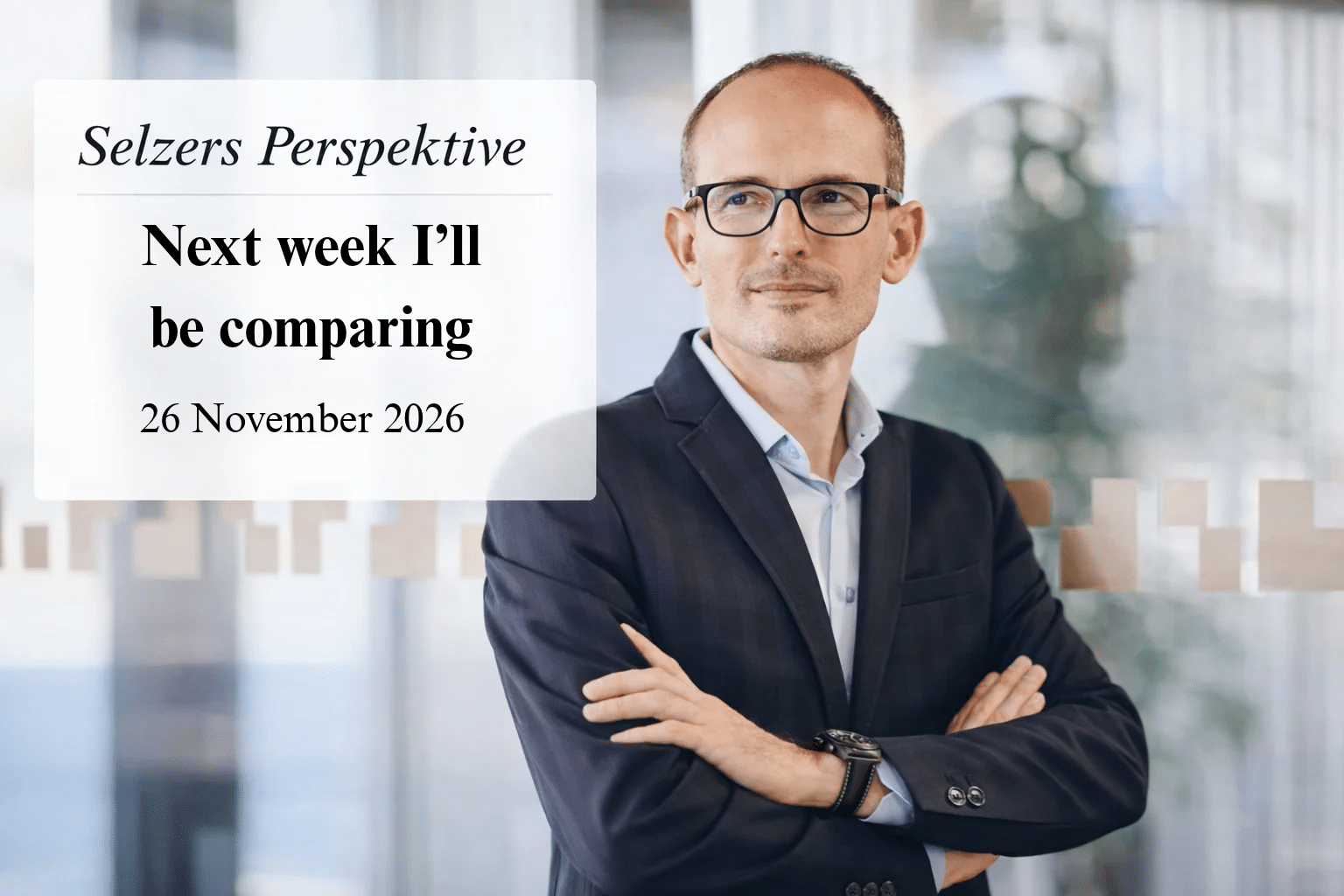
I was invited over for dinner; the house smelled of pumpkin soup, and the letter was lying next to the bread basket, the envelope still sealed, with a pen on top, as if someone had briefly intended to jot something down. The host followed my gaze. He’s a family man with two children, and in his line of work, he’s the type to scrutinize every proposal twice. “I know,” he said, “I should compare them next week.” He laughed as he said it, and I laughed along with him because I recognize that phrase from my own life.
On the way home, one question kept nagging at me: What stops a smart, well-informed person from saving money, money that their family could really use, with just a few clicks?
Why Nothing Happens
In 1988, economists William Samuelson and Richard Zeckhauser demonstrated that people prefer an option simply because it already exists. They called this the status quo bias. In everyday life, this means that what we have feels like our own, and our minds initially interpret any change as a potential loss even if, on paper, it would be a gain. My friend’s hesitation isn’t carelessness, but a protective reflex that almost all of us are familiar with.
An example from research on organ donation illustrates just how powerful this pull is. A widely cited 2003 study by Eric Johnson and Daniel Goldstein compared countries where people must actively consent to donation with those where they must actively opt out. In the first case, only a few people register as donors; in the second, almost everyone remains on the donor list. People’s attitudes toward organ donation are similar in both countries; the difference lies in the default setting, and the default setting is almost always: leave it as it is.
This aligns with what the University of St. Gallen describes in its survey: Swiss policyholders are considered surprisingly reluctant to switch insurers, even when premiums rise. One might dismiss this as mere complacency. To me, it makes more sense to view this as a characteristic of the human mind that every industry dealing with decision-making should be aware of.
What the Computer Doesn’t See
The comparison website has significantly lowered the barrier to switching. In seconds, it identifies the most affordable health insurance provider, the right deductible, and the savings down to the last cent. What it can’t do: sit across from the couple who’ve been with the same health insurance provider for twenty years and feel uneasy at the thought of canceling their policy. The calculator does the math. The feeling remains.
The Deloitte study “Insurance and AI 2026” paints a similar picture from a different perspective. Eighty-six percent of the insured respondents believe that people should have the final say on important insurance decisions, and 73 percent cite human review of critical cases as a prerequisite for accepting AI at all. Since the study focuses on the use of AI rather than switching insurers, I don’t want to read too much into it. However, it does show that when things get serious, people expect someone to review the situation alongside them.
Where Counseling Begins
A consultant I occasionally work with calls his clients every year at the end of October, shortly after they’ve received their premium statements. He begins the conversation without making any comparisons and first asks what people like about their current plan, listening longer than he had planned. Only then does he run the numbers. Some stay, feeling better than before; others switch, and he considers both outcomes a success, because a decision has truly been made.
On top of that, there’s a time factor that I tend to underestimate in my day-to-day life. November 30 is a Monday, and what matters is that the cancellation notice has been received by the insurance company by then, not the day the letter was mailed. If you put off meeting deadlines until the very last moment, you turn a choice into a mishap.
The Case of Business-to-Business
Health insurance is emblematic of the insurance industry, because in the commercial sector, many things follow the same pattern, only with larger sums involved. Contracts are automatically renewed, and no one asks whether the coverage still fits the business’s needs. By now, the company may have two more employees, a second facility, or a new line of business, yet the policy dates back to before all that. For brokers, this is no minor detail, because they are the ones who determine whether a contract continues, either because it’s a good fit or because no one is paying attention to it.
So what does the status quo bias mean for the broker? Three things stand out to me. When a client says nothing, they usually haven’t made a decision, and in many firms, that silence is interpreted as satisfaction. It takes a trigger to break that inertia, and that trigger rarely comes on its own: It comes from someone who calls at the right time and asks a question instead of making an offer. And the broker’s own inertia follows the same pattern, because the quiet, long-standing client who never calls gets pushed further down the calendar because there’s no urgency.
For the insurance industry, this means that inertia can hardly be overcome simply by using better tables. Good advice factors this in from the very beginning and creates the impetus that the customer cannot generate on their own.
What I’m taking with me
I use comparison calculators myself and like them. Still, I’ve noticed that I prefer to discuss decisions like this with someone who has time and isn’t rushing me. On paper, a letter like this is just a math problem. At the kitchen table, there’s a sense of security attached to it, and that’s part of the equation, even if it isn’t listed in any table.
I didn’t compare anything at my friend’s place that evening. I asked him what he estimated his cash register took in, and he spent ten minutes telling me about the hotline that had answered a call one Saturday and about the letter he’d had to write for his mother back then. Then he took the pen from the envelope, slit it open, and read the number. His wife poured more wine, and the letter now lay open on the table next to a sheet of paper on which he was writing down the first few numbers.
Marcus Selzer
See also: The Borrowed Memory
Search:
Sponsors: