The Swiss Insurance Association (SVV)’s Cyber Insurance Summit 2026, held on November 5 in Bern, focused on the entire lifecycle of a cyberattack, from prevention to law enforcement. The takeaway from the afternoon: Attackers are getting faster thanks to AI, while defenders are bogged down by jurisdictional issues, forms, and fine print. The word that came up most often was “collaboration.”
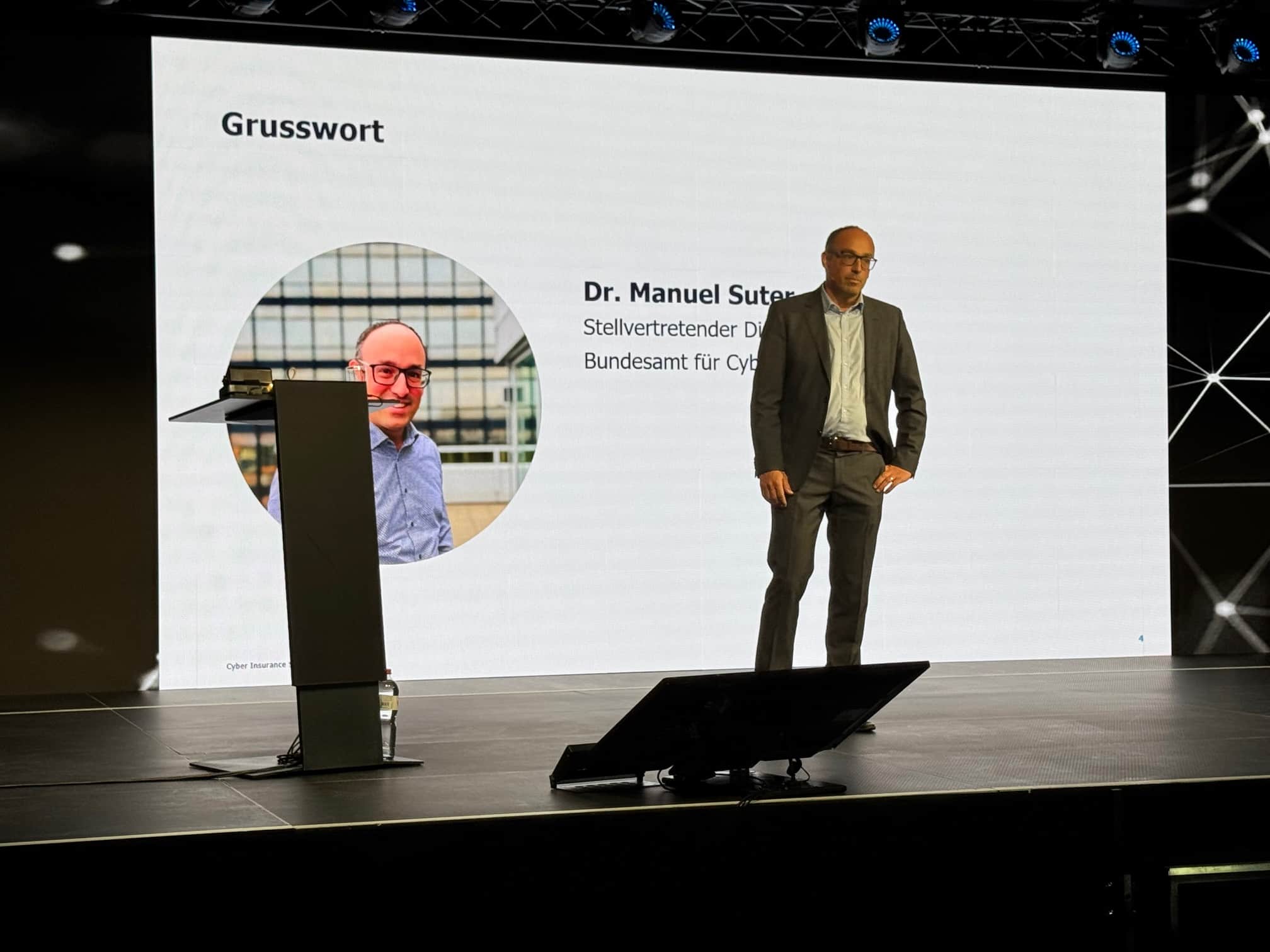
Dr. Manuel Suter, deputy director of the Federal Office for Cybersecurity (BACS), announced in his opening remarks that he wanted to “paint a somewhat bleak picture.” That wasn’t hard for him. He cited data breaches at pension funds, municipalities, and sports associations; tampered refrigerated display cases in French supermarkets; and a widespread PHP vulnerability that left IT managers with only hours to apply a patch. We’ve grown accustomed to data breaches, Suter admitted: a few headlines, and then it’s back to business as usual.
Artificial intelligence is the real game-changer. In the past, once a vulnerability was discovered, there were months to respond. Today, AI finds the vulnerabilities and writes the exploits right away. The PHP vulnerability mentioned was documented in 2020 and 2024 and had been deemed too complex for a real-world attack on both occasions, until an AI provided the attack vector. Suter admitted with remarkable candor that BACS had not anticipated that AI would be searching for vulnerabilities so autonomously as early as 2026. For insurers whose models are based on historical claims data, this is particularly troubling news. He said they were “not overly confident” about the coming years. In the longer term, however, AI could help comprehensively test code and make it more secure. Insurers are important partners in this effort because they are close to their customers and know where the problems lie.
The Legal Aid Donkey
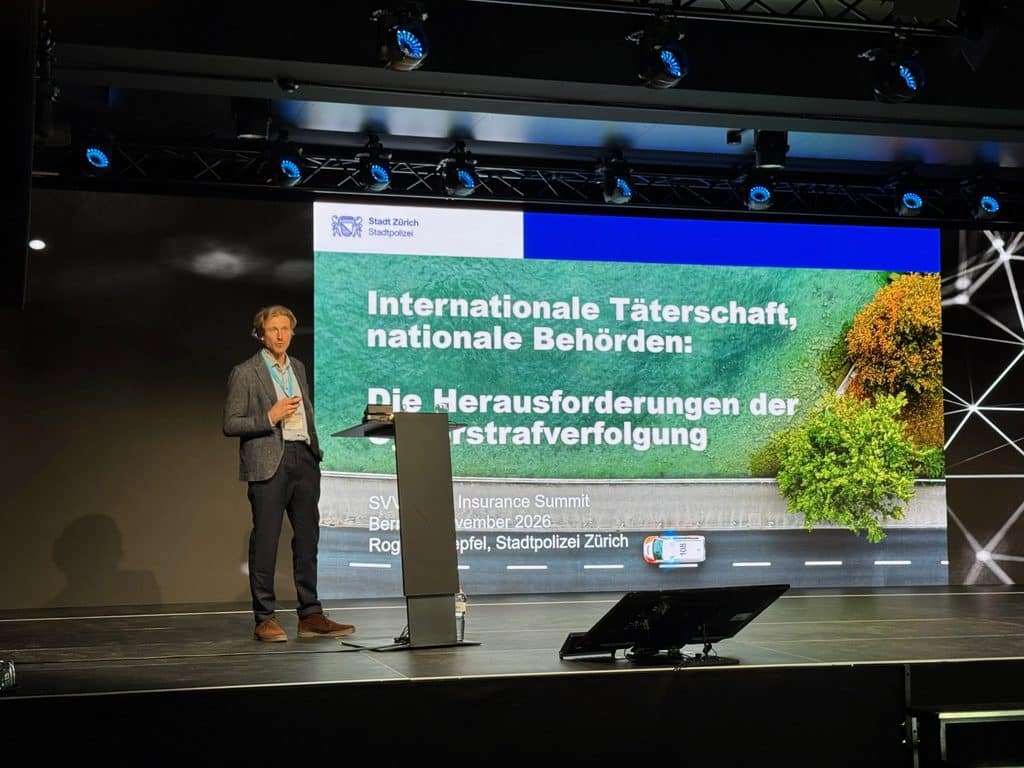
Roger Knoepfel, head of the Digital Investigation Services Division of the Zurich City Police, said he would have liked to hear a more optimistic speaker before him. His assessment is: “We have crime without borders and law enforcement with very significant limitations.” During a bicycle stop, everything is handled within 200 meters, including the fine. Online, however, the “road” belongs to private entities, the data is stored who-knows-where, and there’s no such thing as an “online driver’s license.” The Code of Criminal Procedure doesn’t even recognize the term “data,” even though digital traces are practically the only thing his investigators have to work with. Whether and on what basis the police themselves are allowed to use AI is still under discussion, while perpetrators have long since scaled up their operations. And anyone who wants to know whether a person they’re looking for lives in Switzerland sometimes has to make as many as 26 phone calls.
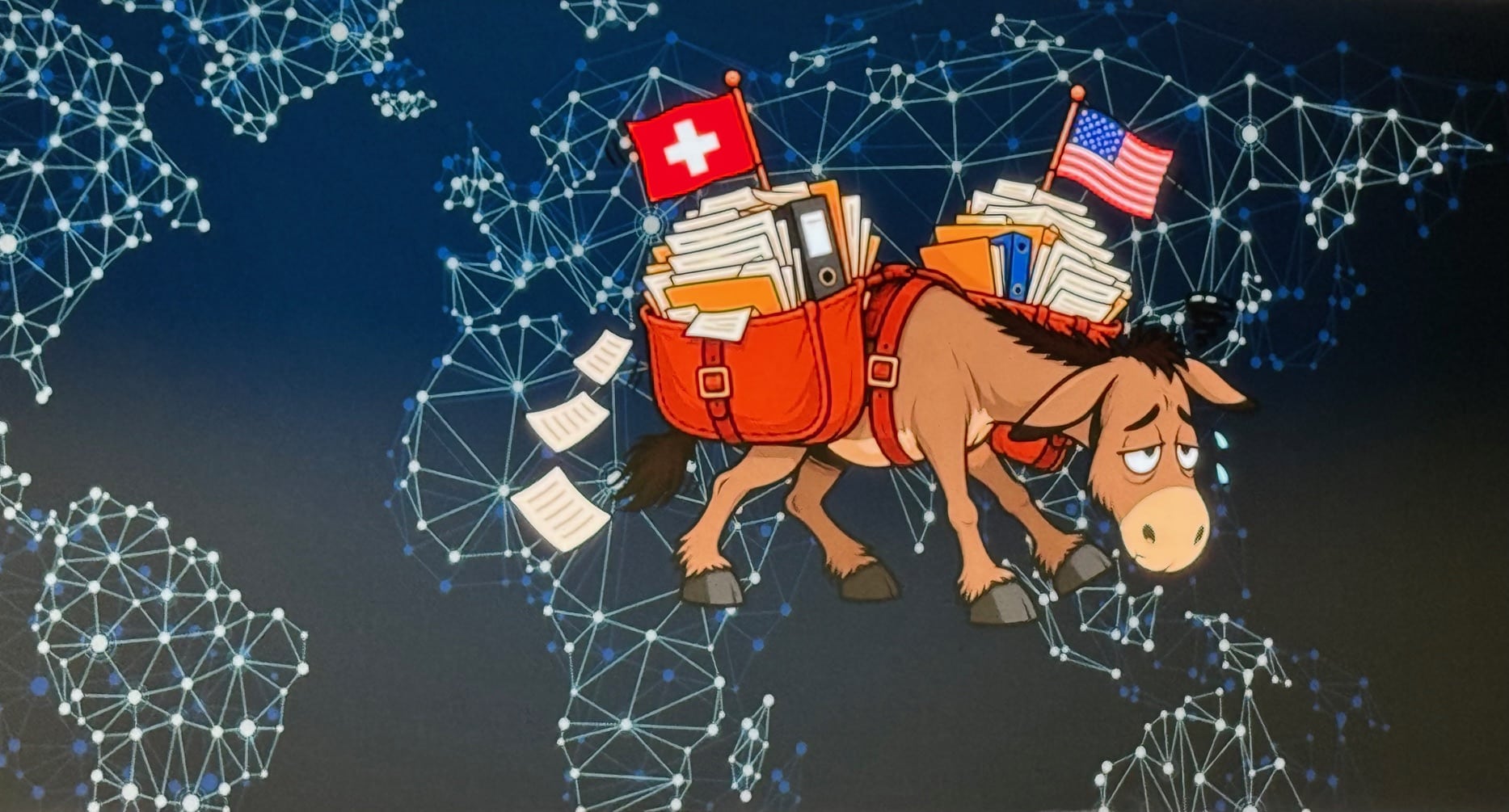
Added to this are anonymization and “cybercrime as a service”: attack tools available by subscription, outsourced cash flows, and a division of labor among perpetrators. The victims are in Switzerland; the perpetrators are usually abroad. The proper path under the rule of law involves mutual legal assistance, which Knoepfel depicted as a heavily laden donkey. You send it westward, and with any luck, it returns after months or years. In a recent case, it took a year and a half. The process is faster under the Budapest Convention on Cybercrime: through the approximately 80 signatory states, data can be secured around the clock before the donkey arrives. However, Russia, China, and India are not signatories.
Because arrests are often impossible, the police rely not only on repression and prevention but also on “crime disruption” that is, making it as costly as possible for offenders to carry out their crimes. A prime example is Operation Olympia. The crypto mixer operated in Zurich, through which approximately 1.3 billion euros had been laundered, was shut down at the end of November 2025. Investigators seized 312 bitcoins worth approximately 25 million euros, took over the domain and infrastructure, and blocked the administrator’s access. The operators haven’t been arrested, but their working capital is gone. This would not have been possible without partners in Switzerland and abroad, as well as from the private sector.
A Summit on the Moon
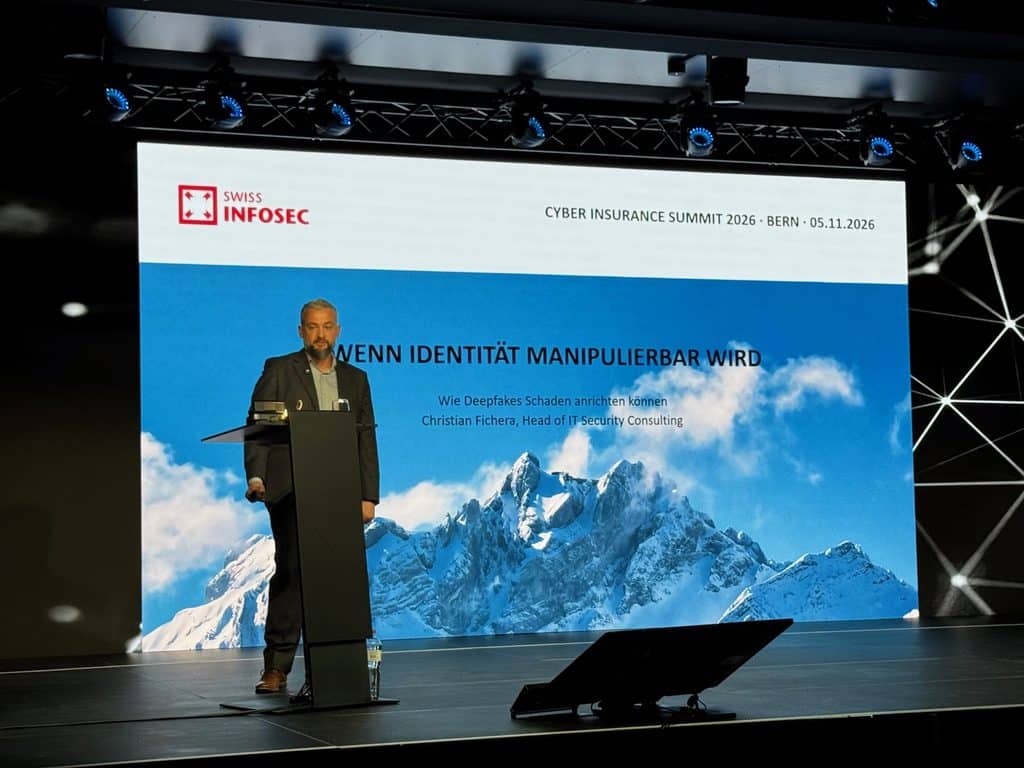
Christian Fichera, Head of IT Security Consulting at Swiss Infosec AG, picked up where law enforcement reaches its limits. In January, a business owner in the canton of Schwyz transferred several million francs after receiving a call from a supposed long-time business partner. The voice was AI-generated; the perpetrators remain unknown. In 2024, the engineering firm Arup in Hong Kong lost 25.6 million following a video conference with a fake CFO. In the past, creating a deepfake required hours of video footage, significant computing power, and specialized knowledge. Today, all it takes is 20 to 30 seconds of source material and freely available tools, and the result is an avatar that responds in real time. In 2025, BACS received nearly 65,000 reports; in the canton of Zurich, there were over 30,000 cyberfraud attempts, about 90 per day. Such attempts have increased fivefold in insurers’ call centers. Insurers are therefore not only risk bearers but also targets themselves.
Fichera demonstrated this live. Using a YouTube interview with SVV CEO Urs Arbter, his team created a deepfake in which Arbter announces that the next summit will take place on the moon, with attendees traveling via space shuttle from Zurich. All it took was an ordinary laptop and tools that anyone can use. According to an MIT study, people recognize such fakes in 54 percent of cases, which is barely better than flipping a coin. Under time pressure, that rate is likely to be even lower.
A tricky issue for the industry: A deepfake doesn’t fit into any category. Is it a cyberattack or a breach of trust, and is it even covered? Social engineering is often insured only with sublimits or supplemental coverage, and the crux of the matter remains that the victim voluntarily paid or granted access. There was no system breach and no malware. Fichera’s countermeasures are unspectacular: calling back via a known number on a second channel, agreed-upon code words, identity verification at the help desk that isn’t based on voice recognition, and awareness training sessions where participants encounter real deepfakes. Insurers could review these processes with their customers and reward good risks. His core message: Verification beats detection.
Just being uninteresting isn’t enough
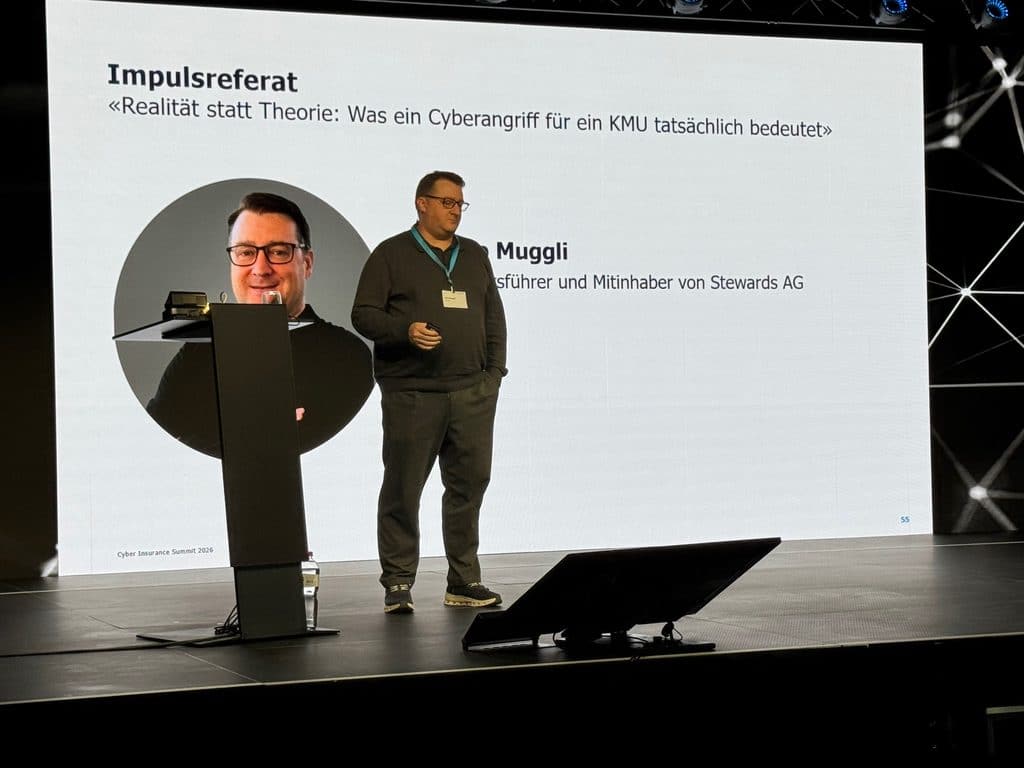
The most striking account came from Remo Muggli, CEO and co-owner of the staffing agency stewards.ch in Zollikon. In October 2024, as he was heading off for fall break, he received an email from a journalist: his company’s employee data was available for free download on the dark web. His first thought was that it was spam. Then a client who monitors the dark web called. The police responded quickly, and the post was deleted that very evening. On the second day, the source of the leak was identified: a custom-developed logistics tool that had been put online only for testing purposes and contained a few real addresses. On the third day, approximately 5,000 affected individuals were notified, along with a list of questions and a hotline number. The trail led to a server in Bangladesh and ended there. Only five to ten people reacted angrily, which aligns well with Suter’s observation that people have become accustomed to such incidents.
Muggli drew some sobering conclusions. Being uninteresting doesn’t protect you, because AI bots scan every website and every hosting provider around the clock. His online hosting provider was unreachable during the crisis: no phone number, and a response might take up to four hours. When he contacted his insurance company, an AI answered first. He was only able to reach a human because his broker had a direct number. Today, Muggli calls his IT providers every three months to check on their security status. He’d like to have cyber insurance, but all he received was a list of requirements he’s supposed to meet first, without any guidance. His requests for the industry: a seal of approval for hosting and online partners, insurance that offers advice instead of a checklist, and an early-warning system so the customer isn’t the first to find out about a breach.
Cybersecurity as a Location Factor
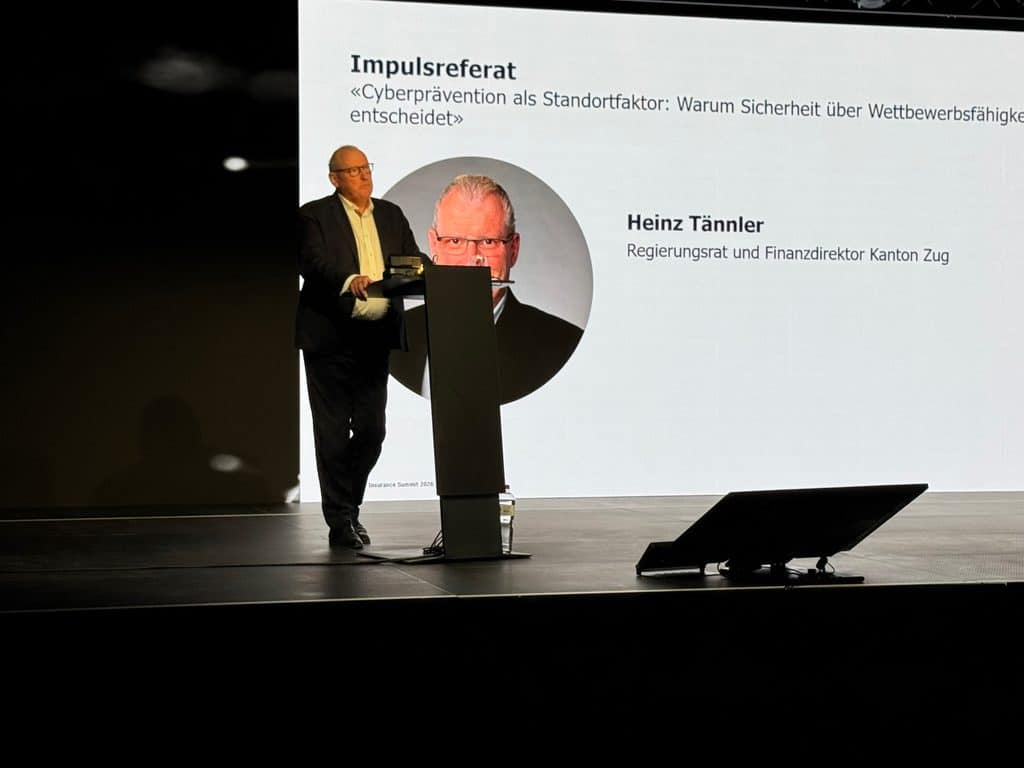
Heinz Tännler, a member of the Zug Cantonal Government and Director of Finance for the Canton of Zug, cited the following figures: The Zug police recorded 706 cybereconomic crimes in 2025, twice as many as in 2021. For him, this is not merely a statistic on losses, but a matter of business location, since trust is one of the strongest assets in the competition among business locations. Zug is focusing on three pillars: prevention, auditing, and research. A cantonal cybersecurity competence center, featuring a help desk, voluntary minimum standards for SMEs, and awareness campaigns is currently being established; approximately 35 million Swiss francs have been allocated for this purpose through 2030. The National Cybersecurity Testing Institute (NTC) independently tests digital products and publishes transparent test reports instead of labels, because a label is merely a snapshot in time. The cantonal council has allocated 80 million Swiss francs over ten years for ETH professorships in AI for cybersecurity. In addition, Zug plans to host the BACS’s planned AI cybersecurity lab.
During the panel discussion, Tännler went a step further. He said that federal funding was “truly meager” in light of the threat. When he offered the Zug initiative to the cantons of Central Switzerland, everyone was enthusiastic, until the topic of money came up. After that, there was no further response. Federalism in its purest form.
Underestimated, Unprotected, Underinsured
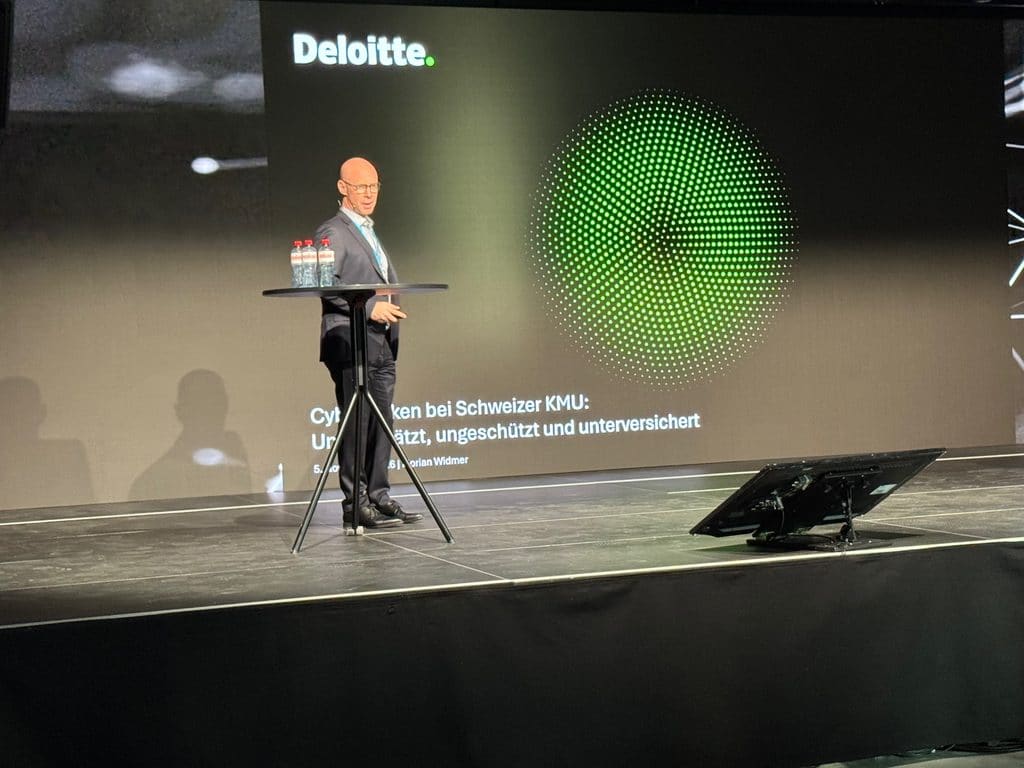
Florian Widmer, a partner in the Cyber Security practice at Deloitte Switzerland, presented the study of the same name. The survey, conducted in April 2026, did not target business owners but rather 924 employees of small and medium-sized enterprises (SMEs), in the hope of eliciting more honest responses. Only 22 percent rate their company’s cyber risk as high, even though 49 percent have experienced a serious incident in the past three months. Thirty-four percent do not have consistent multi-factor authentication; among micro-enterprises, that figure rises to 49 percent. And only about 11 percent of companies in Switzerland have cyber insurance.
Widmer’s demands are directed at three parties. The federal government should establish easy-to-understand minimum standards and hold IT service providers accountable: services that offer strong authentication only as an option should no longer be permitted. After all, you can’t buy a car without an airbag. SMEs should implement the dual-control principle for payments and have their IT systems professionally managed. Finally, insurers should simplify application processes, support sales with AI-powered expert systems, and introduce an industry-wide “cyberscore.” Widmer openly acknowledged that cyber insurance is not a favorite product among salespeople due to its complexity and the commission structure.
Who bears the responsibility?
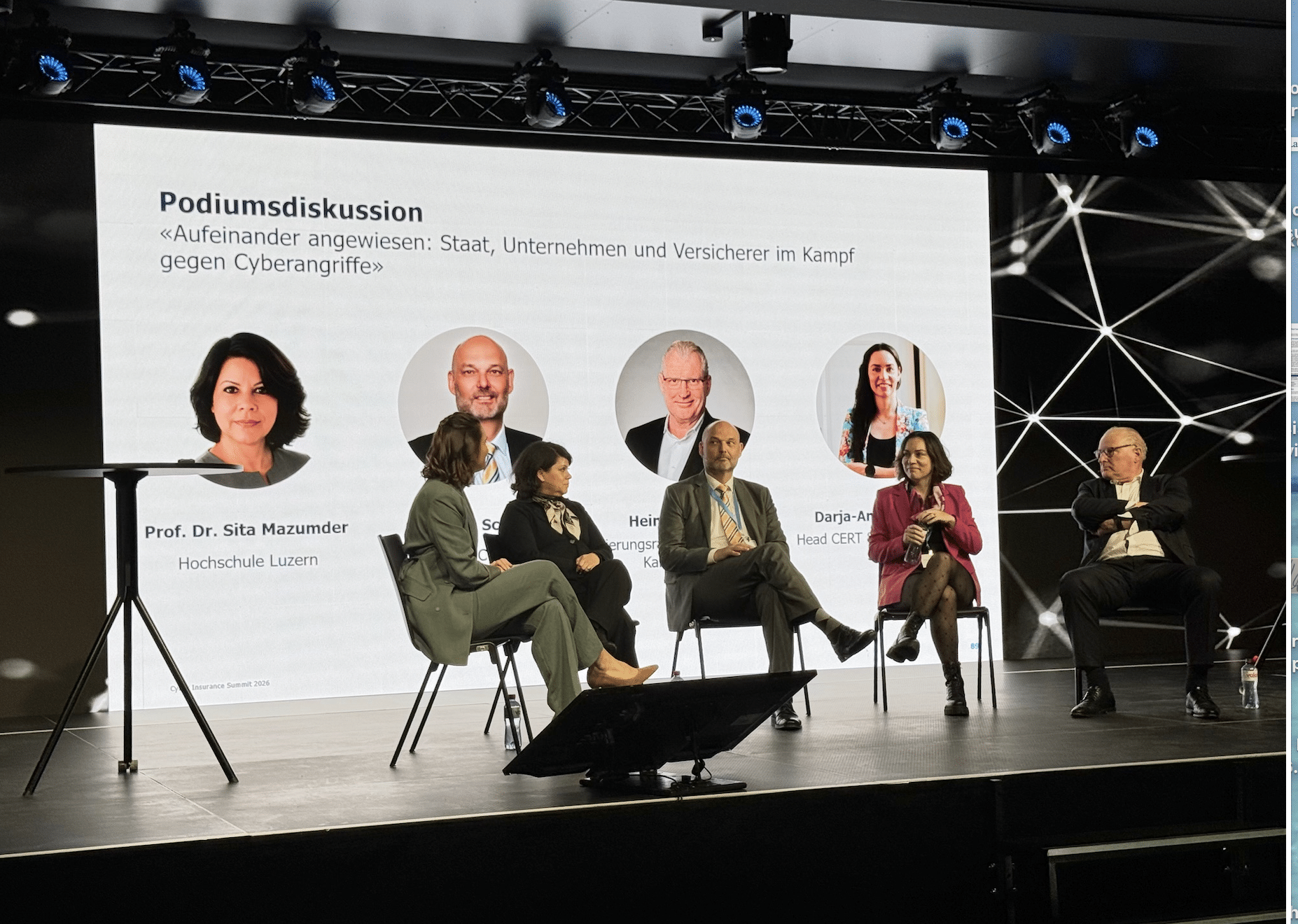
During the panel discussion featuring Prof. Dr. Sita Mazumder (Lucerne University of Applied Sciences and Arts), Andreas Schmitt (Global Head of Cyber, Zurich), Darja-Anna Yurovsky (Head of CERT & Community SOC, Switch), and Heinz Tännler, the fundamental question was quickly settled: The company is responsible more specifically, its leadership. Mazumder recounted how a fellow board member told her that “all that stuff” was just an operational matter. That attitude changes abruptly when the engine room comes to a standstill. Many companies have contingency plans for all sorts of things, but none for a cyber incident.
Yurovsky, whose Community SOC jointly manages security for universities such as ETH, EPFL, and the University of Zurich, coined the phrase “digital seatbelts for everyone.” What she means are security fundamentals that everyone is familiar with, and partners you can rely on, just like the garage that takes care of your vehicle inspection. We’re still a long way from that. She advocated for shared resources and drew a parallel to the Swiss cheese model: technology, processes, and people must work together like layers of cheese so that not all the holes line up on top of each other.
Schmitt, whose employer became the world’s largest specialty insurer following the acquisition of Beazley, which was finalized in early October, emphasized the role of insurers beyond simply paying claims: risk consulting, vulnerability analysis, and round-the-clock incident response. For an SME to be insurable, three to five minimum requirements—such as patch management, two-factor authentication, and employee training, are sufficient; a catalog of 300 controls is not necessary. The objection came promptly: this is precisely where many SMEs are already falling short. Perhaps this is one reason for the low insurance penetration rate.
There was agreement that insurance is not the first line of defense. Mazumder called the statement “We have insurance” extremely dangerous: He said the policy is one piece of the risk management puzzle, not a substitute for it. Schmitt advocated for a public-private partnership to address uninsurable risks such as war or the failure of critical infrastructure, as well as for harmonized reporting requirements and a central authority modeled after the EU agency ENISA. Yurovsky objected from a practical standpoint: Such data would arrive two or three months too late. She needs the information today, but the police are not allowed to share anything from ongoing investigations. Mazumder, who by her own account worked as a regulator in Bern for seven and a half years, identified the underlying conflict of objectives: People want maximum data protection and maximum information sharing at the same time. Both are not possible.
The closing remarks were self-critical. Mazumder, who explicitly identified as part of the industry, had experienced how “radio silence” prevailed after the policy was signed. The industry needs to become simpler and more pragmatic. Yurovsky advised working at the grassroots level rather than dwelling on an AI apocalypse, and addressed the insurers directly: “Fear makes it easier to sell a policy, but in the long run, that’s counterproductive.”
Tom, Jerry, and the Fire Department
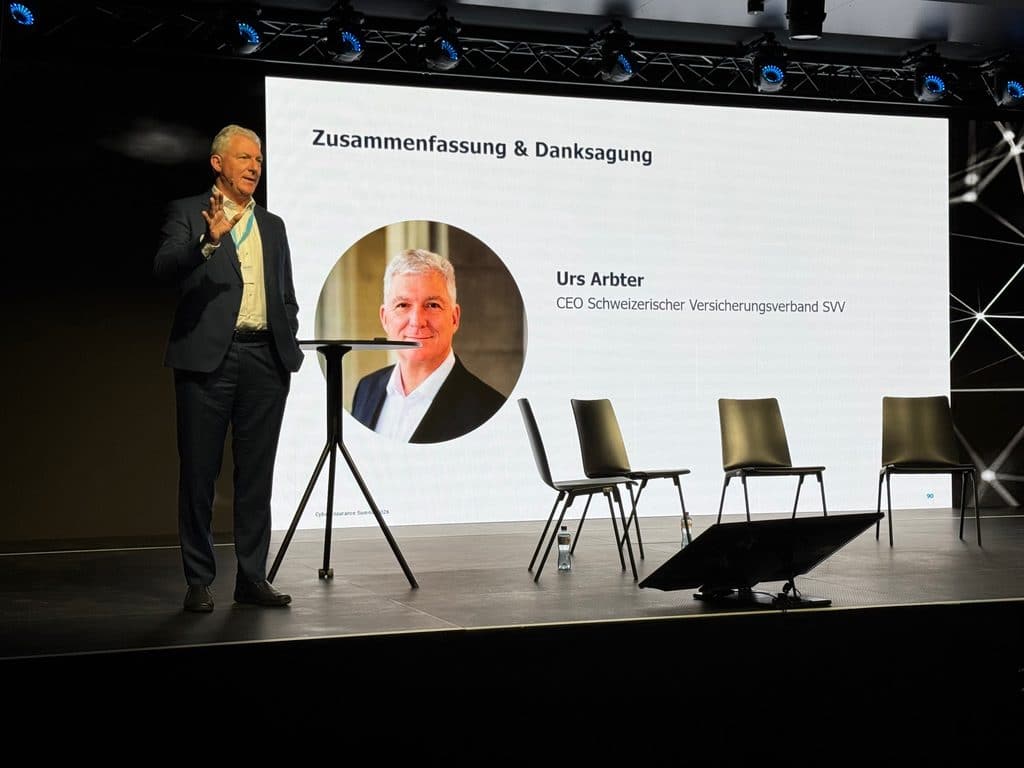
SVV CEO Urs Arbter, speaking in his own words this time, concluded by referring to Tom and Jerry. Thanks to AI, the cat is getting smarter quickly; the mouse has to keep its hole small and learn the new technology faster. Prevention is also in the insurers’ best interest: Contrary to a widespread misconception, the industry wants premiums to be as low as possible, because that’s the only way a product will be purchased on a broad scale. Insurers can score points when claims are filed, as their reputation depends on it. The afternoon’s discussions showed that there is still room for improvement in this area.
Arbter cited fire insurance as a historical model: Following decades of debate in the 19th century, a surcharge on premiums now largely funds the fire department. This only works with high penetration rates. At the same time, he warned the regulator that clumsy regulation could destroy insurance markets. The solution, he said, is dialogue. The next summit will take place on November 23, 2027, once again in the Bern area on Earth.
On the other end of the line
The irony of the afternoon: In the end, what helped most against AI-powered attacks were things that had nothing to do with AI. A callback from a familiar number. A phone call to the hosting provider where someone actually answers. An insurer who offers advice before a claim is filed, rather than just sending a checklist. Technology will continue to advance on both sides. What remains crucial is whether, in a crisis, there is a person available who listens and makes decisions.
Binci Heeb
Search:
Sponsors: