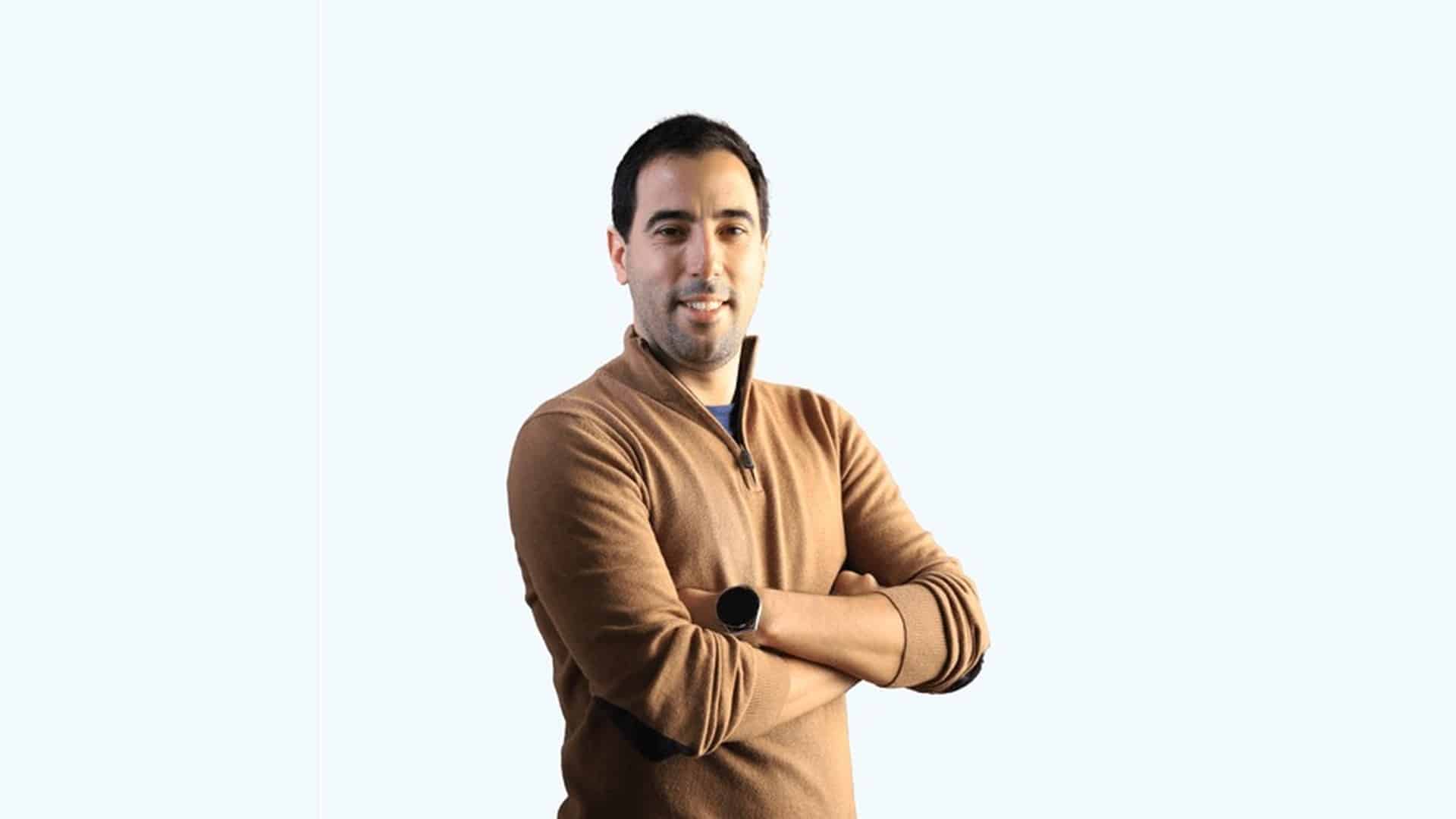
He built and launched a credit marketplace platform regulated by FINMA, weathered the COVID crisis as a fintech founder, and is now dedicating himself to what first inspired him in his master’s thesis: the use of artificial intelligence in the financial services and insurance industries. Ghassen Benhadjsalah is an actuary and AI engineer, co-founder of inncivio, and one of the leading figures at the intersection of mathematics, technology, and insurance risk. thebrokernews sat down with him for the platform’s first interview with an actuary.
Actuaries are the unseen architects of the insurance industry. They calculate the costs of risks, the probability of claims occurring, and how much capital an insurer must set aside to remain solvent in the future. Ghassen Benhadjsalah is one of them, but he’s not the type to sit quietly in the background doing calculations. His career path took him from the University of Lausanne through several startups to his current position at inncivio, where he works with Anna Raafat and Fernando Felix to integrate real-time risk assessment using AI into insurance and trading platforms.
For thebrokernews, this is a good opportunity to learn more about his perspective on an industry in transition. For me, these two disciplines have always been closely linked. Both are quantitative fields, and in both, you have to make decisions within certain constraints. An engineer must think, design, and engineer within limited resources. That’s what defines an engineer: you rarely have unlimited time, an unlimited budget, or perfect conditions. You have to understand the problem, design a solution, and ensure that it works in the real world.
Mr. Benhadjsalah, you are an actuary and an engineer. That’s a rare combination. How did that come about, and what fascinated you about actuarial science?
An actuary faces a similar challenge, but in the context of risks. One must quantify uncertainties based on limited amounts of data. One never has a perfect picture of the future, yet must still make responsible decisions: How likely is an event, how severe could it be, how much capital is needed, and how should the risk be assessed?
This combination fascinated me. Engineering gave me the tools to develop systems, while actuarial science provided the framework for understanding uncertainties and financial consequences. Most of my career has revolved around bringing these two worlds together. Back then, we didn’t use the term “AI” in the way it’s understood today. We tended to talk about machine learning, statistical learning, and predictive models. But the core idea was the same: Can we use data to identify patterns that a human would have a hard time recognizing?
Your master’s thesis, which you wrote over 15 years ago, focused on the use of AI for fraud detection in the insurance industry. What motivated you to write it back then, and weren’t you a little ahead of your time?
Fraud detection in the insurance industry was an obvious topic, since insurance has always been a data-driven business. Claims, customer profiles, historical behavior, anomalies, and relationship networks, all of these contain signals. The challenge is that fraud isn’t always obvious. Often, it manifests as a subtle pattern across many variables rather than a clear warning sign. I was interested in whether algorithms could help insurers identify suspicious cases more quickly and accurately, not to replace human judgment, but to set priorities for where human expertise should be focused.
Looking back, it was probably still too early. But to me, it was obvious that financial services and insurance would eventually become much more data-driven. The technology wasn’t as advanced as it is today, but the direction was already clear. I’d say an actuary helps the market assign a price and a structure to uncertainties.
Actuaries are often regarded as the unsung architects of risk. How would you explain to a layperson what an actuary actually does?
Insurance exists because individuals and businesses are exposed to risks they cannot bear on their own: illness, accidents, longevity, natural disasters, business interruptions, and much more. The job of an actuary is to estimate how often these events might occur, how severe they might be, and how much money needs to be collected or set aside to ensure that promises can continue to be kept in the future.
Simply put: An actuary translates uncertainty into numbers that enable companies to make responsible decisions. It’s not just about insurance pricing. It’s also about solvency, capital, fairness, long-term sustainability, and trust. The best actuaries are not just mathematicians. They understand human behavior, regulation, business models, and the limitations of models. This last point is very important: A good actuary knows that the model is just a tool, not the truth. The biggest challenge was making a credit decision in real time while still managing risk responsibly. In a “buy now, pay later” environment, the customer expects an immediate response. The merchant wants a seamless payment process. But the company still has to decide whether it is taking on an acceptable credit risk with this transaction. A process that takes hours or days is not feasible. The decision must be made immediately.
They joined Swissbilling, now known as Cembra Pay, and we built the AI model for real-time credit risk assessment there. What was the biggest challenge in that process?
That was a perfect early application of AI. Ultimately, building an AI model is about predicting outcomes using a mathematical approach. In this case, the event we modeled was non-payment: the end customer receives the goods but is subsequently unable or unwilling to pay the invoice.
What made it interesting was that the industry already had access to extensive data. We were able to access a wealth of information in real time and use it to make better decisions. Back then, many companies were still relying on decision trees, static rules, and relatively rigid models. We were already considering machine learning as a way to assess risks more dynamically.
The other challenge was that the model didn’t exist in a spreadsheet. It had to work in a real company with real customers, real merchants, real losses, and real pressure to grow. That’s where my background in engineering came in handy. It’s one thing to design a model; it’s another to make it work in practice. A traditional fintech founder often starts with the product, the market, and the growth opportunities. An actuary also considers these aspects, but immediately asks: Where is the hidden risk? What happens during an economic downturn? What assumptions are we making? Are the incentives aligned? What happens if the model is wrong?
You then founded your own credit marketplace platform called Acredius, which is regulated by FINMA through the SRO PolyReg. How does the mindset of an actuary differ from that of a traditional fintech founder?
At Acredius, we connected investors with small and medium-sized businesses that were seeking financing. This meant that we didn’t just build a marketplace; we also had to deal with credit risks, investor expectations, regulatory obligations, and trust.
An actuary’s way of thinking has helped me to look beyond just volume. In the lending business, growth can be dangerous if the risk isn’t properly understood. A marketplace can appear very successful in good times because loans are being issued, but the real test comes later, when repayments are made, or not.
So I would say that an actuary’s way of thinking requires a certain amount of discipline. It doesn’t take away your ambition, but it does force you to consider the other side of the coin. COVID was a very humbling experience. You can model credit risks, probabilities of default, macroeconomic scenarios, and stress cases. But sometimes the shock isn’t just economic in nature, it’s also political and structural. In Switzerland, the market changed almost overnight when the government suddenly offered interest-free loans to businesses.
COVID hit Acredius hard, as the government suddenly began offering interest-free loans. As an entrepreneur and risk specialist, how do you deal with a risk that you simply couldn’t model?
For a lending marketplace, this is not a typical competitive development. It changes the entire demand side of the business. Why would a company take out loans through a marketplace when it can obtain government-backed financing for free?
As a risk specialist, the lesson here is that not every risk can be modeled using historical data. Some risks involve regime shifts. The world in which you trained your model is no longer the world in which you operate.
As an entrepreneur, you have to accept reality quickly. You can’t get too attached to your business model or your original plan. You have to ask yourself: What still holds true, what has changed permanently, and what can we do with the resources and knowledge we have at our disposal?
It was painful, but it also reinforced one of my core beliefs: Risk is not the enemy. Risk is the raw material. The danger lies in pretending that risks don’t exist. inncivio is an agent-based revenue infrastructure for financial services and insurance. We help platforms increase their transaction volume by hyper-personalizing the transaction experience for each individual user.
Today, you are a co-founder of inncivio, where you integrate AI and machine learning directly into insurance and trading platforms. What exactly does the company do?
If you look at the last 15 to 20 years, access to financial products has increased dramatically. Today, we have more digital banking products, more trading products, more types of derivatives, more insurance products, more digital assets, and even prediction markets. The number and complexity of financial products have skyrocketed. Yet the way users interact with these products has remained relatively rigid, standardized, and complex. Most platforms still present the same workflow, the same screens, and the same explanations to very different users, even though these users have varying levels of knowledge, different intentions, and different moments of confusion.
This is exactly the problem that inncivio solves. We believe that financial products are increasingly being developed in a “raw” form at the product level, and that platforms then need an intelligent layer to tailor the transaction experience to each individual user. We provide that layer.
We integrate directly into financial platforms via a lean infrastructure layer. We collect anonymized behavioral and contextual signals (for example, where the user hesitates, which step they’re on, which product they’re viewing) and then provide context-based assistance such as explanations, prompts, tooltips, videos, or calls to action.
The goal is not to manipulate the user. The goal is to reduce friction and improve understanding at the very moment it matters most. For the platform, this can increase transaction volume and user retention. For the user, it can help make complex financial processes easier to navigate. It’s important that we’re directly integrated into the execution path. We’re not a generic chatbot outside the product. We’re embedded in the actual decision-making process. Yes, and I think this conflict is healthy.
At inncivio, you serve as both an actuary and an AI strategist. Are there times when these two perspectives come into conflict?
The AI strategist wants to move quickly, test, learn, and optimize. The actuary asks: What are the assumptions, what are the unintended consequences, what happens if the model is wrong, and how do we measure the impact accurately?
In the financial services sector, optimization cannot be viewed as a purely technical task. If an AI system influences user behavior, it is essential to understand what it is optimizing for. Does it help the user? Does it improve the platform’s profitability? Is it compliant? Is it sufficiently explainable? Could it lead to distortions?
So the actuary in me ensures discipline, and the AI strategist in me ensures speed and a willingness to experiment. The key lies in combining the two. AI without risk discipline can be dangerous. Risk discipline without innovation can become irrelevant. The role has changed significantly. Ten years ago, many actuarial models were still relatively traditional: statistical models, reserve methods, rate tables, and capital models. These are still important, but the data landscape has changed dramatically.
How has the role of the actuary changed over the past ten years as a result of AI and machine learning, and where is the field headed?
Today, actuaries have access to more detailed data, more real-time signals, and more powerful modeling techniques. Machine learning can identify patterns that traditional methods might miss. Generative AI can assist with documentation, scenario analysis, customer communication, and internal workflows.
However, I don’t believe that AI diminishes the importance of actuaries. I think it’s changing what makes an actuary valuable. The actuary of the future must be more technically savvy and product-oriented, and feel more comfortable working with data scientists and engineers. Yet the actuary’s core competency remains indispensable: an understanding of uncertainty, incentives, long-term commitments, and the consequences of poor decisions. In a world where AI can provide answers very quickly, the role of the actuary will increasingly consist of questioning whether the answer is reliable, fair, robust, and economically sound. Technically, a great deal is possible today, but the term “real-time risk assessment” is sometimes used too loosely.
There is a lot of talk in the insurance industry about real-time risk assessment. What is actually technically possible today, and what is still just marketing jargon?
It is possible to use real-time or near-real-time data to improve decision-making. In the insurance industry, this could involve dynamic underwriting, fraud detection, claims triage, price adjustments, risk prevention, or customer counseling. In retail or the lending business, this can mean identifying hesitation, risk tolerance, suitability issues, or behavioral patterns as soon as they arise.
Technically speaking, the tools are available: APIs, event streams, machine learning models, cloud infrastructure, and embedded AI interfaces. The biggest challenges are generally not the algorithms themselves. Rather, they are data quality, regulatory requirements, explainability, integration with legacy systems, and organizational readiness.
Marketing jargon is the notion that every risk can be perfectly assessed in real time. Some risks develop slowly. Some require context that isn’t available digitally. Some cannot be predicted based on past behavior. And some real-time signals are noisy or misleading.
So I would draw the line this way: Real-time risk assessment is valuable when it improves a specific decision within a specific workflow. It becomes jargon when it’s portrayed as some magical level that instantly understands all risks. I think both are true.
Swiss InsurTechs often struggle on the international stage. Do you agree, or is the Swiss market underestimated?
Swiss InsurTechs and FinTechs often find it more difficult to scale internationally because Switzerland is a relatively small market. While it is possible to develop a strong product, a company may not achieve the same scale domestically as one that launches in the U.S. Raising capital can also be more conservative, and Swiss companies sometimes market themselves less aggressively than their international competitors.
At the same time, the Swiss market is underestimated. Switzerland possesses in-depth expertise in the fields of insurance, banking, risk management, regulation, and asset management, as well as technical know-how. If you develop something that works in Switzerland – especially in a regulated environment – it can be a strong sign of credibility.
The challenge is that Swiss companies need to start thinking globally sooner. The quality is often there. Their ambition and communication must match that level. I think one of the biggest risks is that the industry is not preparing its infrastructure for modern AI.
As someone who has been working at the intersection of insurance, AI, and technology for years, what risks do you think the industry still fails to recognize?
The insurance industry has very extensive data sets, but often a very inadequate data infrastructure. The way data is collected, structured, cleaned, linked, and made usable for AI and machine learning is still lagging behind in many organizations. This is not just a technical problem. A shift in mindset is required.
The risk is that companies will apply a generic AI model to poor-quality data and expect transformative results. The results will then be generic, incomplete, or disappointing. People will look at this and say, “AI isn’t ready for our industry yet,” even though the problem isn’t just with the model. The problem is the underlying infrastructure. This is dangerous because it can cause the industry to fall even further behind. AI needs context, structure, and high-quality data to be useful. Without these prerequisites, even the best model will struggle.
That’s why people with a dual background are becoming increasingly valuable: people who are knowledgeable about data engineering and technology, but also about insurance, finance, and risk. You have to be able to view technology through the eyes of an actuary and the insurance industry through the eyes of a technologist. This is where much of the added value is created. My advice to you is this: Master the fundamentals thoroughly, but don’t stop there. You still need knowledge of mathematics, probability theory, statistics, finance, and insurance. Generative AI does not replace this foundation. In fact, it makes this foundation even more important, because you need to be able to recognize when the machine is wrong.
What advice would you give to young people who are pursuing a career in actuarial science today, especially in light of generative AI?
I would also encourage young actuaries to explore programming, data science, machine learning, and product thinking. Don’t just see yourselves as people who create reports or models. See yourselves as people who can help build decision-making systems.
The best opportunities will go to those who can build bridges between different worlds: actuarial science and AI, regulation and innovation, business and technology. My recommendation is also this: Stay curious. AI will transform many tools, but curiosity, good judgment, and a sense of responsibility will continue to be highly valuable. Passion, without a doubt, and more specifically, a passion for creativity.
Finally: You have co-founded or founded six companies. What drives you: risk or passion?
I enjoy building things. I like the feeling of taking something from zero to one: from an idea, through a first version, to a product, to a company, to something that customers actually use. That’s what brings me the greatest joy.
I also like taking my fate into my own hands. Entrepreneurship is difficult and sometimes painful, but it gives you the opportunity to shape your own path and create something that reflects your own view of the world.
I’m not drawn to risk just for the sake of risk. I don’t believe entrepreneurs should glorify uncertainty. But I’m drawn to problems where uncertainty prevails and where technology can help people make better decisions. That has been the common thread throughout my career: insurance fraud, credit risk, lending, trading, financial consulting, and AI. These are all areas where decisions are complex and involve real risks.
So I would say that it’s not risk that drives me. Risk is the material I work with. It’s the creative process that drives me.
Binci Heeb asked the questions.
Ghassen Benhadjsalah is an experienced tech entrepreneur with an academic background in AI and actuarial science. Over the years, he has founded several startups, most of which operate at the intersection of fintech, insurance, and AI. He is a passionate developer and a tenacious, resilient founder who possesses both technical and business expertise.
See also: How inncivio Uses AI to Redesign Context-Aware User Guidance for the Transactions Industry
Search:
Sponsors: