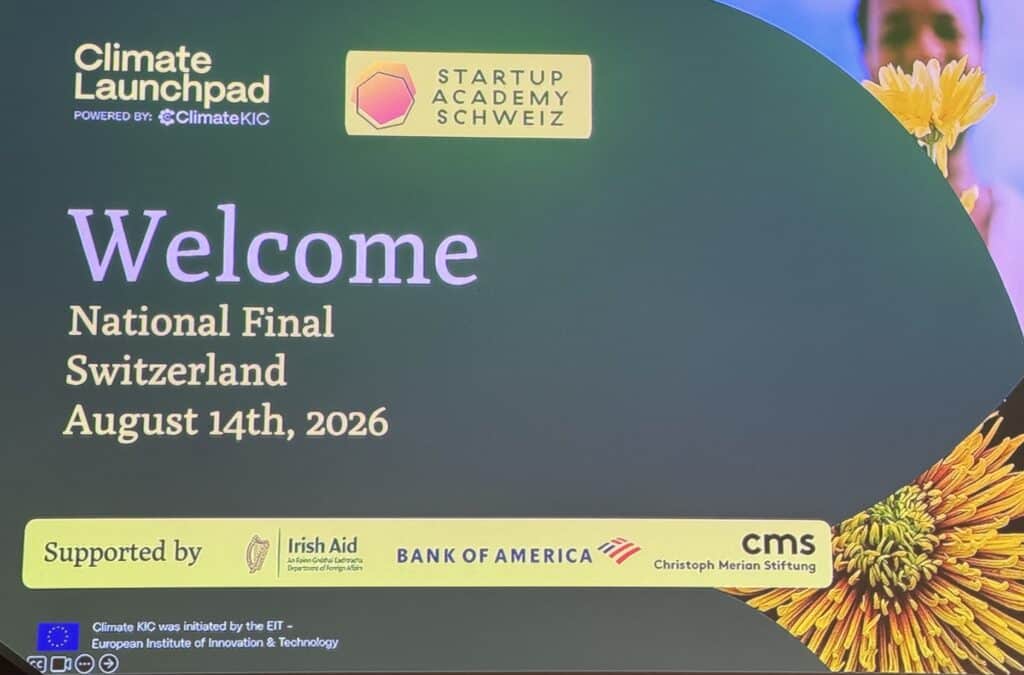
With temperatures reaching 37 degrees in the shade, ten Swiss startups competed at the Climate Launchpad Swiss National Finals 2026 in Basel for a spot in the global finals in Singapore, delivering more than just pitches: a lesson in how problems can be turned into business models.
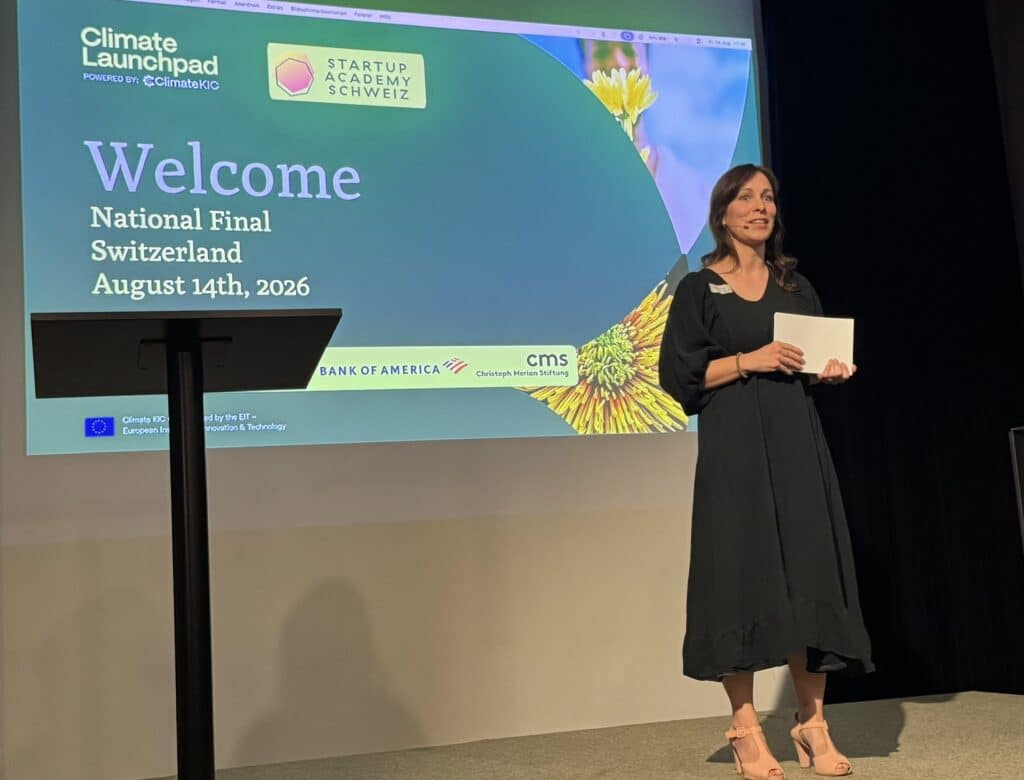
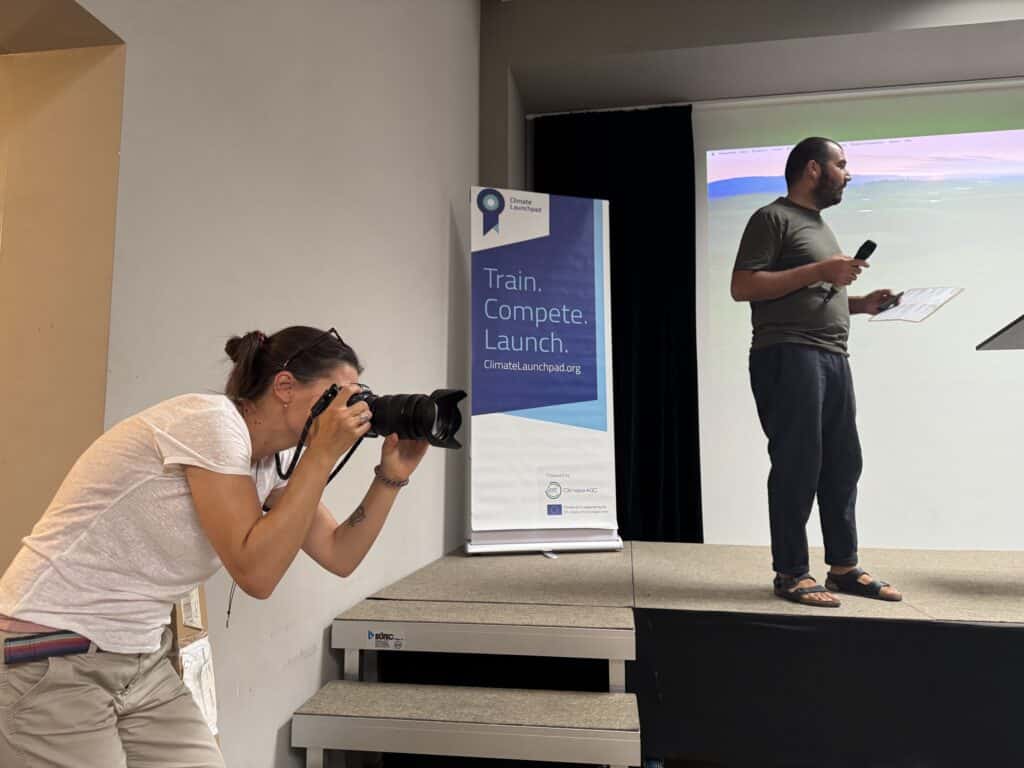
Host Catherine Riesen opened the evening with a statement that would serve as a recurring theme throughout the following hours: Major change begins with bold ideas —and there were plenty of those that evening. The Climate Launch Pad Swiss National Finals 2026—which has been running since 2014 and has been organized in Switzerland by the Startup Academy since 2015—is considered the world’s largest ideas competition for green business models. Ten teams had made it to the national finals in 2026.
Keynote speaker Elianne Hutet set the tone, speaking from her own entrepreneurial experience. Her core message: The pitch on stage is just the highlight reel. The real work consists of sleepless nights, rejected proposals, and the painful realization that your favorite idea might not be what the market wants. Those who fall in love with their solution rather than the underlying problem lose touch with customers’ actual needs. Using the example of two companies that both produce biodegradable packaging made from algae—the British Emergency pla and the Swiss Noriware –, she demonstrated how differently startup stories can unfold and how crucial it is to design a solution in such a way that it integrates into existing processes without requiring major changes. With regard to artificial intelligence, Hutet emphasized that the question is no longer whether something can be built, but whether it is worth building.
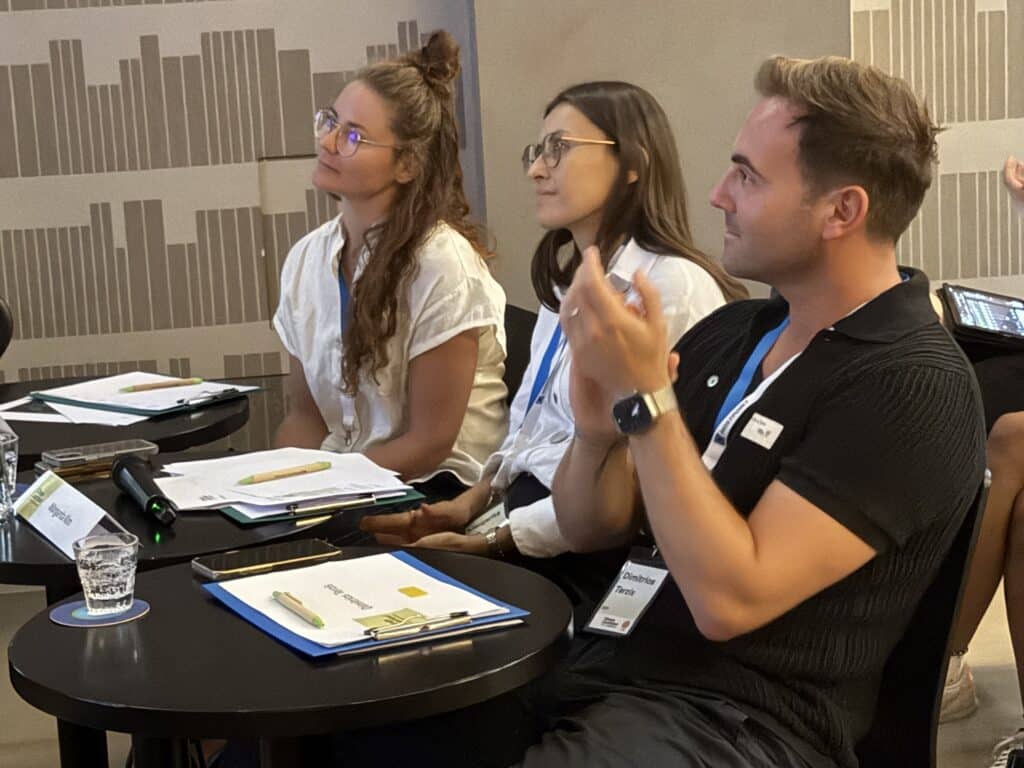
The three-member jury, consisting of Lara Sutter (University of Applied Sciences Northwestern Switzerland), Margarita Kim (Bank of America), and Dimitrios Terzis (Medusoil, himself a former Climate Launch Pad winner), evaluated the pitches based on market potential, job creation, climate impact, level of innovation, team strength, and pitch quality. Each team had five minutes on stage and three minutes for questions.







Ten Approaches to Ten Different Problems
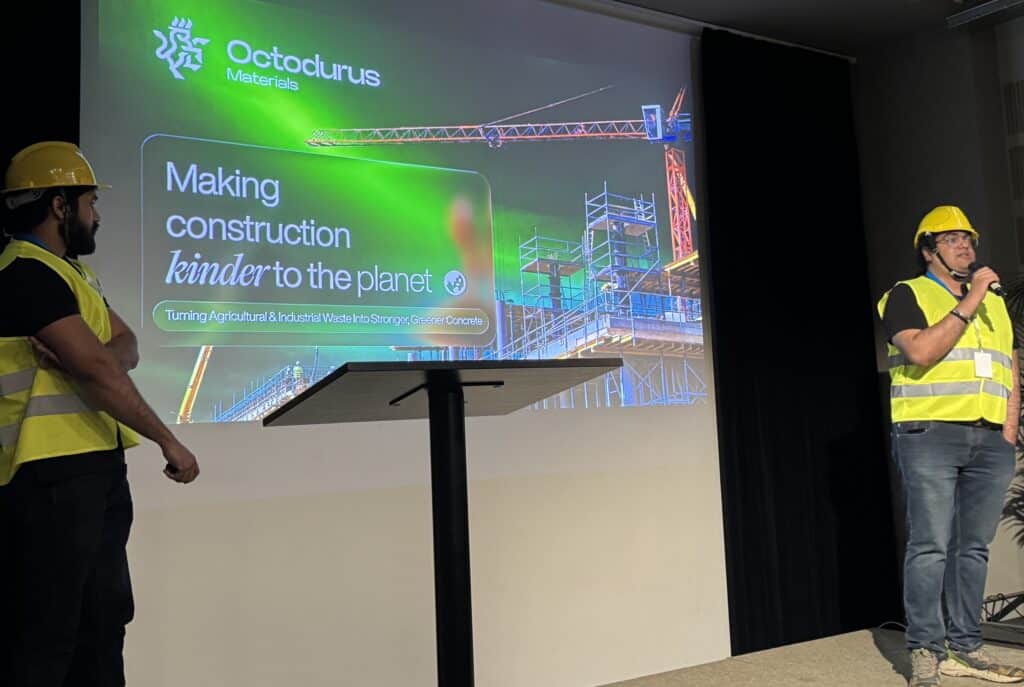
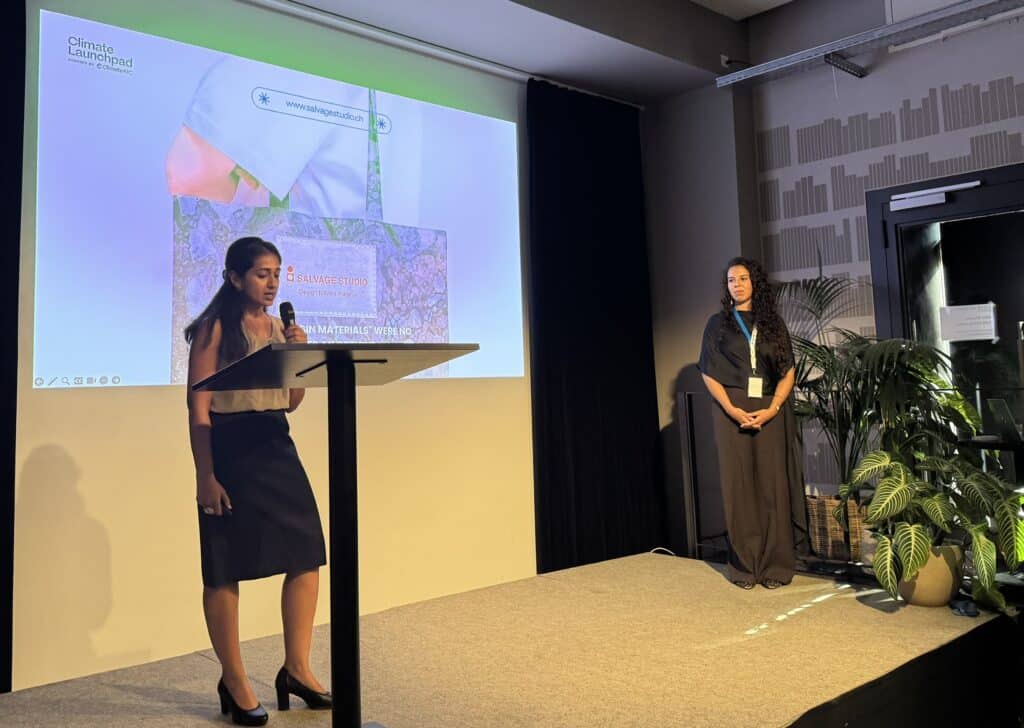
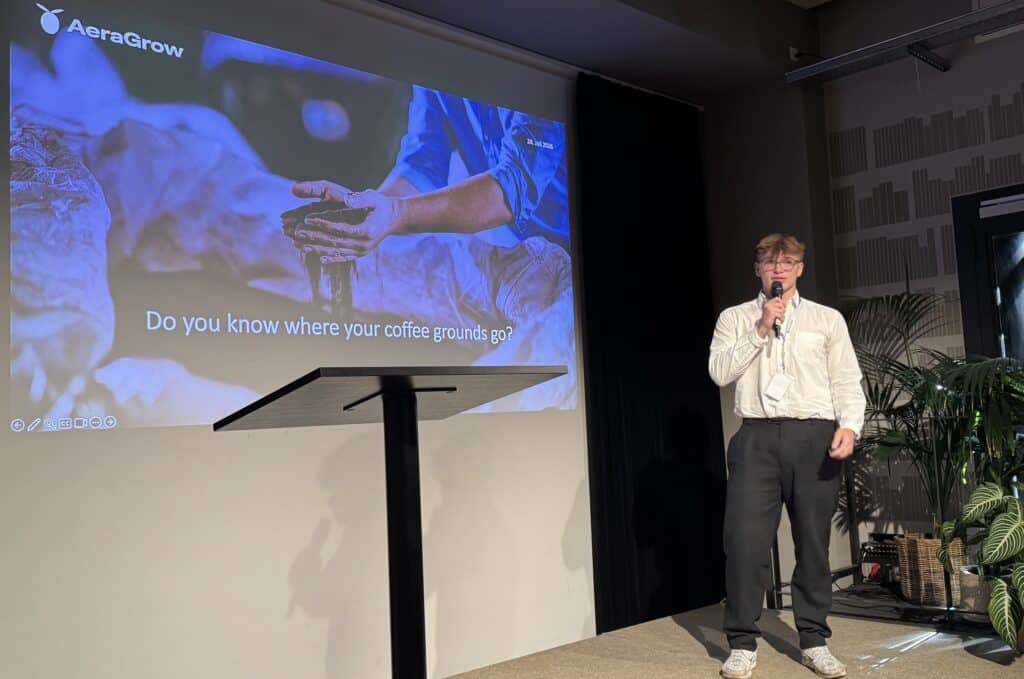
It all started with EcoForentis. The company helps back up sustainability claims on packaging with robust evidence—an issue of growing urgency in light of stricter EU regulations against misleading environmental claims. This was followed by Octodurus Materials with “Vertera,” a concrete alternative made from agricultural waste that has a negative carbon footprint and, according to the company, is significantly cheaper and produces fewer emissions than conventional cement. Salvage Studio In turn, it transforms exhibition materials from Basel museums—such as aluminum, wood, or textiles—into new, one-of-a-kind pieces, each accompanied by a certificate of transparency, while Area Grow systematically collects used coffee grounds from the food service industry and passes them on to recyclers as a documented raw material. The first session concluded with FLOCCUS, which aims to simultaneously produce green hydrogen and carbon-negative calcium carbonate using CO₂ capture technology, financed in part through the sale of CO₂ removal credits.
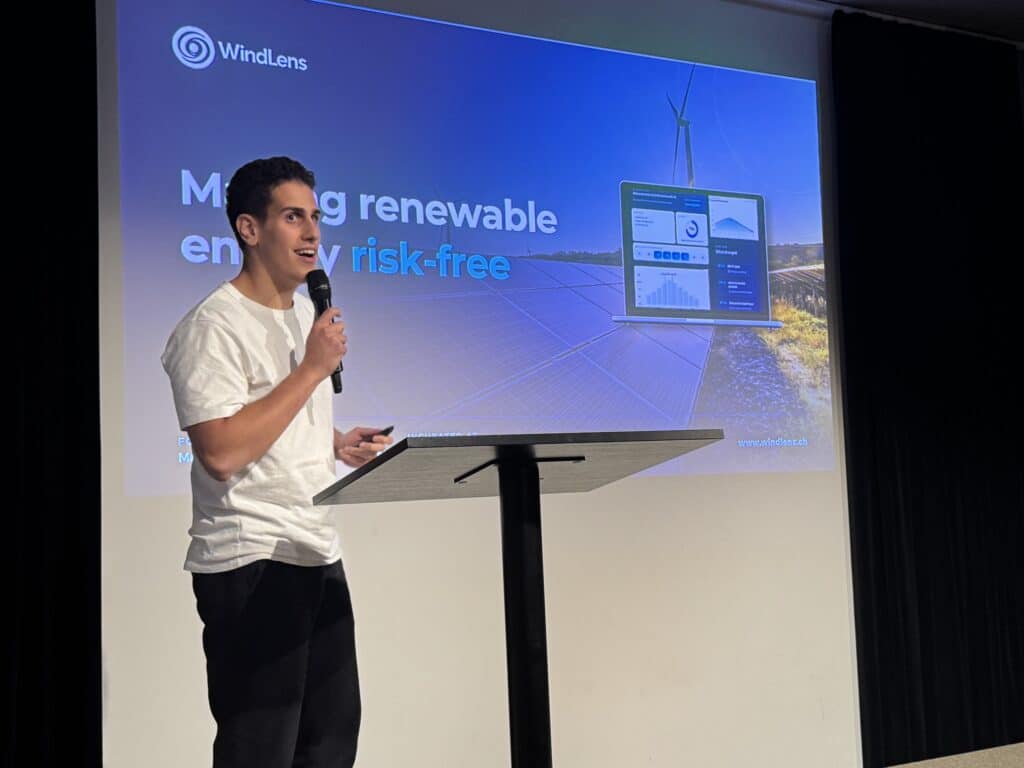
In the second round, UNAREV presented smart collection stations for cigarette butts that count each butt using an infrared sensor, record the data on a blockchain, and thus provide companies with auditable ESG reporting, including proof of recycling. ResolV presented an approach to recovering industrial solvents for Basel’s densely concentrated pharmaceutical and chemical industries: a model that saves companies both disposal and procurement costs. Klaro Solutions, LLC positioned itself as an independent software platform for corporate waste management that provides transparency regarding various waste disposal options, thereby enabling companies to achieve significant savings in some cases. The event concluded with WindLens, which uses machine learning based on research from MIT and EPFL to protect wind farm operators from costly forecasting errors in the electricity market. According to the founders, this problem had recently even contributed to the bankruptcy of a major operator.
Three winners, one family photo
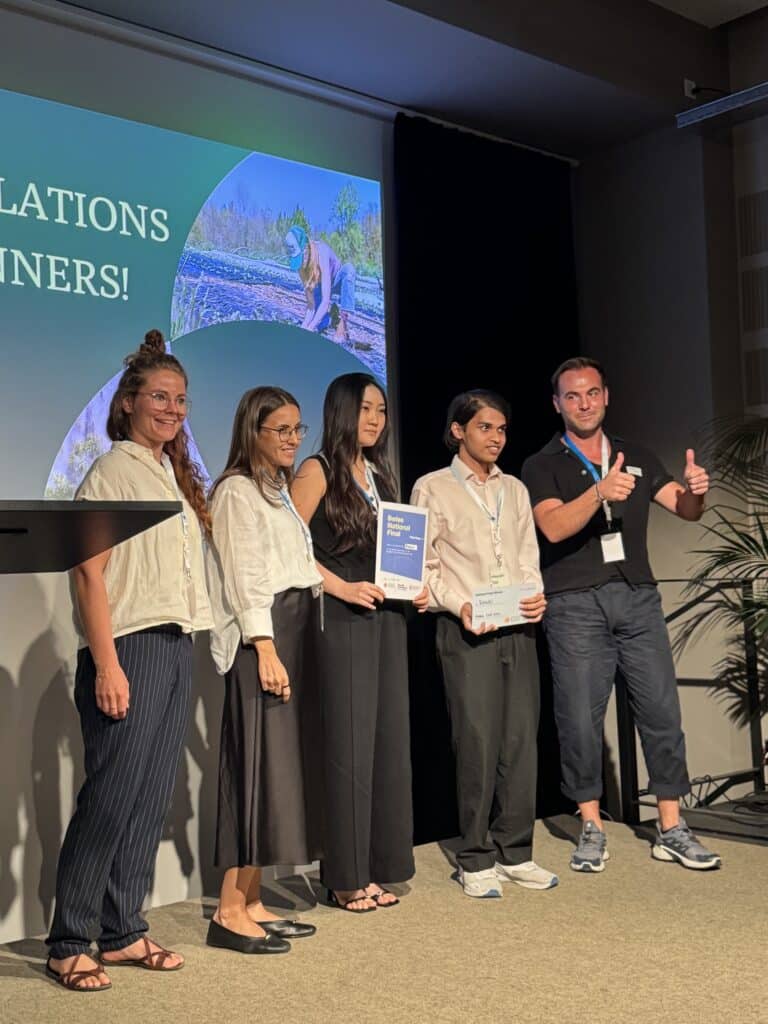
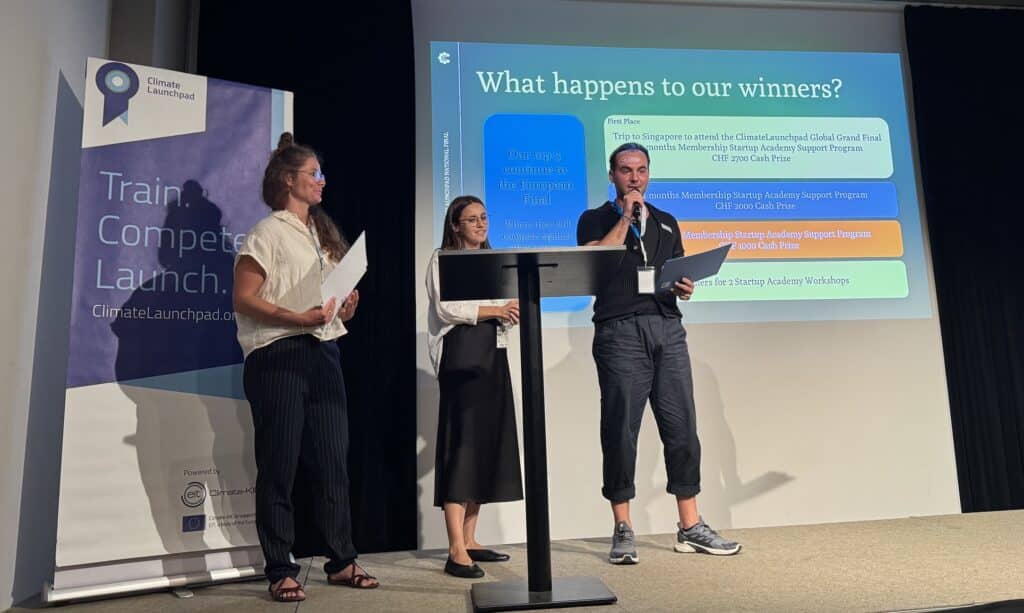
After an intensive Q&A session on scalability, margins, data quality, and competitive advantages, the jury withdrew to deliberate. In the end, it was clear: Third place went to ResolV for its approach to solvent recovery, along with a nine-month membership in the Startup Academy support program and 1,000 Swiss francs in prize money. Second place went to FLOCCUS for its integrated CO2 capture technology, which came with twelve months of support and 2,000 Swiss francs. First place—and with it, a ticket to the global finals in Singapore—went to WindLens, which impressed the jury with a particularly clear pitch, along with 18 months of support and 2,700 Swiss francs in prize money.
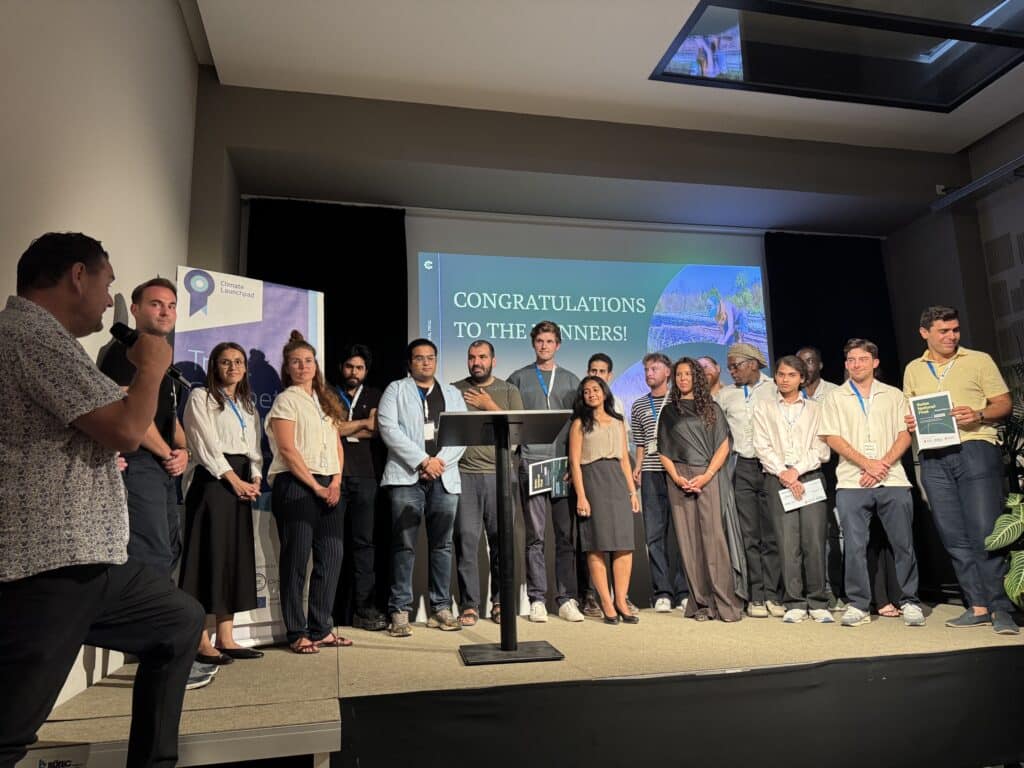
To wrap things up, Marcus Fischer, CEO of the Startup Academy, invited all ten teams and the jury onto the stage for a commemorative photo. As the host had already hinted at the beginning of the evening, the competition itself is just the highlight reel. The real work is only just beginning for all ten teams.
Binci Heeb
See also: Basel Wants More Than Just Pharmaceuticals
Search:
Sponsors: