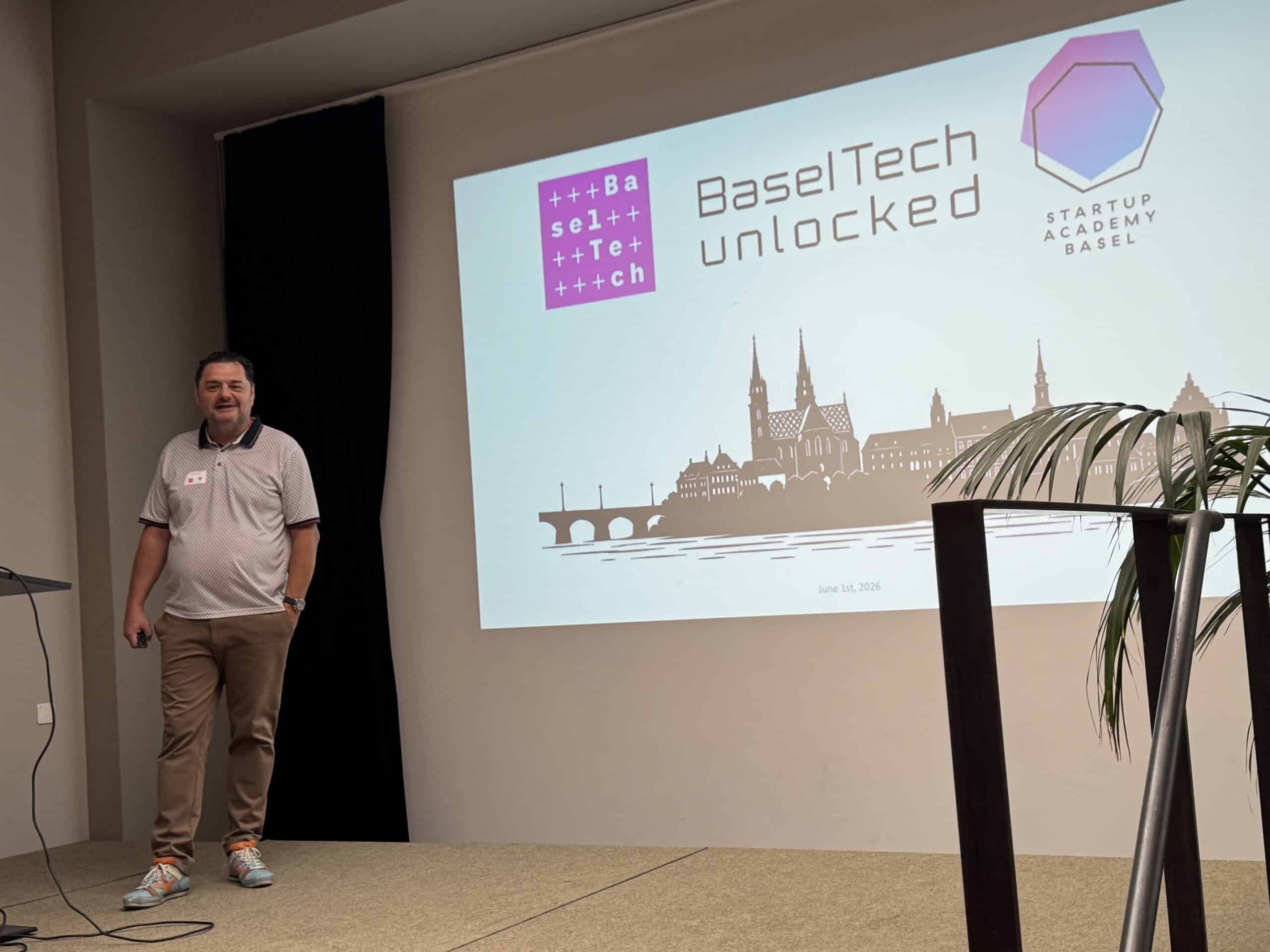
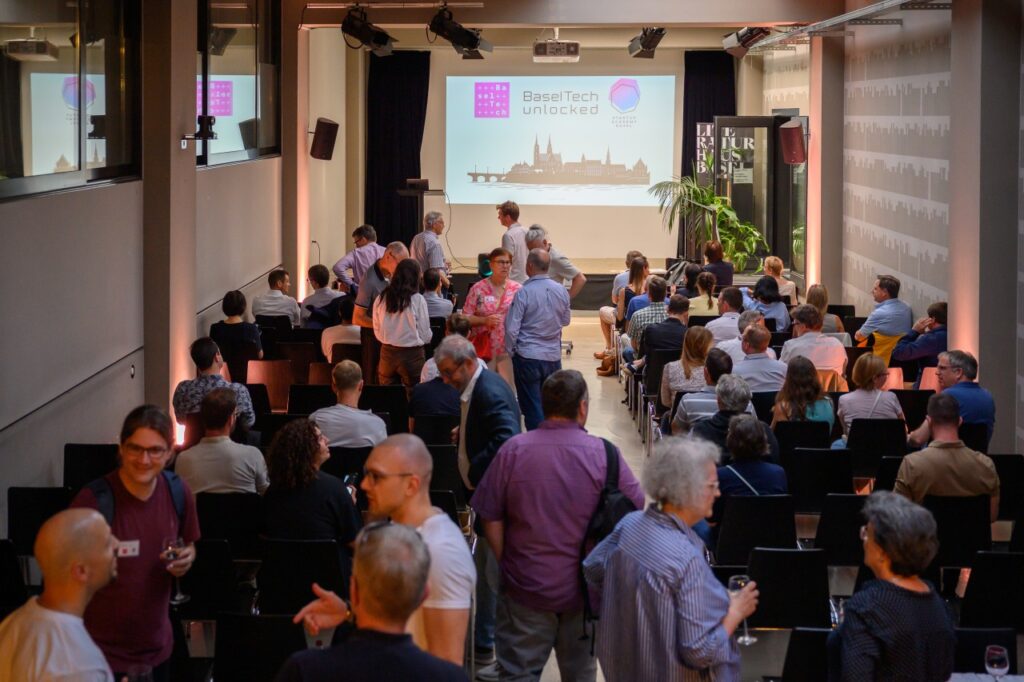
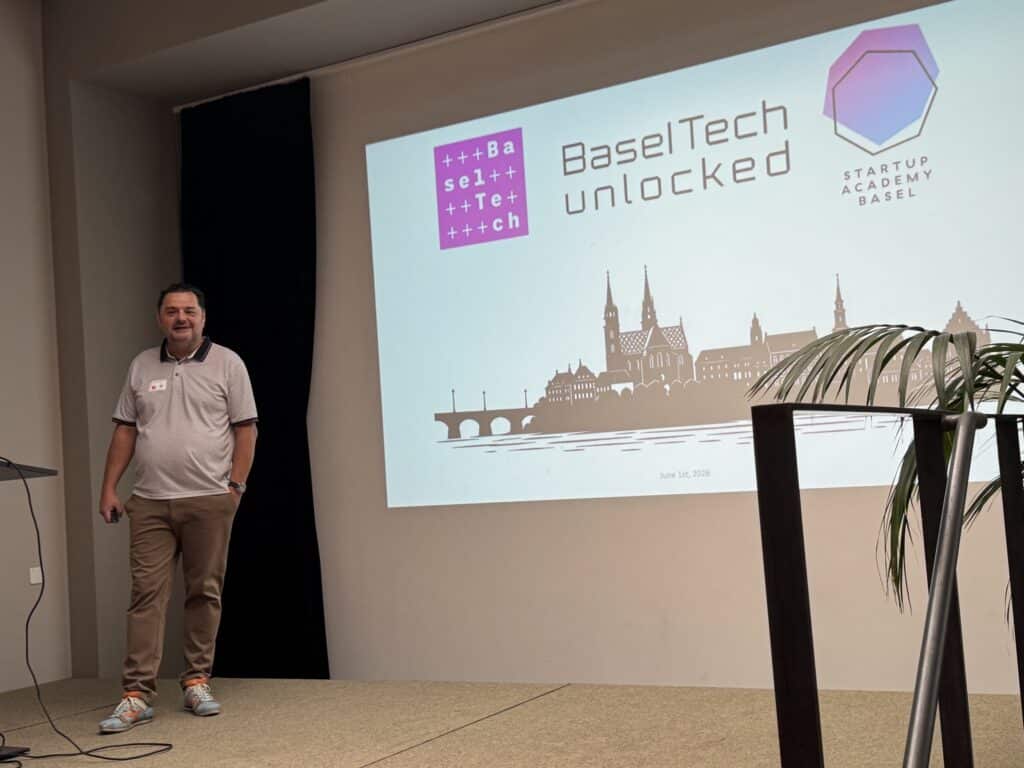
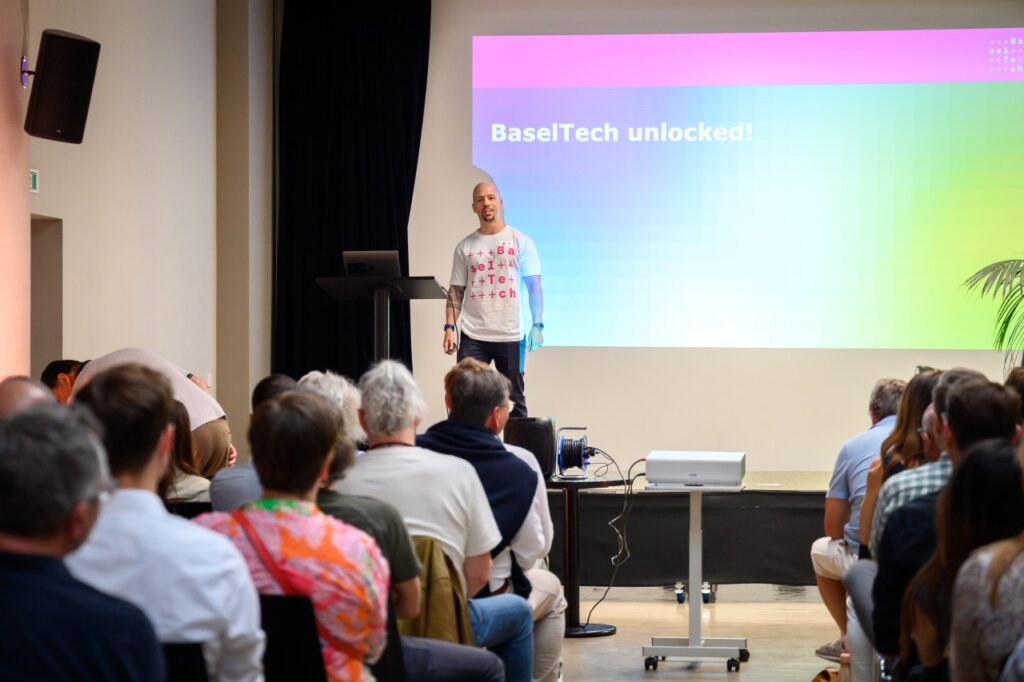
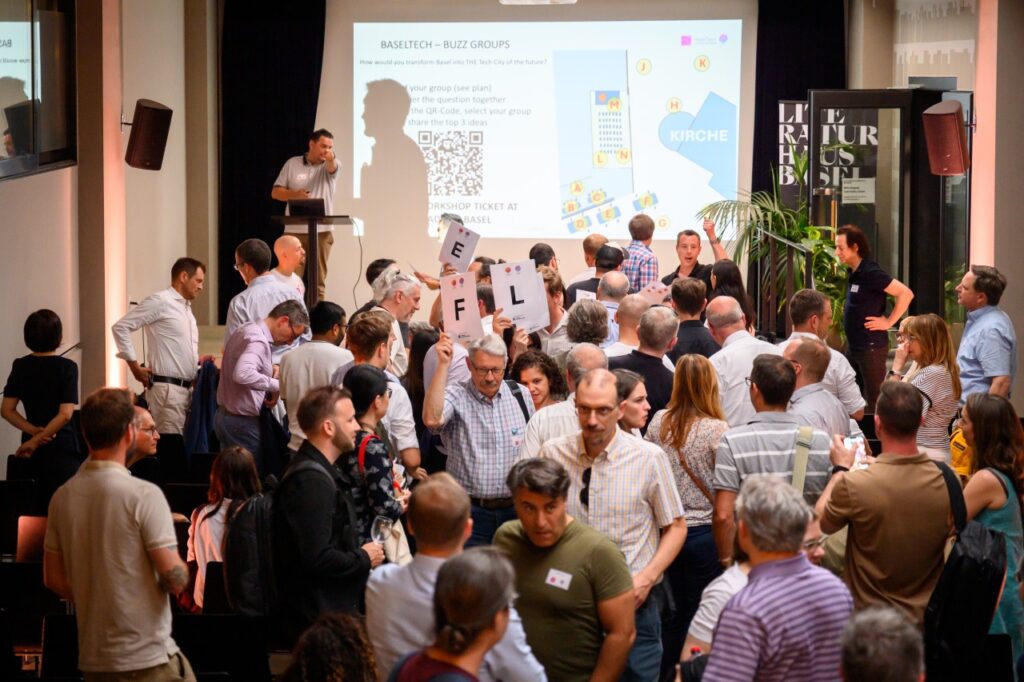
At the “Basel Tech Unlocked” event, entrepreneurs, university representatives and AI experts discussed how the region could establish itself as a European tech city. The focus was on visibility, talent development, artificial intelligence and the question of how innovation and regulation must interact in the future.
Basel is internationally regarded as a life sciences stronghold. However, according to the speakers, this is also a challenge: the city is often underestimated in terms of technology. The aim of the “Basel Tech” initiative is therefore to make the existing strengths more visible and to establish a tech hub with international appeal by 2032.
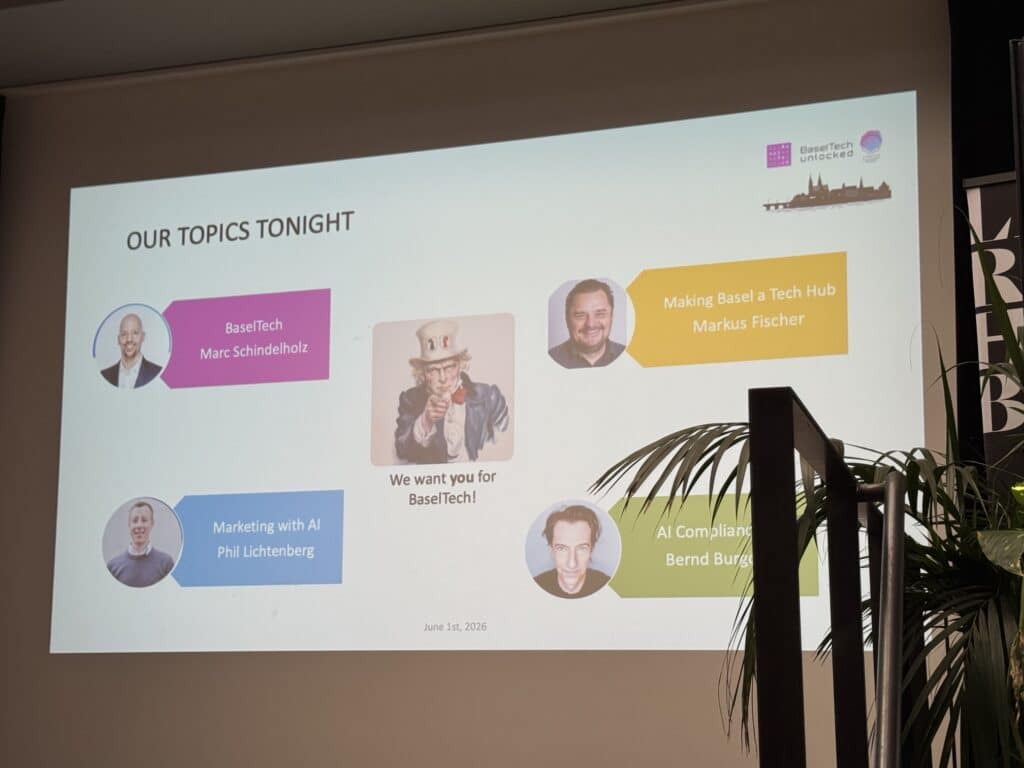
Marc Schindelholz, board member of Basel-Tech and Head of Innovation Promotion Basel-Stadt, emphasized that Basel already has numerous elements of a functioning tech ecosystem. These include universities, start-ups, innovation promotion, accelerators and the region’s strong industrial base. The new aim is to network these players more closely and make them more visible internationally.
Particular emphasis was placed on the community platform, which aims to facilitate the exchange between startups, companies and innovation organizations. At the same time, Basel Tech aims to support young companies at an early stage with events, mentoring programs and a digital accelerator.
Between Barcelona and Stockholm
In another presentation by Markus Fischer, Managing Director of Startup Academy Basel, which is also supported by Pax as an innovation partner, the city on the Rhine was compared with international “lifestyle tech cities” such as Amsterdam, Berlin, Stockholm and Tel Aviv. According to the speakers, the region is now roughly on a par with European mid-range tech locations such as Rotterdam, Gothenburg or Manchester.
However, the conditions are good: political stability, high quality of life, strong universities, international corporations and the unique location in the border triangle. Basel’s combination of culture, nature, research and infrastructure in particular could play to its strengths in the future.
At the same time, it became clear that the city still has some catching up to do when it comes to international branding. Visibility, international tech success stories and access to venture capital are decisive factors in attracting global talent and investment. The promotion of young talent also plays a central role. The ICT scouts, who introduce school pupils to robotics and IT topics at an early age, were cited as a positive example.
AI is radically changing marketing and business
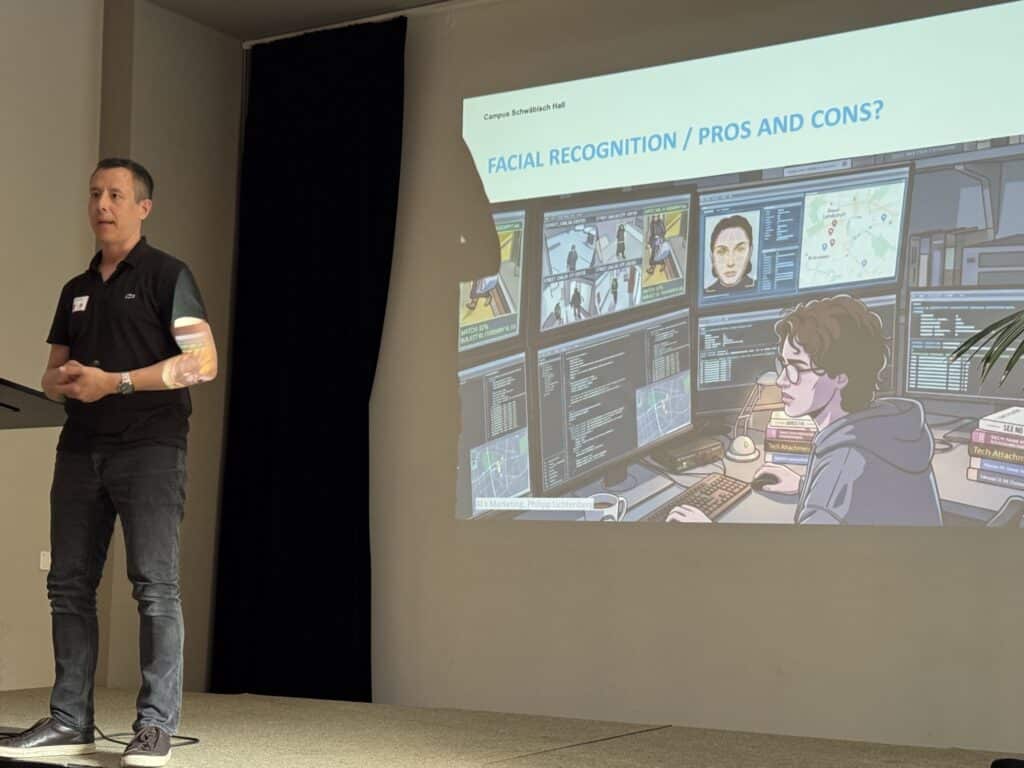
Phil Lichtenberg’s presentation was much more provocative. The marketing and AI expert painted a picture of an economy that is being fundamentally changed by artificial intelligence. He spoke about AI-generated content, deepfakes, virtual influencers, automated video creation and the loss of importance of traditional websites due to Google’s AI overviews.
According to Lichtenberg, digital business models are increasingly shifting away from traditional platforms towards social media, video formats and AI-supported content. Companies would have to learn how to prepare content in such a way that it would be recognized by AI systems. Videos in particular will be crucial for reach and visibility in the future.
At the same time, he warned of social risks. AI companions could emotionally manipulate young people in particular. Deepfake technologies now make it extremely easy to copy voices and faces. Biometric data such as iris scans are also being increasingly commercialized.
Europe, and Switzerland in particular, must therefore ask themselves what role they want to play in the global AI competition in the future. While China and the USA are investing billions in data centers and AI models, Europe is in danger of falling behind technologically. At the same time, Lichtenberg pointed to more efficient Chinese models such as DeepSeek, which operate with significantly less energy consumption.
Compliance is becoming a key factor
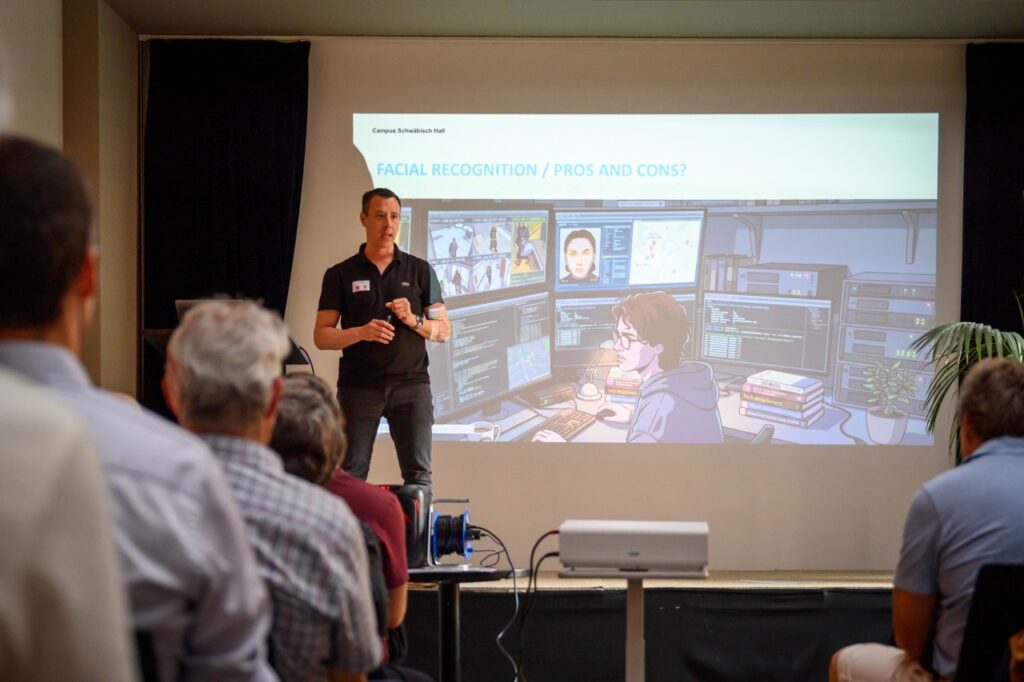
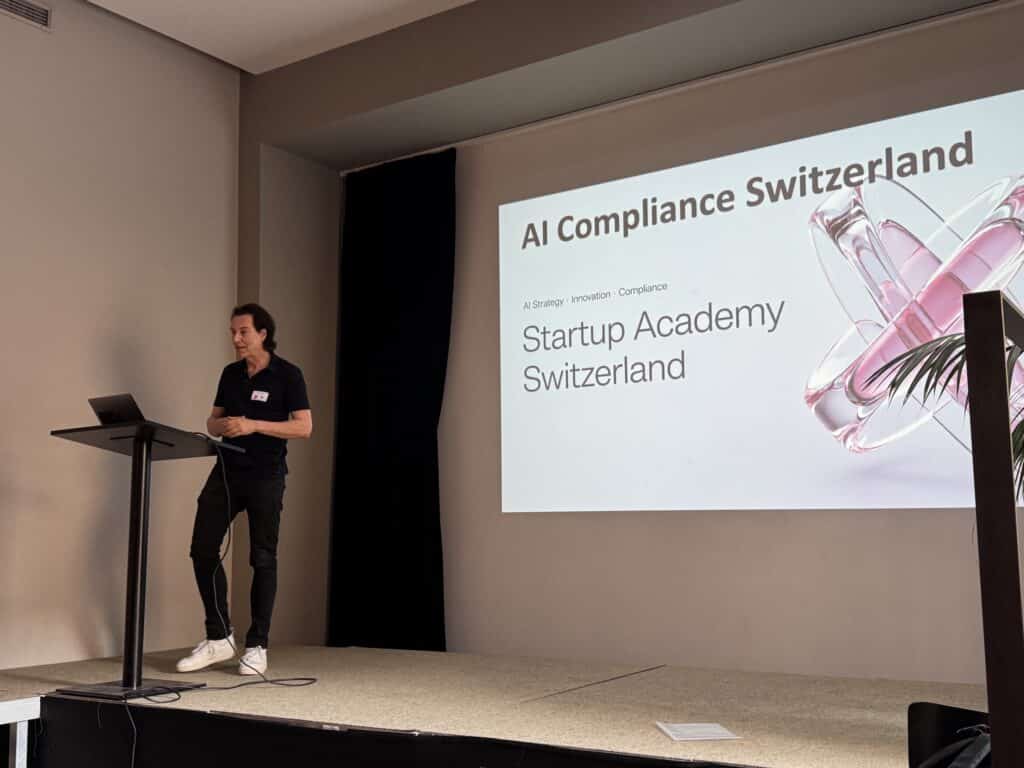
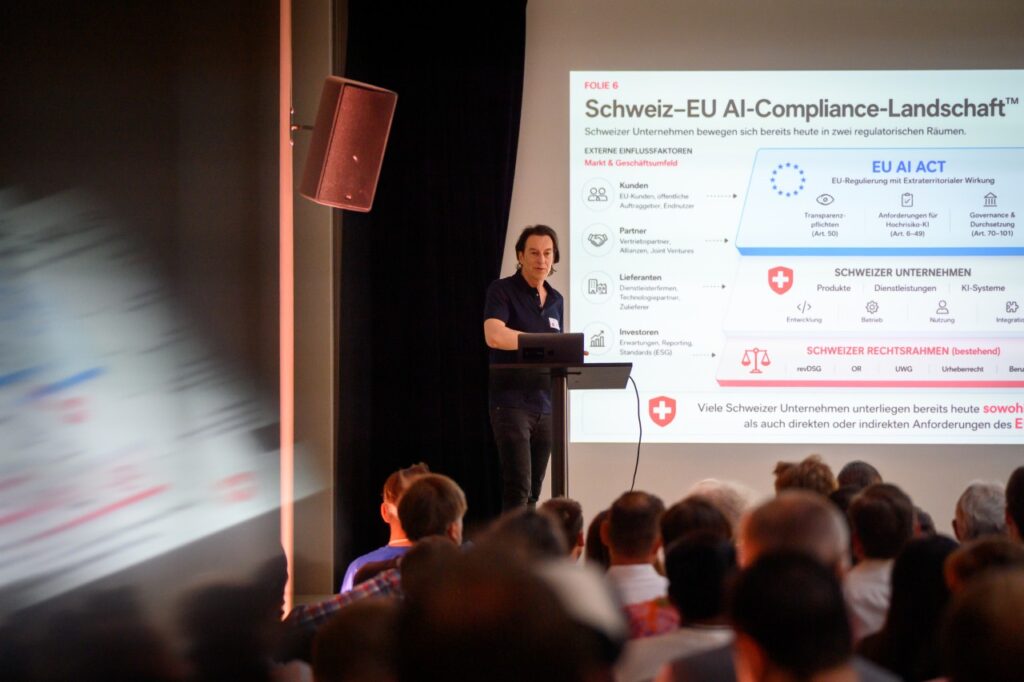
Finally, the focus shifted to AI compliance. Technology expert Bernd Burgdorf, who had returned to Basel from the USA, made it clear that although artificial intelligence enables enormous efficiency gains, it is also becoming highly complex from a regulatory perspective.
Data protection, liability and transparency are key issues, especially in Europe. Companies need to know exactly where their data is stored, which models are used and whether sensitive information may be used unintentionally to train external systems.
Burgdorf emphasized that many companies are already using AI systems without fully understanding their compliance risks. Cloud-based solutions from large providers are particularly problematic, as the responsibility often ultimately lies with the company itself.
As a solution, he advocated local or hybrid AI infrastructures, open source models and clear governance structures within companies. It is crucial to integrate artificial intelligence not only technologically, but also organizationally and legally.
Basel between new beginnings and reality
The event clearly showed that Basel wants to be much more than just a life sciences center in terms of technology. The region has strong universities, international companies, innovation promotion and a high quality of life. At the same time, there are issues surrounding talent development, international visibility, energy supply, AI expertise and regulation.
However, the discussions also made it clear that the development of a real tech hub is less a question of individual projects than the interaction of many players. Or as one speaker put it: “Opportunity belongs to the decisive.”
Binci Heeb
Read also: Courage for the future – the winners of the Swiss Sustainability Challenge 2025
Search:
Sponsors: