No sooner had the half-year results been published than unrest began to stir on the sales front: Some customer advisors are voicing dissatisfaction, and an article on Inside Paradeplatz is fueling the debate. Simon Weiner, Head of Sales Network & Market Development at Helvetia, answers questions and clarifies what’s behind the rumors and where the sales division is really headed.
Internal discussions, a few screenshots that found their way to the public, and an article that quickly turned the whole thing into a public uproar: The situation surrounding Helvetia’s sales organization has become confusing in recent weeks. Yet the heart of the matter is more down-to-earth than the outside perception might suggest: It involves an internal examination of the challenges facing the field sales force—the kind that occurs in any large sales organization.thebrokernews spoke with Simon Weiner: Where exactly is the problem in sales, what’s the truth behind the rumors circulating, and how is Helvetia positioning itself in the market?
Mr. Weiner, first of all, let me congratulate you on the figures released on Thursday. What do the half-year results tell us about the state of sales?
The results we were able to present exceeded what most analysts had expected from the new group. From a sales perspective, this shows that the decisions regarding the product launch were the right ones and that the launch went exactly as we had hoped: There were no system failures, and after the transition took place in a single night, all employees were fully operational the very next day. It really was textbook-perfect and fills me with great pride. Two cultures have come together, and “similar” does not mean “the same.” But when it came to our shared goal, that didn’t matter—everyone pulled together and achieved this joint masterpiece as the new Helvetia.
In recent weeks, there has been talk—both internally and in some media outlets—of dissatisfaction among the sales force. Is there any truth to these reports?
As of January 1, we merged the teams, thoroughly mixing former Helvetia and former Baloise employees. However, with the launch of sales on July 1, life—especially for former Baloise employees—was placed on a completely new footing: new systems, a new contract, discontinued products, and the management of the old Baloise portfolio within the new Helvetia environment. As a result, we’re sensing a bit more dissatisfaction among former Baloise employees—though not across the board; there are also many positive moments. We prepared our employees through in-person training sessions and numerous digital information channels. Nevertheless, it’s like giving birth: no matter how well you prepare, there’s always a touch of surprise in the end. Naturally, this leads to some turbulence at first.
But let me point out that the dissatisfaction mentioned is only evident in isolated cases: The projected turnover rate for the field sales force is 16 percent, which is exactly in line with the industry average for field sales. Even when we look at the figures internally, we remain within the multi-year average, even after the merger.
How did the discussion that led to the screenshots circulating even start, and what reaction did it provoke among management?
I regularly host a 90-minute digital session with all employees: 45 minutes of content, 45 minutes of questions. These can be asked anonymously via Slido on purpose, because otherwise I wouldn’t find out what’s really on people’s minds. I’m sticking to this approach, even at the risk that someone might take a photo. I’ve had many angry field staff members on the phone who were upset about the disclosure of internal information. I’d rather have this self-regulation than change my cultural approach. Openness is especially important during this period of uncertainty.
Where do you currently see the biggest challenges in sales, and specifically on the sales floor?
With the launch of sales, we’ve revamped the entire value chain, including claims and the service center. We’re now in the process of normalizing and optimizing operations across all areas. For sales, however, the priority now—following this hectic phase—is to return to normal operations and conduct consultations, in other words, to refocus on operational performance. Of course, the hailstorm two weeks ago—which caused 120 to 140 million Swiss francs in damages for Helvetia alone—complicated matters further. This places an additional strain on the organization, and as a result, field staff are having their capacity absorbed by issues that do not fall under core consulting services. Nevertheless—and this is the positive aspect—we have demonstrated, particularly during this most severe hailstorm in the company’s history, that we have our processes under control and are there for our customers when it matters most.
Customer service representatives are caught between customer expectations, digital transformation, and internal guidelines. Where exactly does the pressure come from?
The technology is meant to provide support; building trust remains the responsibility of the sales force. Today, we use AI in areas such as lead management and for internal training—for example, in sales pitch simulations with personalized feedback. At the same time, customer expectations have changed dramatically: A general agent told me about a prospective client who had asked ChatGPT about the best disability insurance for students and, upon receiving “Helvetia” as the answer, wanted to take out a policy right away. Customers today come to us with a great deal of knowledge. Ultimately, the customer must be able to choose which channel to use for what purpose. Let’s draw an analogy with the medical field. The customer advisor is like the family doctor; for specialized assessments, there are specialists in our 15 advisory centers; and for a common cold, there will be a chat or voice bot serving as a pharmacy in the future.
Is the job description for field sales representatives at Helvetia currently undergoing a fundamental change, and if so, in what direction?
I don’t think so. There are specializations with standardized career paths. What needs to change is the mindset: You have to accept that your gut isn’t always your best guide. In an A/B test of our tranche products, the hit rate of the advisor’s “gut list” was 50 percent lower than that of a list generated centrally and automatically. For those who are open to support and embrace change, nothing about their job description will change. We provide hybrid and individualized support to older employees through their sales managers. This requires tact and common sense, because these employees are of tremendous value to our company due to their long-standing customer relationships. To draw a parallel with medicine here as well, Paracelsus himself once said, “The dose makes the poison.”
How does Helvetia handle internal feedback and criticism from its own ranks? What triggered the current situation?
He isn’t changing course. I take criticism seriously; otherwise, we wouldn’t be holding these open forums at all. I answer all questions, and anything we can’t clarify right away, we address in writing afterward. Anyone who asks a question has a right to an answer. The fact that at some point we have to shake people out of their “merger romance” is part of the process, because now, in the new Helvetia and after this long phase of change, we must refocus our sales network on our primary mission: serving our nearly 2 million customers, as well as driving sales performance. If such external disruptions are the price we pay for staying the course, then so be it.
What specific steps is Helvetia taking to retain sales staff and inspire them to be committed to the company?
From the very beginning, the sales team was a frontrunner in communication and transparency during the merger: We published the blueprints early on and defined the leadership roles, because uncertainty is toxic to performance. Added to that was the 80-percent guarantee, which stabilized us amid staff turnover and took the pressure off the sales launch. We’ve also invested in team events and training. Now that the intense focus on merging the two companies is behind us, we’re showing people how they can shape their own success, and we’re supporting that with assistance programs, competitions, and—as always—transparent communication, meaning an ongoing dialogue.
How does Helvetia’s sales model today differ from that of its major competitors?
We have the most balanced mix of performance orientation and social responsibility. I’m familiar with nearly all field sales contracts on the market, and I’m the architect of the one used by a major competitor. As a result, I’m very well-positioned to form an objective view of the situation. What sets Helvetia apart is that it offers a very attractive upside opportunity—that is, the chance to significantly increase your salary—while the downside risk remains highly predictable thanks to the so-called salary principle: You receive a salary that you don’t have to repay. Behind the scenes, there’s a shadow accounting system through which you can earn attractive variable compensation. That’s why even career changers—such as a 35-year-old father—can achieve a predictable income. Add to that the brand’s appeal. We have no trouble finding good people.
What role do compensation models and performance targets play in the current debate about dissatisfaction?
As already explained, this primarily affects former Baloise employees. Baloise itself was not satisfied with its previous field sales contract and had long been trying to bring it in line with market standards. For us, the switch to the Helvetia contract was therefore clear from the start and strikes a good balance between economic and social responsibility. Understandably, this is causing some initial friction among those affected, but that will subside. If they had an agreement with AXA, Allianz, or Zurich, they would also face a transition and would additionally have to adapt to a contract model that is significantly more activity-based. Former Baloise employees will be able to earn more under the new Helvetia agreement—provided they are willing to embrace the change—without having to start from scratch.
They are moving from the new building designed by Herzog & de Meuron and the renovated historic building on St. Alban-Anlage—located very close to the train station—to the former Baloise offices. When will the move take place, and what will happen to the former Helvetia properties?
We are not selling the campus; instead, we will continue to operate it and lease out spaces as they become available. The move will begin next year and will take place in phases until around January 2029. We have already found our first tenant for the newly built North Tower—Sandoz—and are in concrete talks regarding the old VB1 Tower. The reason: After the merger, we didn’t have enough space on the campus. Baloise Park is better laid out logistically, so it’s the right decision from an economic standpoint—even though my heart naturally aches for the beautiful Helvetia Campus.
Is there even enough space at the new location, and how many people can it accommodate?
Yes, there is enough space for the Group and for all headquarters employees in Switzerland. The Switzerland market unit has about 5,000 employees, of whom slightly more than 2,000 work in the agencies. About 3,000 will be based in Basel and St. Gallen. We’re expecting a workspace ratio of 0.6, since working from home remains an option, and that works well for us.
The Helvetia Campus also features a wonderful auditorium. Will there be one at the new location as well, or will you rent an auditorium in the future?
Baloise Park Ost also offers spacious venues for events. For example, we recently held our nationwide general agents’ conference on these premises. The auditorium on campus, however, is truly one of a kind. Since we retain ownership of the building, we will certainly continue to maintain a balanced ratio between external and internal use.
Digitalization and AI are noticeably changing the way we work. Where do you see opportunities and risks here, including for traditional sales?
The opportunity lies in increasing the effectiveness and efficiency of our sales force. With the help of AI, we ensure that we work faster, capitalize on more promising sales opportunities, and make fewer oversights—for example, when it comes to documentation in a regulatory environment. The risk: Customers are much better informed, and relying solely on trust won’t get you very far anymore. You have to stay on top of the subject matter and set yourself apart—through emotional connection and expertise—from what AI presents in a purely rational way. Anyone who is emotionally insensitive and focuses purely on selling products will struggle. No AI can replace someone who provides good advice and accompanies customers throughout their lives. As for customer loyalty, however, we have not yet seen the use of AI having a negative impact. Ultimately, my assessment is that when trust exists and people feel they’re in the right hands, long-standing trust trumps situational rationality.
When you look back on the current situation a year from now, what would need to have changed by then for you to be satisfied?
I’ll be proud when, in a year’s time, Helvetia no longer feels like a newly merged company. Right from the start of sales, the organization stood together and pulled in the same direction, even though many would have considered this impossible on this scale and with this result. We’re on the right track. We’re unique in our size and our values.
Binci Heeb asked the questions.
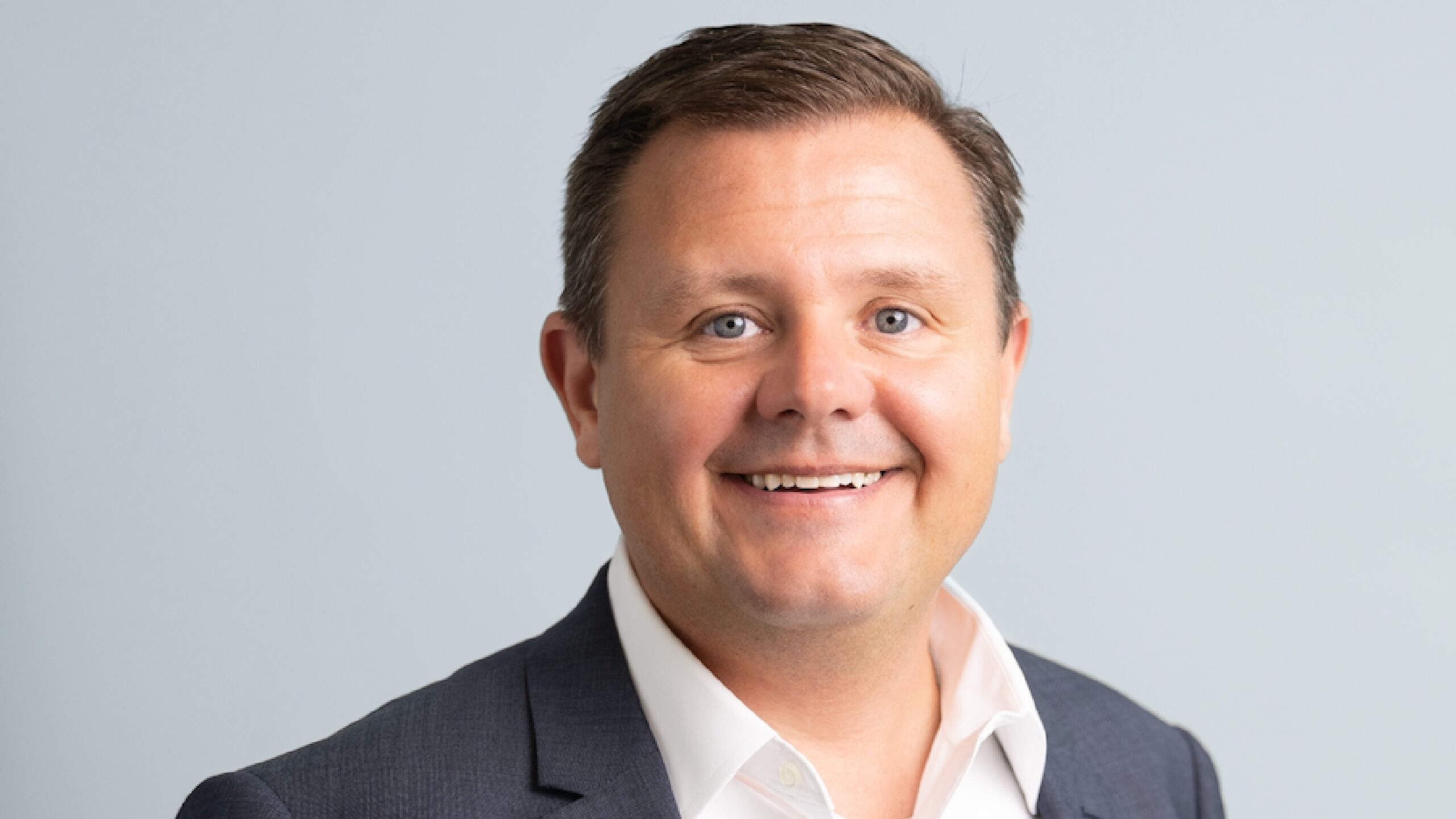
Simon Weiner (1979) is an insurance executive with over 25 years of experience across the entire value chain, specializing in sales, strategy, and transformation. Since 2025, he has headed the Swiss Sales Network at Helvetia in Basel, where he is responsible for the company’s field sales force of over 1,200 FTEs, the online and outbound business, and the Pension & Home Ownership Competence Center. Previously, from 2019 to 2024, as Head of the Central Region Field Sales Team, he led Helvetia’s strongest sales region and was involved in the 2025 Sales Strategy, the 2025+ Strategy, and the integration of Money Park. From 2017 to 2019, he served as CEO of Orion Legal Protection Insurance, which he developed—with a staff of 130—into a multi-award-winning, progressive employer. He began his career at Zurich, where, between 2009 and 2017, he held positions including Senior Project Manager, Head of Agent Operations, Head of Sales Management with 80 employees, and, most recently, Head of Strategy & Business Transformation for Commercial Customers. Prior to that, from 1999 to 2009, he gained experience in IT, project management, and software development, including at Zurich, at the European Center of Excellence in Barcelona, and at Hapimag. After completing a business apprenticeship, he earned a degree in Business Administration (FH) and completed an International Executive MBA at the University of St. Gallen (HSG) in 2023, supplemented by an INSEAD program in sales management (2024). He describes himself as analytical, a strong communicator, values-driven, and highly effective in execution; he is married and has four children.
See also: Helvetia Baloise: Strong Results to Start the Year
Search:
Sponsors: