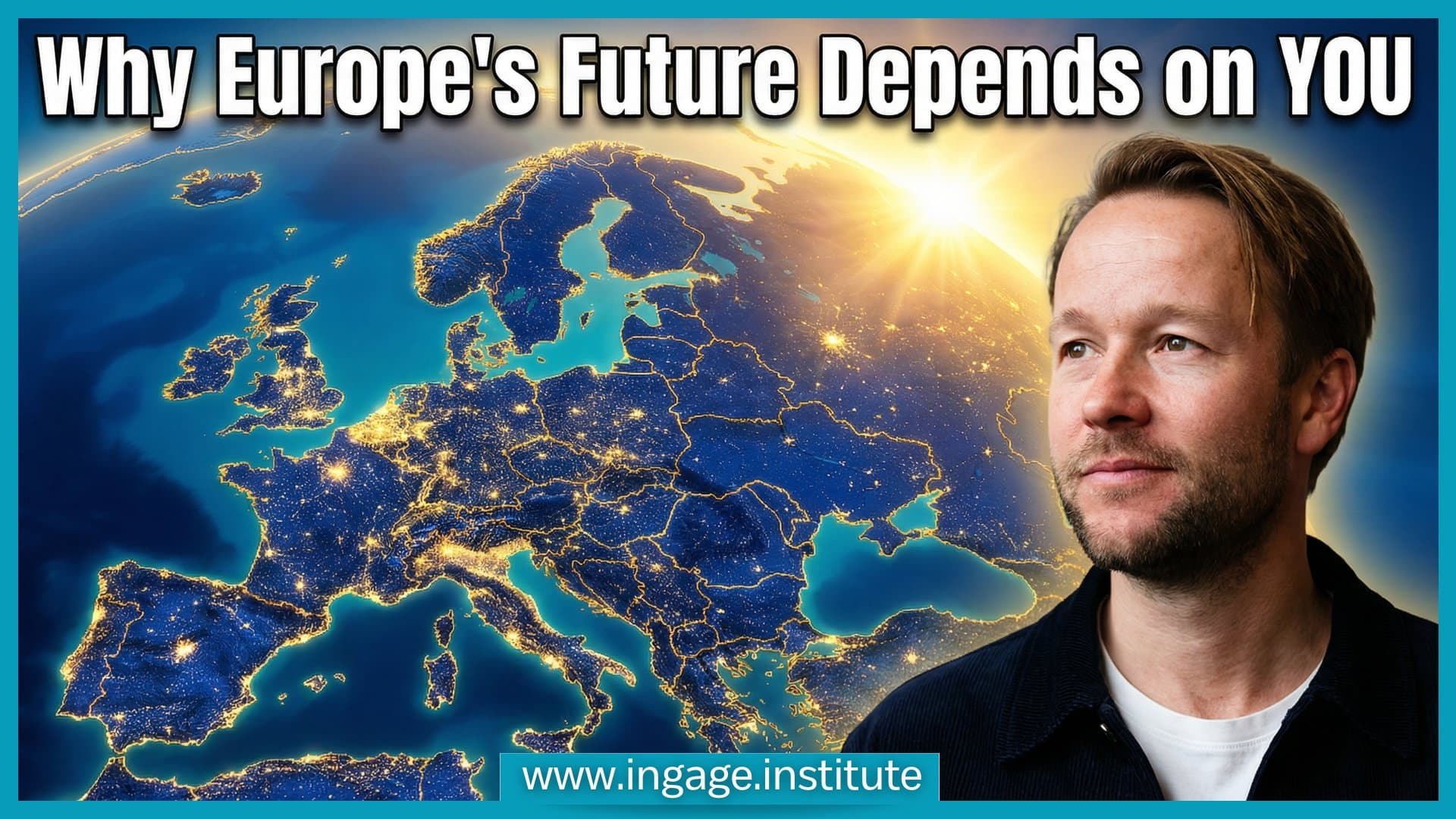
Dutch MEP Reinier van Lanschot calls for more speed, more democracy and more independence for Europe. In an interview with Philippe Séjalon from INGAGE, it becomes clear that the time for hesitant integration is over, as geopolitical pressure is forcing the EU to act.
Van Lanschot argues soberly: European defense is not a vision, but a necessity. The war in Ukraine and the growing uncertainty about the role of the USA have created a new security environment. Europe must be able to protect itself with its own satellites, intelligence services and military capabilities.
He considers the debate about whether to call it a “European army” or something else to be of secondary importance. The decisive factor is operational autonomy. He sees the growing support for this – both politically and among the population – as a turning point.
Democracy under digital pressure
At the same time, van Lanschot sees Europe’s democracies under massive pressure. Disinformation and foreign influence have long since reached a new level. Millions of coordinated posts on social networks are no longer a marginal phenomenon, but part of geopolitical strategies.
His antidote is remarkable: less technology, more society. An active citizenry is the strongest defense. Those who interfere, disagree and get politically involved stabilize democracy more effectively than any regulation alone.
Media as strategic infrastructure
Against this backdrop, van Lanschot brings up an idea that is also relevant for Switzerland: a European public broadcaster. The aim would not be propaganda, but a common, credible information base that transcends national perspectives.
Quality journalism can play a stabilizing role, especially in fragmented digital public spheres. For media companies, including in Switzerland, this is a strategic question: how can trust be maintained in an algorithmically controlled world of information?
Data protection remains European DNA
When it comes to the tension between security and privacy, van Lanschot draws a clear line. Europe should neither follow the data-driven US model nor the control-oriented Chinese approach. Data protection is a locational advantage and a democratic principle.
He rejects measures such as blanket surveillance of private communications. Interventions are only acceptable on a selective basis, clearly limited by law and subject to judicial control. Security should not lead to a systemic erosion of fundamental rights.
The structural problem of the EU
His harshest point of criticism concerns the EU’s decision-making mechanism. The right of veto of individual states blocks central progress from security policy to climate protection. In a world of growing crises, this structure is no longer sustainable.
For a country with close economic ties like Switzerland, this is more than just an internal EU debate. Europe’s ability to act directly determines stability, regulation and market conditions throughout the continent.
More integration, more legitimacy
Van Lanschot thinks further: more European integration must go hand in hand with more democratic legitimacy. The EU is democratic, but not democratic enough for the scope of its decisions.
His vision of a more integrated Union is aimed at precisely this point: being able to make decisions more quickly and having broader legitimacy. For export-oriented economies such as Switzerland, this indirectly raises the question of how close they want to remain to a deepening Europe.
Security, climate and prosperity are linked
His link between security, climate and social stability is particularly relevant for economic policy debates. Defense spending is not an alternative to investments in education or climate protection, but a prerequisite for these to remain possible at all.
His proposal: joint European financing via capital markets instead of national austerity programs. There is a clear logic behind this, as stability is the basis for sustainable growth.
Europe’s next step
Van Lanschot’s short-term demand is concrete: the abolition of the veto. His long-term goal is more ambitious: a more united, more capable Europe.
For Switzerland, as for the insurance industry, this development means one thing above all: the strategic importance of the EU will continue to grow. Those who understand European integration also understand the future of their own economic and political scope for action.
Binci Heeb
Read and listen to: Europe’s wake-up call: General Trinquand on risks, defense and values
Search:
Sponsors: