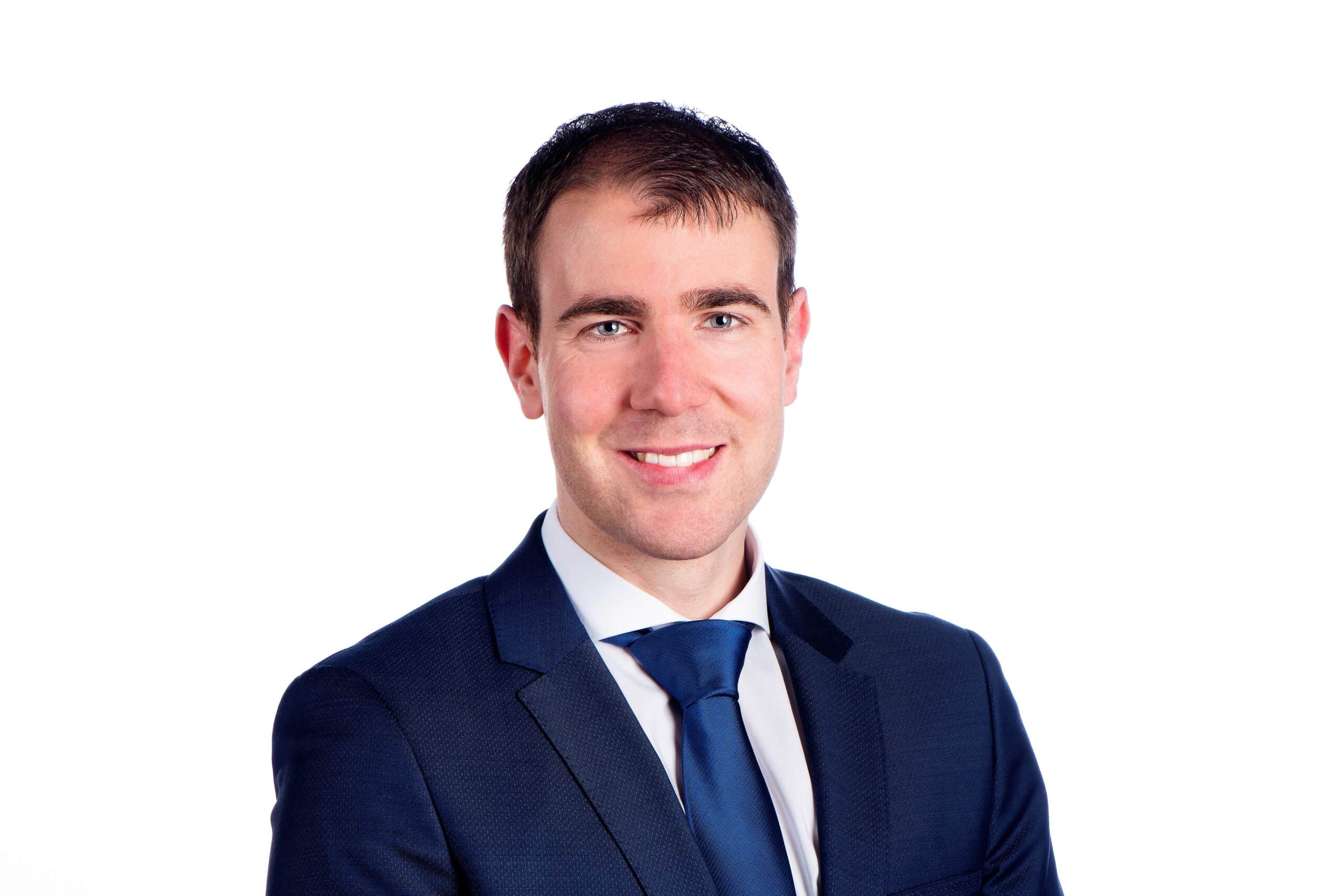
In the run-up to the IFZ Insurance Summit 2026 on May 7, 2026, conference chair Prof. Dr. Florian Schreiber talks about the key forces that are changing the Swiss insurance industry. Between the technological spirit of optimism and operational reality, it is clear that transformation is no longer a topic for the future, but is now decisive for competitiveness and relevance.
In an interview with thebrokernews, Prof. Dr. Florian Schreiber talks about the current state of the industry and the most pressing challenges: from the integration of new technologies and increasing complexity in transformation processes to the effects of geopolitical and climatic risks. It will become clear where insurers need to start today and why successful transformation goes far beyond technological innovation.
Professor Schreiber, if you had to describe the current state of the Swiss insurance industry in one sentence, what would it be?
Insurers remain the stable pillars of the Swiss economy, but they are facing the challenge of having to adapt their established business models and processes to an increasingly dynamic and data-driven reality.
The IFZ Insurance Summit is strongly focused on transformation. Where do you currently see the greatest pressure for insurers to act?
I believe that the greatest pressure to act always arises when strategic ambitions meet operational reality, especially when it comes to questions such as how new technologies, data-based business models or innovative forms of distribution (keyword: “embedded insurance”) can be sustainably and efficiently integrated into existing structures.
At the same time, we are currently observing a remarkable dynamic at management level, with numerous changes at CEO and executive board level, which on the one hand provides new impetus, but on the other hand also brings additional complexity to transformation processes.
In combination, these two factors mean that many insurers not only have to manage the transformation process from a purely technological and organizational perspective, but also sharpen their strategic focus under new management teams, which significantly increases the pressure to act.
What role do macro trends, such as geopolitical uncertainties or climate risks, play in the strategic realignment of the industry?
The traditional business of (re)insurers is volatile by definition, meaning that they must constantly adapt to current developments in the respective markets, be it with higher capitalization, a more restrictive and disciplined underwriting policy, risk-adequate asset-liability management or innovative products that offer the potential to push the boundaries of insurability. The climate risks and geopolitical uncertainties mentioned above contribute massively to this volatility and require increased vigilance.
Artificial intelligence is a key topic at the summit. Where do you already see concrete, productive applications in the insurance industry and where is AI perhaps still overrated?
AI is already being used productively today in clearly structured processes such as claims processing or fraud detection. However, there are also numerous voices saying that many initiatives are falling short of expectations because AI is not a panacea, but depends heavily on various factors such as data quality, processes and integration and, in particular, the culture within the company.
Many insurers invest in technology, but the hoped-for efficiency gains often fail to materialize. According to your observations, what is the most common reason why transformation fails?
I think that two factors are decisive here. On the one hand, attempts are being made to build new technologies and solutions on top of existing, complex process and IT landscapes or to force them into the same corset. This can lead to their actual potential not being able to unfold. On the other hand, the status quo is quite comfortable thanks to good operating results, meaning that the pressure for consistent transformation is simply lacking in the short term.
The industry is under increasing competitive pressure from new market players. How serious do you think the threat from InsurTechs and Big Techs is?
As young companies, InsurTechs provide important impetus for innovation, but usually operate in clearly defined niches or as technology suppliers and are therefore only selective competitors for established insurers. In contrast, the situation is more differentiated in the case of Big Techs: to date, they have also primarily acted as partners along platforms and ecosystems, but at the same time have access to customers and data, which basically gives them the opportunity to restructure value creation. The challenge for insurers is therefore not so much direct competition, but rather securing their own strategic role and, in particular, the customer interface in such collaborations.
A look at the organizations themselves: Do insurers need to become culturally different to truly create transformation? If so, how?
The current dynamic at management level with numerous CEO and management changes confirms that cultural change is increasingly being seen as a strategic lever. At the same time, however, it is becoming clear in practice that personnel changes alone are not enough as long as decision-making processes, incentive systems and organizational structures remain largely unchanged; this is precisely where the real transformation hurdle lies that companies need to overcome.
This year’s program brings together leading minds from the industry. Which discussion or program item do you think will be particularly trend-setting?
Our aim is to design the Summit program each year in such a way that all program items are interlinked and together paint a differentiated picture of the current challenges and strategic directions. With a focus on the major topic of transformation, this year we are covering both technological developments and strategic and organizational issues, with a focus on life, damage and recovery.
Against this backdrop, it is not so much a single program item that points the way forward as the overall program, which is supported by a strong line-up of leading representatives from Germany and abroad. This allows us to shed light on the central areas of tension in the transformation of the insurance industry in a well-founded manner and from different perspectives.
The Summit also sees itself as a platform for exchange. What distinguishes this dialog from other industry events?
In my opinion, the main difference lies in the fact that we consistently conduct the dialogue from an independent perspective and analyze current developments and market challenges not in isolation, but in an overall context. As a public research institute of a Swiss university, we do not pursue any commercial interests with the event and our services, but rather have the clear aim of providing well-founded content and orientation for the industry. In addition to the event, this includes in particular our annual IFZ Insurance Study (one of several regular publications), which provides conference participants and interested readers with access to the event’s main topic as well as numerous other analyses of the Swiss insurance market.
Finally, if you had to name three priorities that insurers should set in the next two to three years, what would they be?
The consistent use of data, securing the customer interface in the context of new platforms and the further expansion and maintenance of organizational adaptability (particularly in light of the recent management changes and strategic realignments).
The questions were asked by Binci Heeb.
Read also: Dextra once again named best Swiss insurer in online sales
Search:
Sponsors: