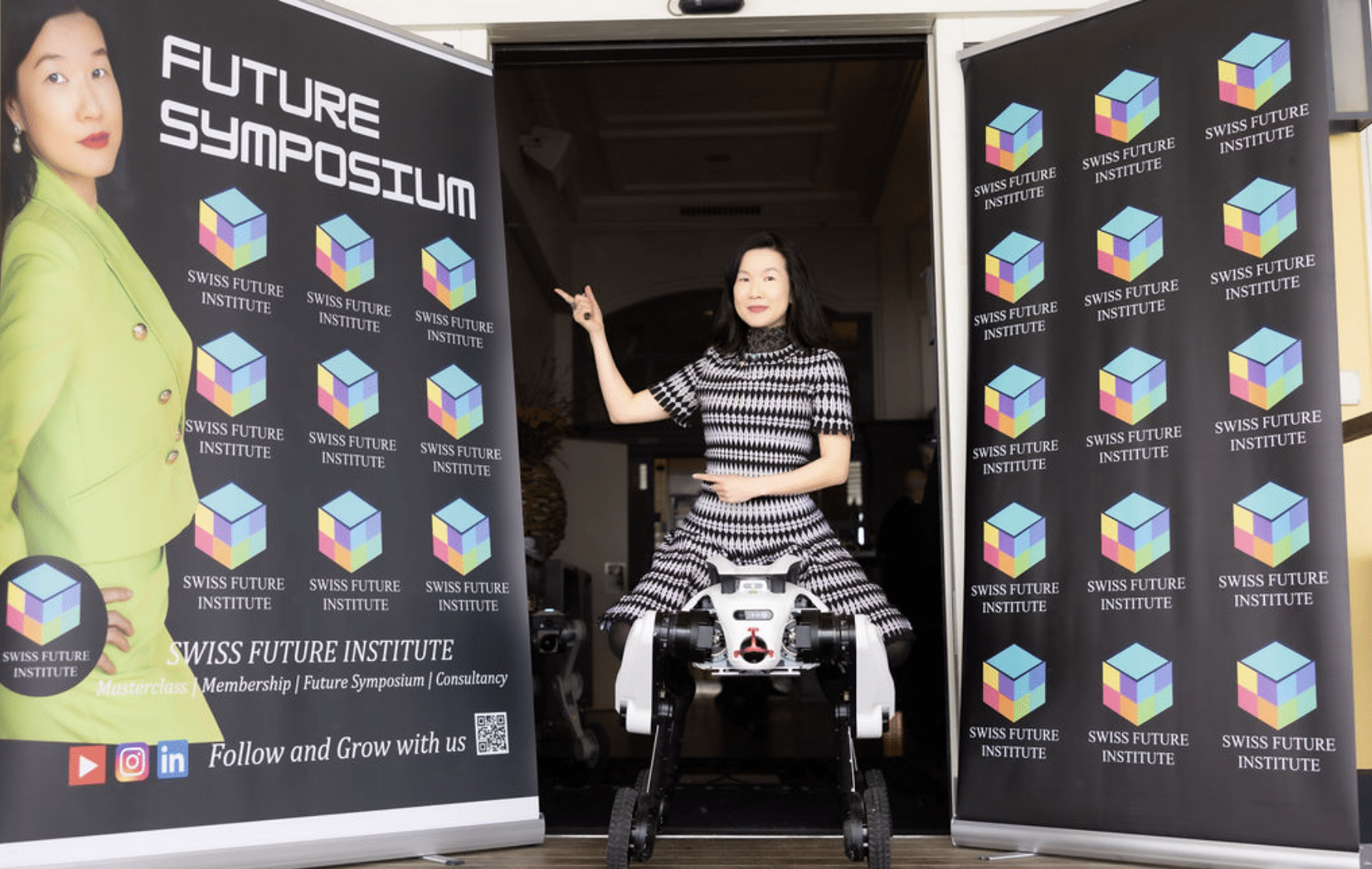
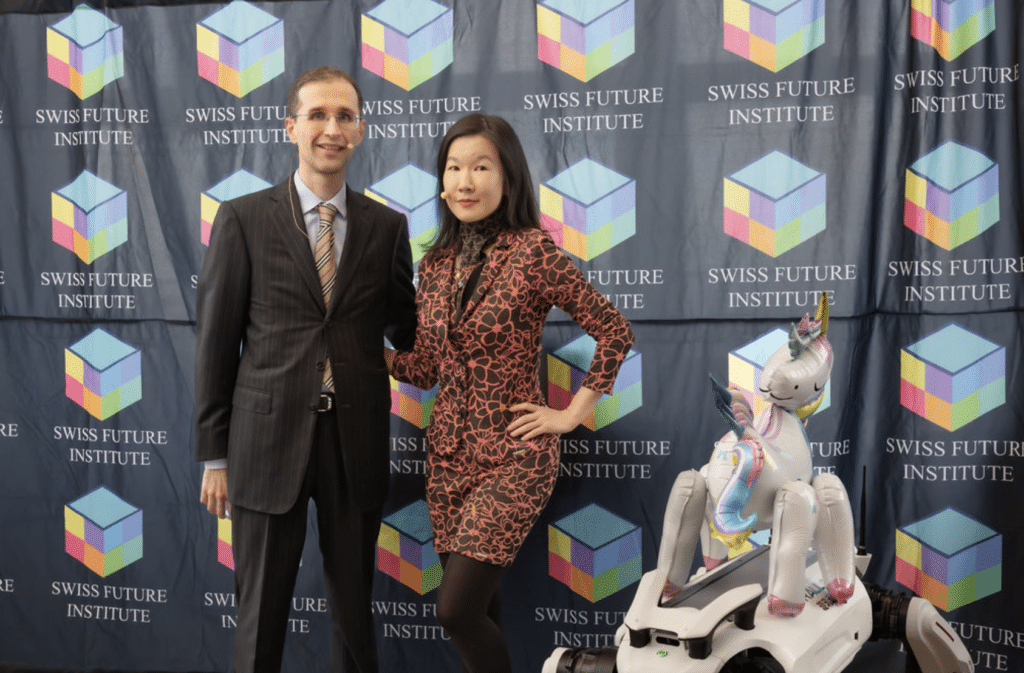
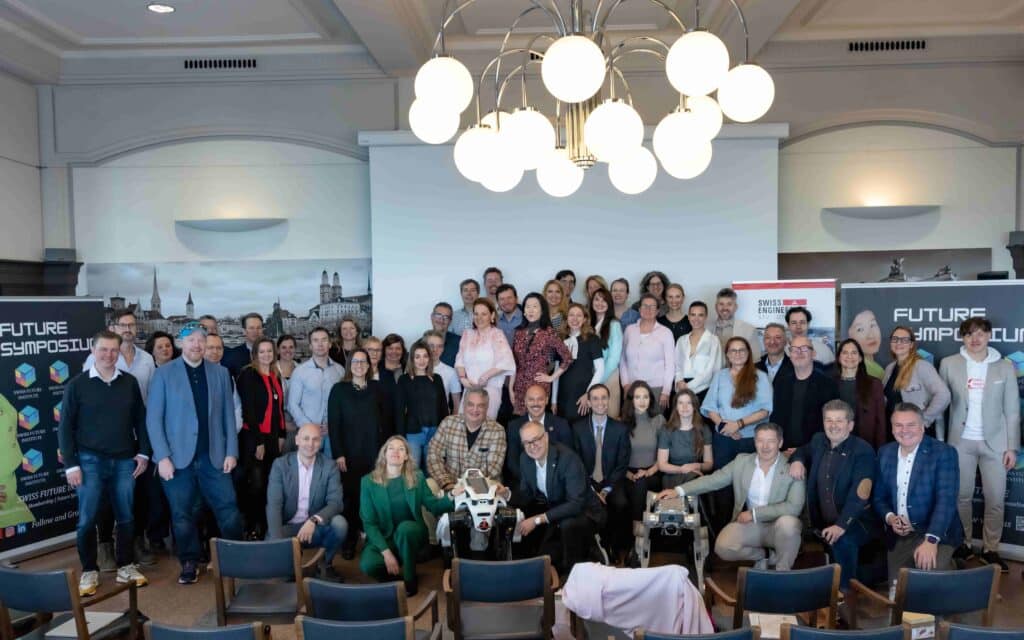
On 26 and 27 March 2026, thought leaders, entrepreneurs, family offices, board members and practitioners gathered on the Uetliberg for the Future Symposium, a two-day AI conference featuring use cases from SMEs, family offices, universities and start-ups. In addition to the technology itself, the focus was on how it can be used effectively and what role humans play in this. To this end, the Swiss Future Institute has established the AI-Human-Collective Intelligence initiative with the AI Future Council, which combines technical possibilities with human responsibility and practical use cases.
The opening of the Future Symposium was deliberately conceived differently. Moderator Gregorio Uglioni, Advisor & Podcast Host, made it clear right at the start: it was not about competition, but about collective learning. Those taking part in these two days were not only investing time, but also responsibility in shaping a shared future. The central message: artificial intelligence is not a zero-sum game. “None of us is smarter than all of us”: this idea was a recurring theme throughout the event.
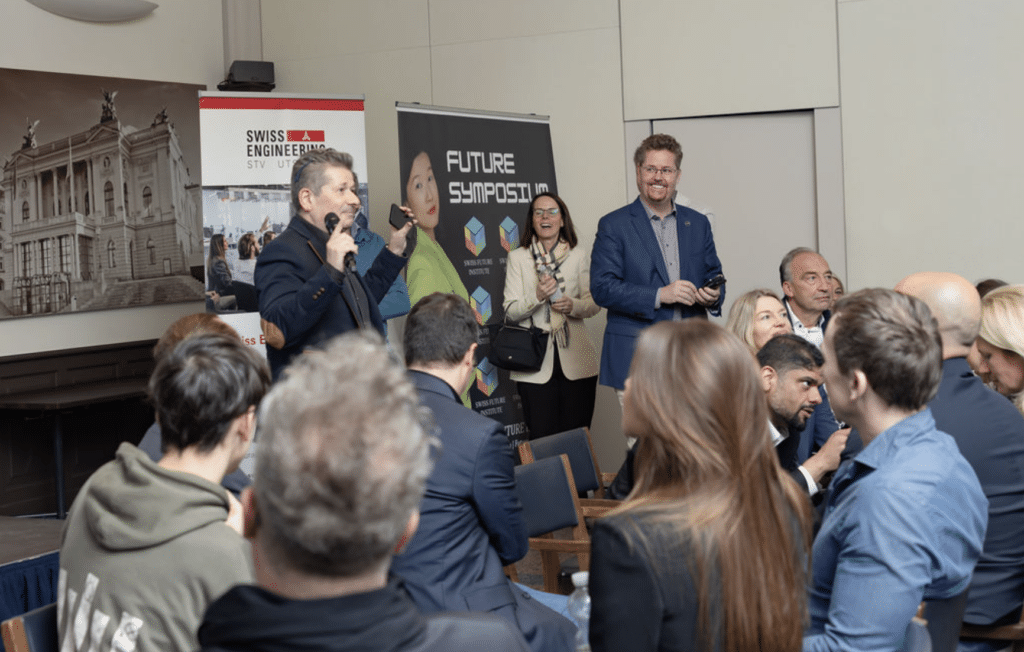
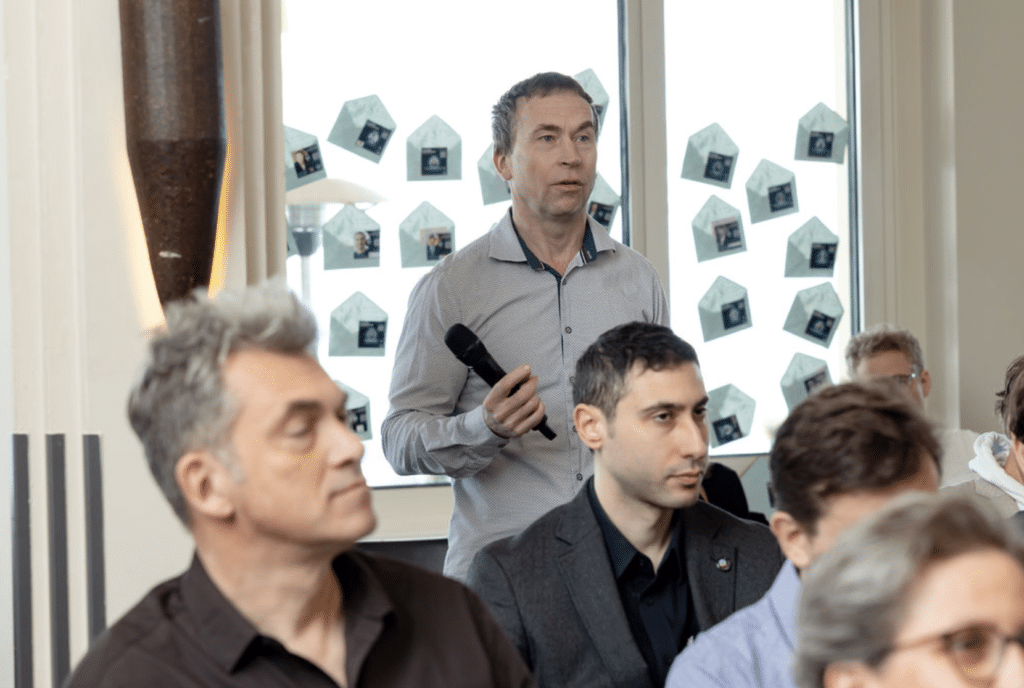
The format underlined this attitude. In addition to keynotes and panels, the focus was on exchange, speed dating and personal discussions. The conference saw itself as a platform for a growing ecosystem, supported by the Swiss Future Institute, which positions itself as a long-term community for knowledge, networking and practical implementation.
AI between tool and partner
It quickly became clear in the discussions that the understanding of AI is currently undergoing a fundamental shift. For many companies, it is still a tool for increasing efficiency. However, voices from consulting, industry and research paint a different picture: AI is evolving from a tool to a player.
Consultant and AI expert Katrin J. Yuan is CEO of the Swiss Future Institute and emphasized that this transformation has already begun. While AI is still being used as a tool today, it is increasingly developing into a “partner” with increasing cognitive performance and growing integration into business processes. This is also shifting the management question: is AI being managed as a tool or integrated as part of the team?
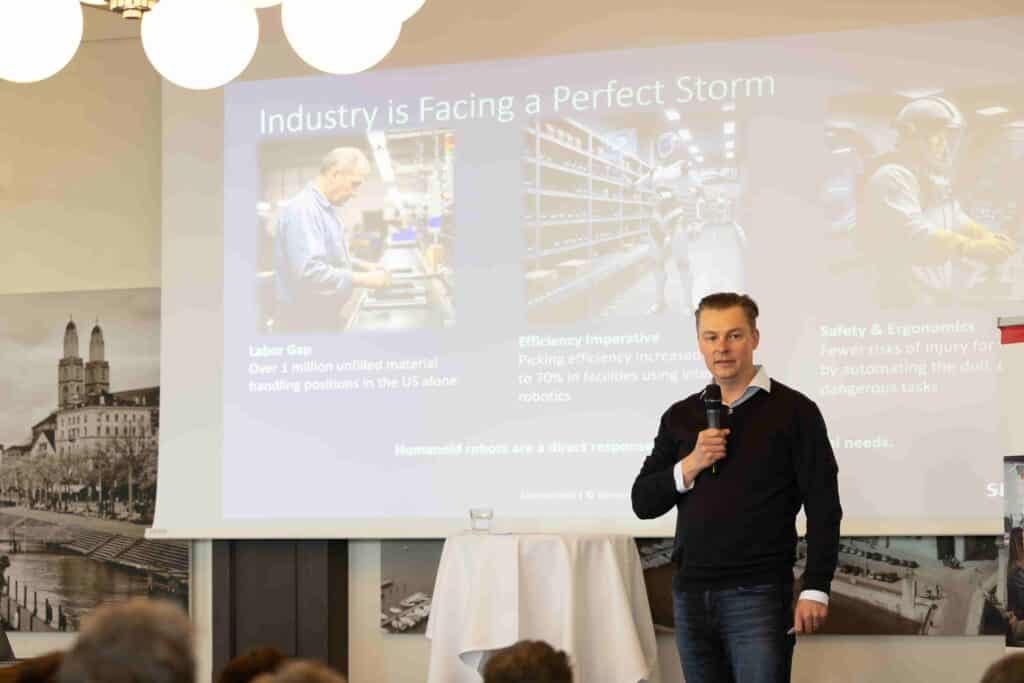
According to the SME sector in particular Dr. Dominic Gorecky a pragmatic approach from the Swiss Smart Factory. Companies do not invest out of enthusiasm for technology, but out of necessity: increasing complexity, smaller batch sizes and volatile markets require flexible automation. Classic robotics remain dominant, but cognitive and humanoid systems are gaining in importance, especially where flexibility is crucial.

The crucial mistake: thinking from the tool
A recurring motif was criticism of the technology-driven approach. Companies often start with the question of which tool they should use instead of defining which problem they want to solve.
Yasmin Aziz, CEO Visilab, put it in a nutshell: “Successful implementation does not start with software, but with a clearly understood business problem. Only then does the selection of suitable technologies follow. The human dimension is just as crucial. Transformation is not an IT project, but a management project.
This perspective was further emphasized in the panel: Anyone who only sees AI as a tool remains stuck in the old way of thinking. Only the combination of business goals, human intelligence and artificial intelligence creates real added value. The way to achieve this is through strategy, clear objectives and gradual integration into processes and organization.
AI as a strategic decision
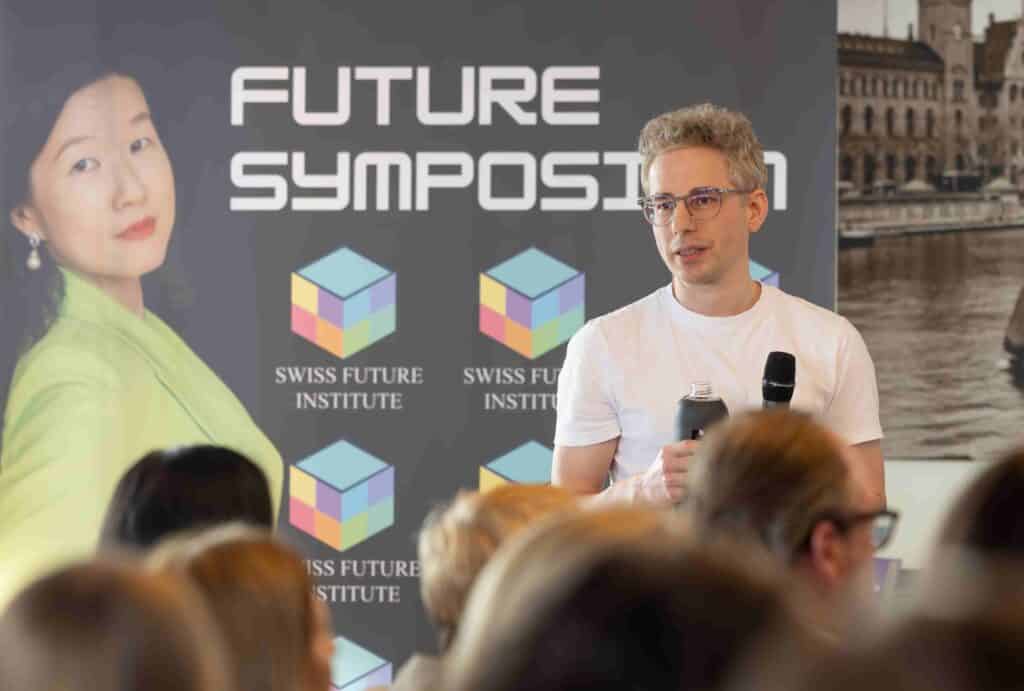
In his keynote speech, mathematician and data science professor Johannes Lederer from the University of Hamburg set the fundamental perspective straight. AI is neither new nor a short-term hype. The decisive factor is that three things have changed: Data availability, computing power and – perhaps most importantly – our thinking.
His appeal was clearly directed at companies and managers: don’t follow the tools, but define for yourself what AI should achieve. Those who blindly follow the big tech providers run the risk of implementing other people’s interests instead of their own strategies.
AI Needs More Leaders, Not Followers
He formulated three key questions for dealing with AI: What should it do for my company? What should it do for society? And how do I build up the necessary expertise? The second question in particular, the social dimension, was highlighted as often being underestimated. AI is already influencing decisions in education, medicine and the labor market. This development should not simply “happen”, but must be actively shaped.
From experiment to implementation
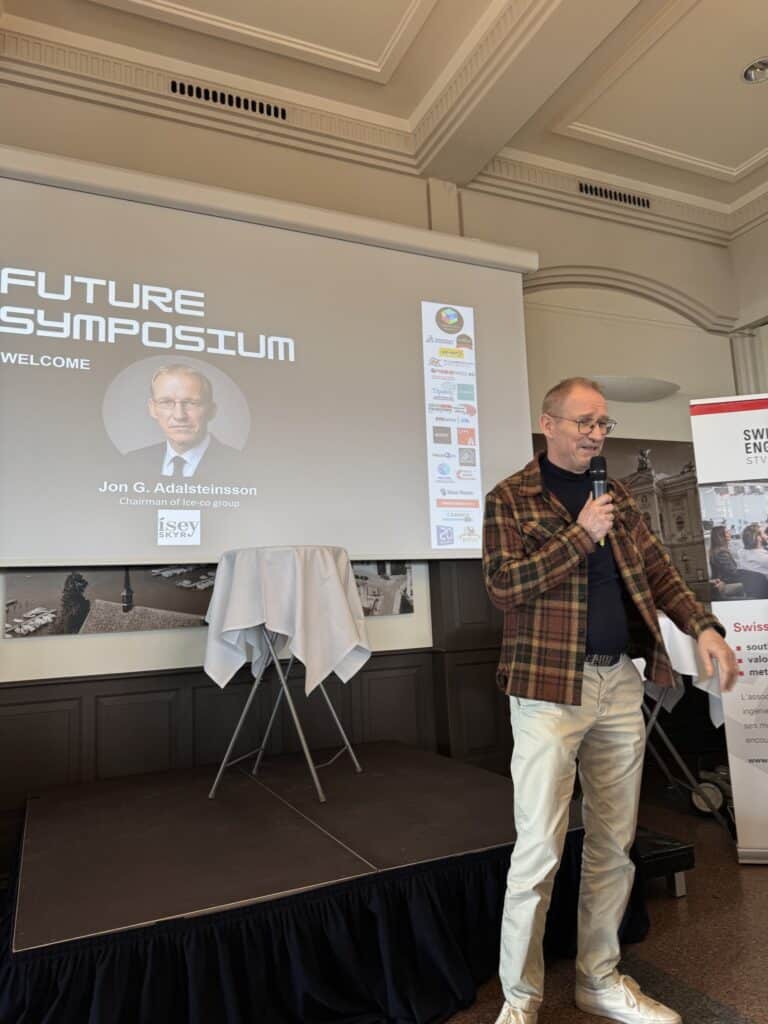
In addition to strategic considerations, the conference also showed very concrete applications. Entrepreneur Jón Georg Adalsteinsson, Chairman of the Ice-co Group, gave an impressive account of how AI is already enabling small organizations to compete with large corporations. His thesis: AI “flattens the Alps” because it reduces the structural disadvantages of small teams.
From contract analysis and negotiation strategies to marketing and influencer analysis, many tasks can now be efficiently supported with AI. However, it is crucial that technology does not become an end in itself. Successful companies combine clear value propositions with the intelligent use of technology.
This also revealed a cultural challenge: not all employees follow suit equally quickly. While young talents are often keen to experiment and managers feel the pressure to transform, resistance often arises in the operational heart of the organization. Building a genuine culture of experimentation therefore remains a key management task.
People at the center of transformation
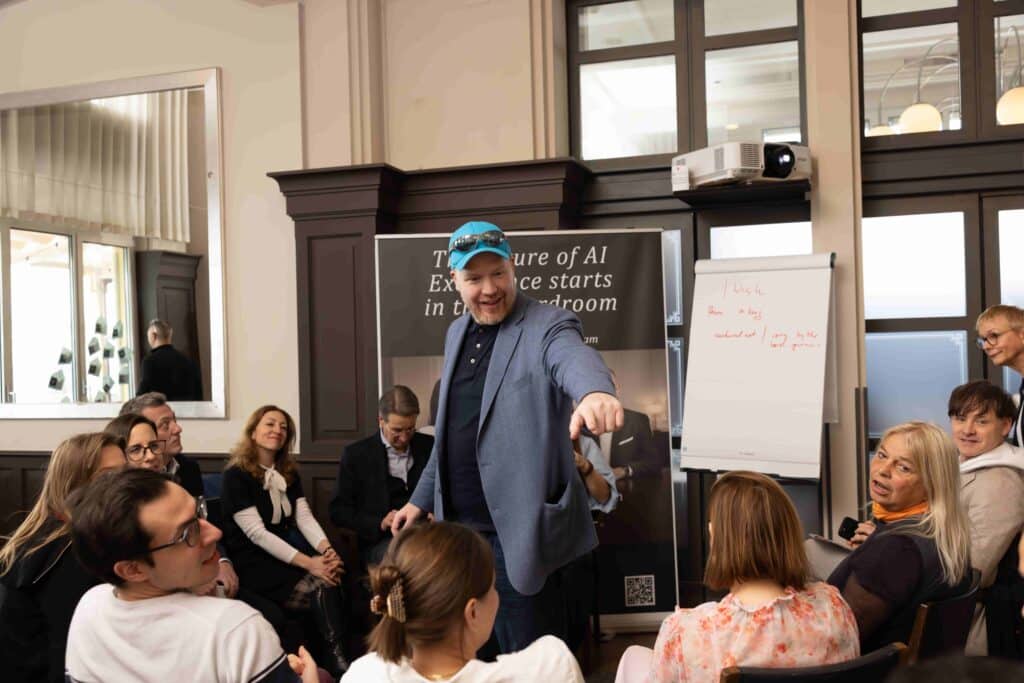
Despite all the technological dynamics, one message remained constant: the focus is on people. This perspective was not only discussed, but also brought to life through a joint reflection exercise that took the participants mentally into the year 2050.
The central question was: Which skills will be irreplaceable in a highly automated future? The answers lay less in technical skills than in creativity, attitude and social intelligence.
The Future Symposium is thus consciously positioning itself against a purely technological determinism. AI is not a self-runner, but a creative space. Or, as it has been put several times: The future is not created, it is made.
Use of the technology decides
The two days on the Uetliberg showed that the discussion about artificial intelligence has reached a new level of maturity. Away from the fascination with tools and towards questions of application, responsibility and leadership.
For the insurance and financial sector, but also for other industries, there is a clear consequence: if you want to use AI successfully, you need to think strategically, lead culturally and understand technology.
However, perhaps the most important insight from the conference remains a simple one: it is not the technology that determines success, but the way in which we use it.
Binci Heeb
Read also: How artificial intelligence is redistributing power, margin and morale in the insurance industry
Search:
Sponsors: