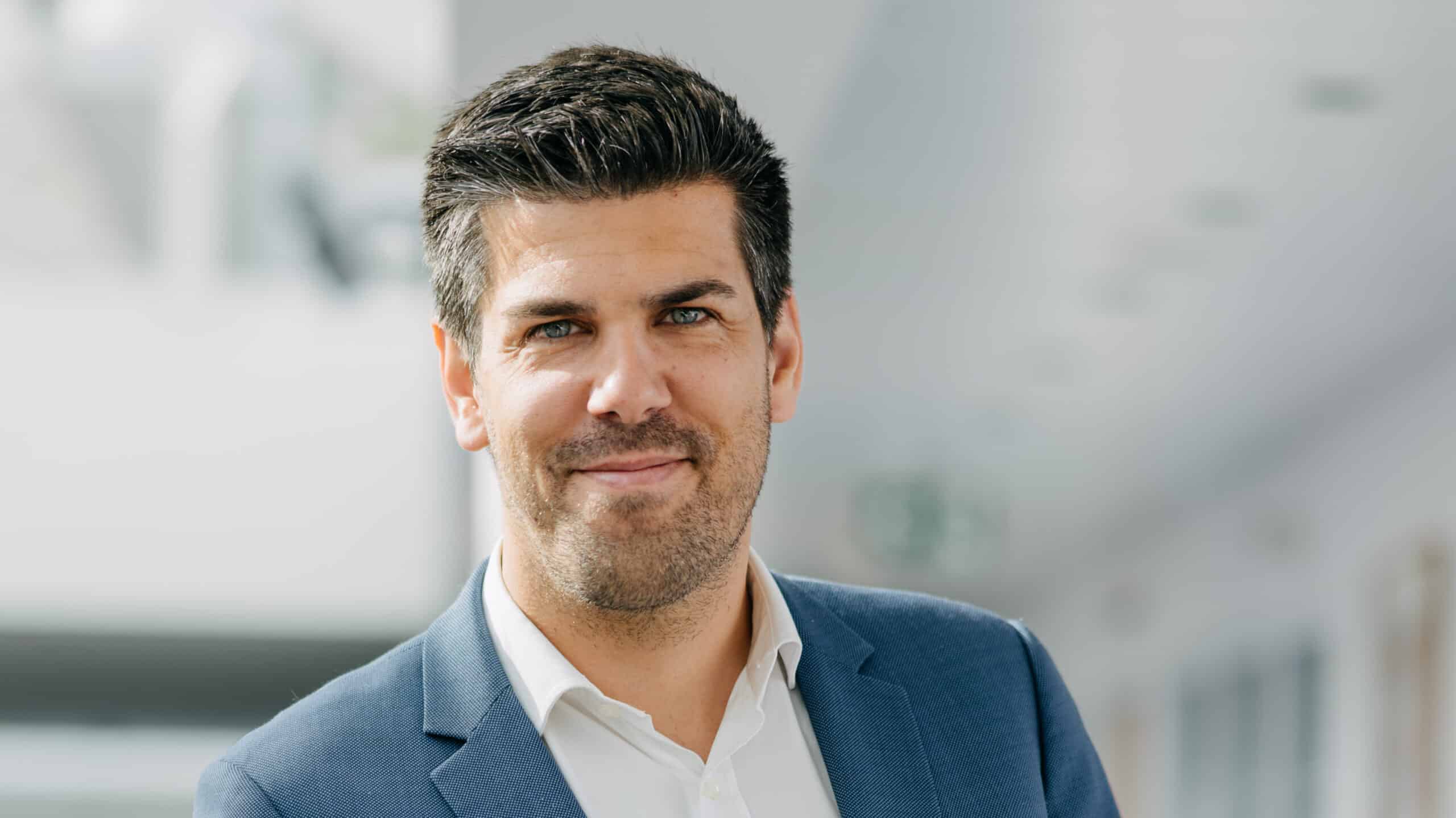
The Adelaïde Group is experiencing double-digit growth and is pushing ahead with its expansion. CEO Benjamin Verlingue explains why Europe remains fragmented for brokers, where Switzerland stands and why size alone is not a model for success.
Mr. Verlingue, your growth is strong, but the market remains tense. How much of this is real performance and how much is market cycle?
The growth in our activities in 2025 was achieved without price effects. This is in a market that is no longer growing on average and in which declines can already be observed in many areas of corporate risk. This is particularly true of the French market, but is also the case in several insurance lines in other European countries in which we operate. Our performance is therefore primarily the result of the quality of our offers, our sales dynamics and our daily proximity to our customers.
“Better Future 28” sounds ambitious. Where do you currently see the biggest risks for this plan?
The current economic situation has a direct impact on many of our customers and their development opportunities. A profound and prolonged crisis would therefore also affect our growth momentum, even if our strategic ambition remains unchanged.
Growth through acquisition is en vogue. Where do you consciously draw the line?
Our acquisition strategy is based on an industrial integration model. We are not under pressure from the financial markets and invest exclusively with the aim of profitable growth. We integrate entrepreneurs and teams with whom we want to shape a joint growth journey.
Large international brokers are increasingly dominating the market. Why do you think your model can hold its own against them?
There are several successful models that exist side by side. Compared to global brokers, which are predominantly American or Anglo-Saxon, we are convinced that our positioning as an independent and customer-oriented player offers real added value for companies in Europe. This is precisely the aim of our Better Future 28 strategic plan: to become the leading independent, family-run broker in Europe.
Is the traditional broker still fit for the future or will it be replaced by platforms and technology?
Technology is an integral part of our business. After our employees – our most important asset – it is the second-largest area of investment. Topics such as data management, automated processes and customer platforms are central to our expertise and consulting services. At the same time, our business is based on long-term relationships of trust. I am convinced that the human factor will continue to play a central role in the broker’s business model in the future.
You rely heavily on specialization, for example via Angelus Courtage and Dune. Is that scaling or fragmentation?
Our strategy is to cover the entire brokerage value chain: Advice, negotiation and brokerage, administration, distribution and underwriting. Each of these activities is a growth driver and creates additional added value for the Group.
Switzerland is a highly developed but competitive market. What specific role does it play in your strategy?
Our ambition is to become the leading independent, family-run broker in Europe. Our presence in Switzerland is part of this strategy. We want to develop and expand our business both in Switzerland, as we did recently with ProConseils Solutions in French-speaking Switzerland, and in other European markets.
Europe is considered fragmented. What is missing for a genuine pan-European broker to emerge?
The insurance brokerage business is strongly influenced by the regulatory, economic and financial characteristics of the individual countries. While we ensure a uniform level of service in all countries under the Verlingue brand, it is also necessary to adapt our offerings to local conditions. It is precisely this ability to combine a common strategic orientation with the entrepreneurial autonomy of the local teams that makes us special and is central to our goal of building a genuine pan-European broker in the coming years. We also have the expertise in Europe and worldwide to support our clients in all their markets.
Where do you currently see the greatest opportunities for expansion and where are you deliberately underestimating risks?
We have always emphasized that we want to be present in other Western European countries and are actively working on this. At the same time, we are not ruling out opportunities in other European regions. At the same time, we will continue to strengthen our model by integrating additional activities along the brokerage value chain.
Many people talk about AI in brokerage, but only a few show concrete results. Where is technology creating measurable added value for you today?
AI is a significant lever for transformation, but we take a pragmatic and controlled approach. We structure our governance along the lines of business, data, technology and compliance. At the same time, we have specifically strengthened our data governance, as the performance of AI models is directly dependent on the quality and structure of the data.
Automated solutions for processing emails are already in use, automatically forwarding messages to the right contacts and in some cases integrating them directly into back-office systems. This improves efficiency and significantly shortens processing times.
Another key use case is the automated analysis of insurance terms and conditions. An internal chatbot enables our teams to quickly compare services from different providers, which is a significant efficiency gain and a clear added value for advising our customers.
We also use AI in claims management, particularly for fraud detection.
There is enormous potential for efficiency in areas such as génération. How far have you really come in industrializing your processes?
Today, over 94 percent of the processes handled by Génération are automated and we are working on increasing this proportion further. In addition to automated e-mail routing, for example, we have been using a callbot for over four years, which processes more than 1.5 million calls a year, over 300,000 of which are fully automated without the intervention of an employee.
You manage a growing, family-run company. How do you prevent culture from becoming a drag instead of a competitive advantage?
Our company has existed for over 90 years and is based on a combination of a family corporate culture with a focus on skills development and internal promotion as well as the targeted integration of external talent and expertise. This combination is a key success factor and enables us to successfully integrate new companies into our Group and develop them further together.
The questions were asked by Binci Heeb.
Read also: Adelaïde continues to grow in Europe
Search:
Sponsors: