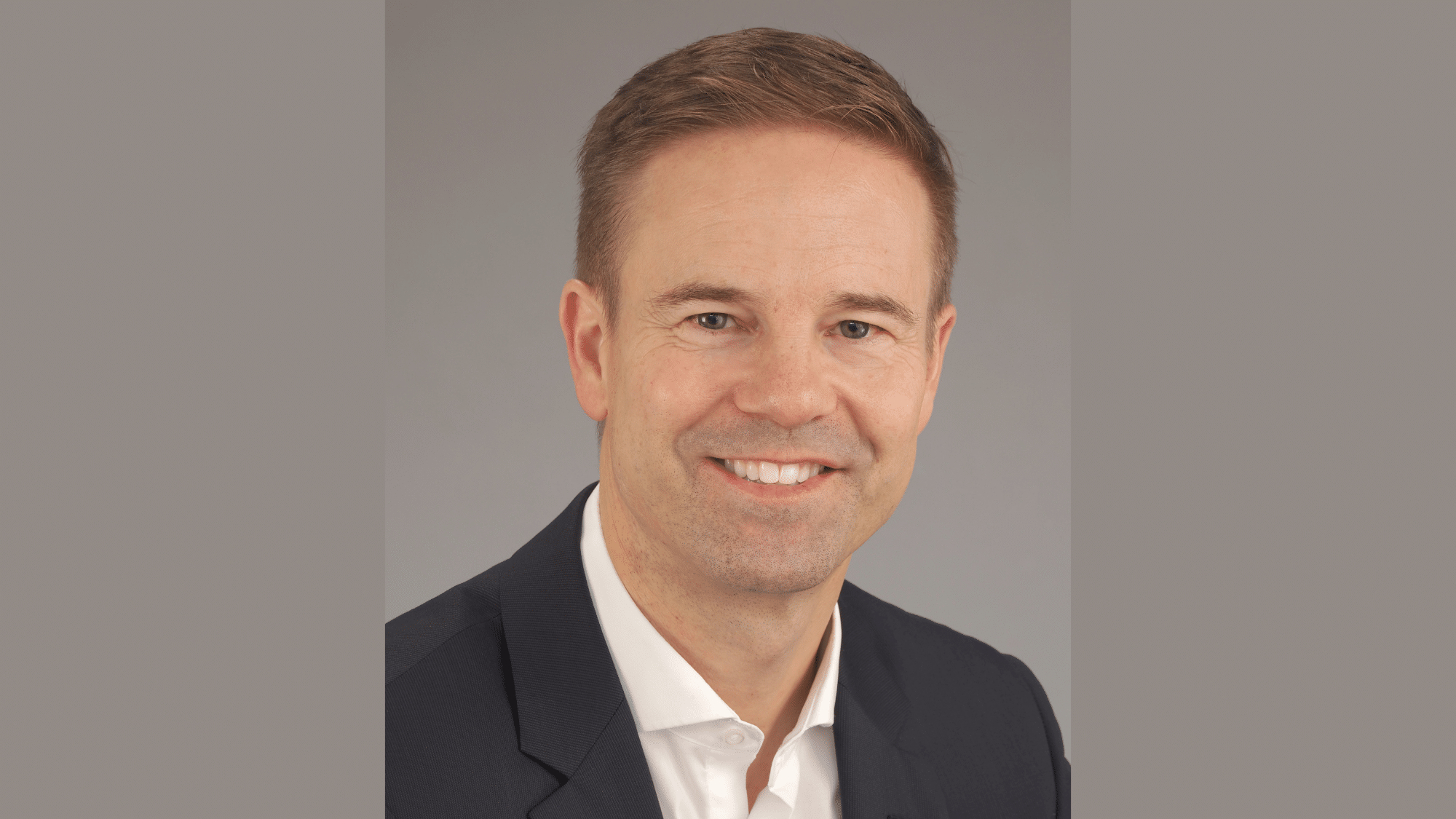
After years in banking and insurance, Thomas A. Weber set up his own business, Finvor GmbH. In this interview, he explains why the traditional financial industry is at a turning point, how consulting needs to redefine itself – and why trust will become more important than products in the future.
The financial sector is undergoing structural change: regulation, digitalization, the platform economy and changing customer expectations are calling established business models into question. While many institutions are still working on efficiency programs, experienced industry experts are increasingly choosing the path to independence.
Thomas Weber knows both sides. After a long career in banking and insurance, he now provides independent advice to companies and private clients with Finvor GmbH. This gives him a view of the industry without institutional constraints and the question of what role financial intermediaries will still play in the future.
Mr. Weber, what originally fascinated you about the financial sector?
From the very beginning, I was fascinated by the fact that financial decisions have a direct impact on people’s lives, for better or for worse. It’s not just about numbers, but about very personal questions: How secure is my family? Will it be enough for retirement? Can I hand over my company in an orderly fashion?
The financial sector seemed to me to be the ideal place to work precisely at this interface between people, their goals and financial opportunities. I found the variety of topics from pensions and taxes to investments, real estate and corporate finance particularly exciting. And the complexity appealed to me: developing a clear, viable plan from many individual parts is still a key driver today.
Was there a specific moment when you decided to become self-employed?
There was no single moment; the decision took years to prepare. Two consultations with female doctors who were planning to become self-employed were very formative. Officially, they were “classic” consultations at the bank, but in reality we thought about everything together: setting up a practice, legal risks, taxes, financing, private and corporate pension provision, liquidity planning and private investments.
In these conversations, it became clear how much clarity emerges when you see a situation as a whole and not as a collection of individual accounts, policies or investment proposals. I knew then that this was exactly how I wanted to work: integrated, independent and with a focus on the big picture. Self-employment was then the logical consequence, because neutrality and integrated planning are often difficult to implement within traditional product logics.
Why do you focus on entrepreneurs and cohabiting couples?
Because these groups often have complex constellations and because gaps can be particularly expensive. I know the inside view of banks and insurers: product logic, processes, remuneration systems, risk requirements. Today, this knowledge helps me to make a clear distinction between what is really in the interests of the customer and where the logic of the institution speaks.
Entrepreneurs have to coordinate the private and corporate worlds: Pension provision, taxes, liquidity, real estate, succession. Cohabiting couples, on the other hand, often have less legal protection, especially when it comes to inheritance, protection or property issues. If all of this is only planned “side by side”, blind spots arise. My approach is therefore to integrate them early on, explain them clearly, work with scenarios and create a common thread.
What services do you offer?
Essentially, there are two service areas that complement each other well in practice:
Firstly, it is integrated financial and pension planning for entrepreneurs and cohabiting couples: retirement planning (timing, partial retirement, pension vs. capital), pension and protection analyses, coordination of private and company assets, succession and exit preparation, real estate and mortgage strategy as well as strategic wealth planning including withdrawal planning. Important: product-neutral, without own product sales If necessary, I coordinate the implementation with tax advice, fiduciary and legal services.
Secondly, it is business consulting / sales transformation via Transperform AG: We support companies – especially in the financial and service sectors – in developing sales and consulting from product-driven logics to genuine customer orientation, including training, coaching and implementation in everyday life.
What do you only really recognize outside of an institute?
How difficult it is to structurally implement true holism. It is often not the concepts that are missing, but the prerequisites in the system: silos, key figures, historically grown processes and IT. For reasons of efficiency or risk, many processes are designed to serve the institution, but not necessarily the integrated customer plan.
Outside of this, it becomes clearer where to start in order to make consulting truly customer-centric and why this often fails in large organizations due to seemingly small details: responsibilities, incentives, process interfaces. However, this is exactly where the differences arise that customers really feel.
Which assumptions have proven to be wrong?
Three things were important corrections for me. Firstly, many products do not automatically mean a good plan. In practice, many people had “everything”, i.e. accounts, policies, investments, pension fund solutions, but without a common thread and without coordinated priorities.
Secondly, customers rarely have a clear idea of what they need. They may feel the need for action, but decisions such as pension vs. capital, pension fund purchases, partial retirement or succession are difficult to make without a clear picture. Orientation comes before solutions.
Thirdly, complexity is not a deterrent if you make it understandable . With scenarios, numerical examples and clear language, trust is created because people then really understand the consequences of their decisions.
Structural change or paradigm shift?
In my view, it’s more than structural change, it’s a paradigm shift. Regulation, digitalization, platform models and margin pressure have been changing the industry for years. AI is now adding an accelerator: Everything that is rule-based, standardizable and repeatable is becoming a commodity, such as analyses, simple financial planning and product recommendations.
The added value thus shifts away from pure calculation and product access to the integrated classification of complex situations: How do pensions, taxes, assets, real estate, companies and estates interact? AI provides variants, but setting priorities, resolving conflicting goals and supporting decisions remains a core human service.
Where is the biggest discrepancy between expectations and supply?
At the point of added value. Many institutions communicate “holistic advice”, but in reality often deliver fragmented discussions: pension provision here, mortgage there, investments separately, plus processes that are strongly geared towards internal goals.
customers – especially entrepreneurs and cohabiting couples – want a common thread: How is everything connected, where are the risks, which decision has which tax and pension consequences? Products are then a means to an end. In my view, the biggest gap lies between this need for integration and the offering logic of many institutions, and this is precisely where I position myself.
Real transformation only occurs when the time gained is invested in integrated consulting and not in more product sales.
What does “independent advice” mean in concrete terms?
For me, independence means above all: first clarifying the goals, risks and dependencies and then calculating scenarios before talking about products. Only when it is clear what someone wants to achieve and what the consequences of decisions are does the choice of instruments make sense.
Secondly, role clarification is part of it: An institute may sell products, that is legitimate. However, it only becomes “holistic” when it is transparent where product interests begin and where a neutral sparring partner is useful as a supplement. I consciously see banks, insurers and asset managers as implementation partners, not as competitors.
Why is genuine customer orientation difficult for large institutions?
Because organization, IT and remuneration are often built according to divisions: Investments, mortgages, pensions, corporate clients. A “one-size-fits-all” view does not fit well into such structures. In addition, product sales and efficiency are usually measured and not whether a comprehensible, integrated plan is created in the end.
However, true customer orientation means assuming responsibility across divisions. This is more complex and often contradicts the specialization logic of large institutions. That’s why, in my view, there is a need for additional independent players who can provide the common thread and then work together with the institutions.
How has trust changed?
In the past, communication was often one-way: the institution explained, the customer listened. Today, it is more of a dialog at eye level. Customers are more informed, compare, question costs and tax consequences and expect transparency instead of technical jargon.
Trust is created less by authority and more by comprehensibility: if someone can understand why a decision makes sense and what consequences it has, consulting becomes joint work on a plan and not a sales pitch.
Which services remain human?
Standard services are becoming increasingly digital: payment transactions, simple investment proposals, standard mortgages, basic financial planning. This is becoming cheaper and more interchangeable with the help of AI.
Services that integrate complexity remain human and valuable: Pension and retirement planning (pension/capital, partial retirement), entrepreneurial and succession issues, as well as the interplay of assets, real estate, taxes and inheritance, especially for cohabiting couples. This is about considerations, priorities and individual conflicts of interest, not just the logic of calculations.
Will the traditional customer advisor disappear?
They have to reinvent themselves. Standard tasks, such as explaining products, processing forms or solving simple issues, are increasingly being taken over by digital tools and AI. The future belongs to the consultant who becomes a sparring partner: who understands the overall situation, classifies scenarios, translates consequences and prioritizes them with customers.
Products are then the last step and not the starting point. Those who do not take on this role will actually be replaceable in many areas.
What skills do the next generation need?
I would name three areas of expertise:
First: Understanding instead of selling, by really penetrating complex customer situations, such as pensions, taxes, assets, real estate, entrepreneurial issues, family and relationship constellations.
Secondly: Translating & classifying by making specialist knowledge understandable, explaining scenarios, pointing out consequences and prioritizing together. Communication becomes a key qualification.
Thirdly, dealing with data, digitalization & AI by confidently using tools for analysis and simulations and critically examining and interpreting results and embedding them in an integrated life and financial plan. The combination of technical expertise and human judgment will be crucial.
The questions were asked by Binci Heeb.
Thomas A. Weber is an independent financial planner (Finvor GmbH) with over 30 years of experience in banking, pensions and financial planning. He specializes in integrated financial and pension planning for entrepreneurs and cohabiting couples (scenarios such as pension vs. capital, partial retirement, succession/sale) and works together with banks, pension funds and tax, fiduciary and legal experts. Previously, he worked at Valiant (Head of Sales Support/Sales Promotion) and UBS (Project Management Financial Advisory Tools, roll-outs in several countries), among others; he also advises Transperform AG on sales transformation and advisory quality. He holds a Master’s degree in Banking & Finance as well as qualifications as a certified financial planning expert and social insurance specialist, among others. He is also a lecturer/quality assurance in the IAF environment and has experience in administrative and foundation board mandates.
Read also: “The Broker Becomes an Entrepreneurial Risk Manager for SMEs”
Search:
Sponsors: