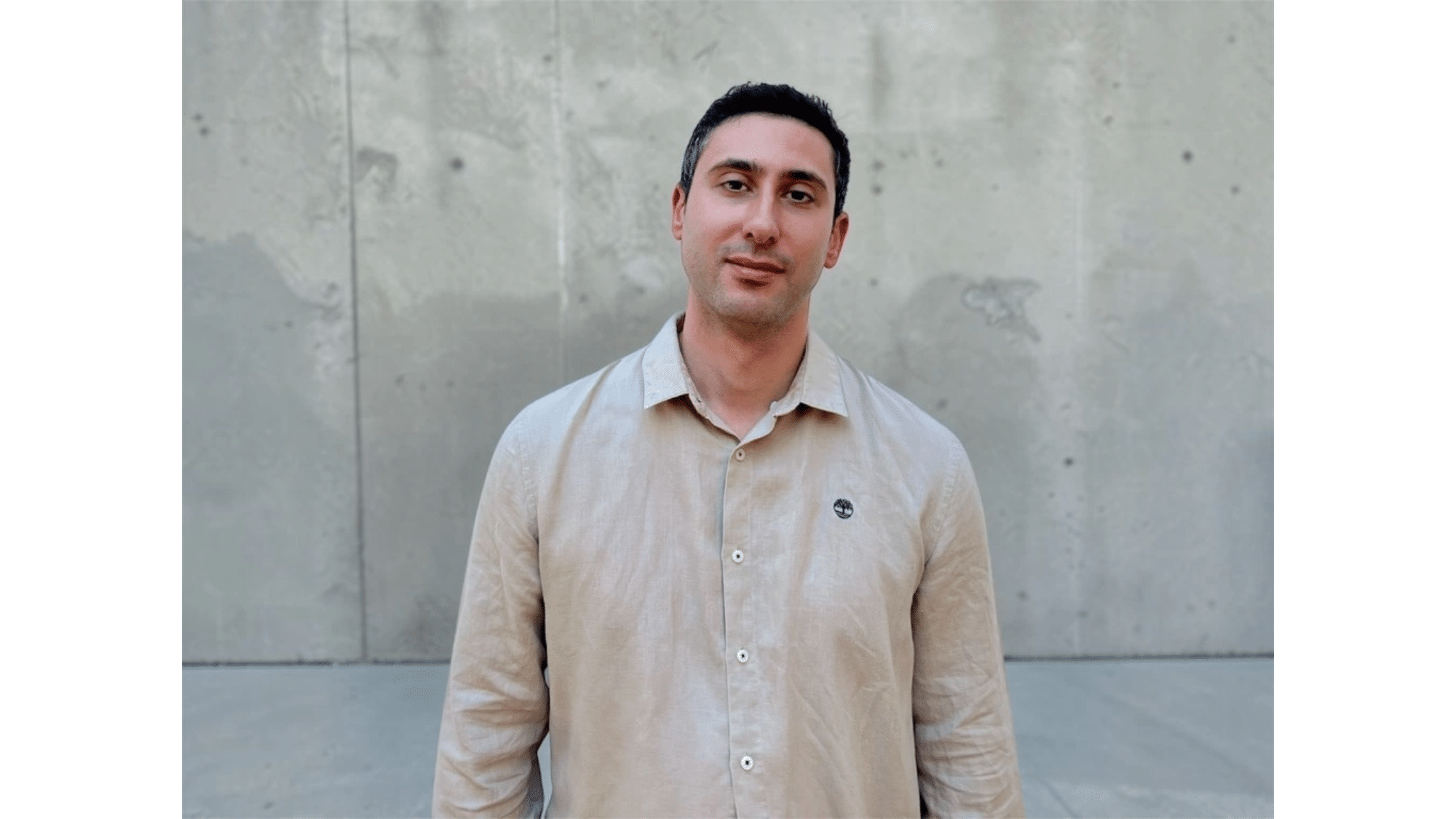
What happens when excellent research stalls on the threshold of the market? Dr. Antonios Gkikakis, a Start-up CEO and roboticist who recently transitioned from his research role at the Italian Institute of Technology (IIT) in Genoa, made this question the focus of his presentation at the Swiss Future Institute’s AI Future Council. And he offered two concrete attempts at an answer in the form of two deep-tech ventures that he is spearheading himself.
Gkikakis observes a recurring pattern in the research landscape: Robotics systems are developed up to a high Technology Readiness Level (TRL 4 or 5) and then come to a standstill. The challenge lies not in technical failure, but in the transition: from the laboratory to the market, from research logic to entrepreneurial logic. “I have seen incredible technologies gathering dust on the shelves,” said Gkikakis. “That is a huge waste.”
His approach: don’t wait, but start a business yourself. With Guardian and ALMA, he leads two projects that could hardly be more different, yet both pursue the same basic idea: bringing physical AI into the real world.
Case study 1: Guardian – the airbag protective suit for workers
The starting point is alarmingly simple: falls are one of the most common causes of workplace accidents worldwide. In Europe and the US alone, around one million slips, trips and falls occur in the workplace every year. In the construction sector, Guardian’s main target, one in five fatalities in the EU is caused by a fall.
The solution is a ‘Smart PPE’ (Smart Personal Protective Equipment): an intelligent protective vest with an integrated airbag system. The device detects in real time whether a person is falling, regardless of the height or direction of the fall, and deploys the airbag within 0.08 seconds before impact occurs. The problem of false triggers (“false positives”) was particularly tricky: construction workers jump, run and crouch. An unintended inflation on scaffolding can itself become a hazard. Gkikakis has solved this problem through precise activity recognition modelling.
The commercialisation strategy is structured in three phases. Phase one focuses on the direct sale of the safety vest to companies, offering an immediate return on investment through reduced accident costs. This involves the collection of movement data from real workers. In phase two, this data is processed into a unique movement dataset and secured as intellectual property. Phase three is the vision: active exoskeletons that not only protect but also physically enhance people’s physical capabilities. An initial prototype, a passive back exoskeleton weighing just 1.3 kilograms for lifting tasks, was presented during the talk.
A lively discussion immediately developed among the audience regarding potential applications: care homes and the elderly population, integration into the Suva insurance scheme in Switzerland, airport logistics, the Middle East with its strict construction site regulations, as well as concrete offers of contact from members to specific companies, universities and health initiatives.
Case study 2: ALMA – Actuators and jumping robots for the lunar economy
The second project is far more speculative and, at the same time, visionary. ALMA means jump in Greek and stands for ‘Adaptive Lunar & Microgravity Actuation’. The aim: to fundamentally solve the problem of mobility on the Moon. The wheels of lunar rovers are slow (around 0.1 km/h), get stuck in craters and fail on the dusty, uneven lunar terrain. Flying is not possible without an atmosphere. According to Gkikakis, the optimal mode of transport on the Moon is jumping, just as astronauts do intuitively.
The technological centrepiece is the RingScrew, a patented linear drive developed at the IIT, which ALMA is now exclusively commercializing. It is three times faster than comparable technologies on the market, has virtually no play, extremely low friction and requires no wet lubricants, which would evaporate in the vacuum of space and lead to catastrophic failures. Integrated into the Earth-based validation prototype ‘Skippy’, the mechanism has already successfully demonstrated 1-meter dynamic hops. The architecture is engineered with the capacity for up to 3-meter jumps on Earth, which translates to massive 18-meter leaps on the Moon thanks to the one-sixth gravity.
Here too, the roadmap is three-stage: first, securing patents and validation under space conditions; then market entry via satellite laser communications (lasercom) and laser optical routing in space datacenters (with the advantage of immediately acquiring ‘space flight heritage’, i.e. a track record in real space); and finally, actual lunar mobility for space agencies and private space companies. The total market for space propulsion and robotics is estimated at around ten billion US dollars by 2030.
Which hurdle is greater?
At the end of his presentation, Gkikakis posed a pointed question to the audience: Which is harder to overcome, the acceptance hurdle with companies (Guardian) or technical validation in space (ALMA)?
The answers were clear: space validation is considered the tougher nut to crack. Without strong strategic partners, such as an established space company, this path is virtually impossible to take. The launch at Guardian, on the other hand, is more a question of consistency, personal persuasiveness and the right entry point. Ultimately, this can be resolved through polite persistence, as one participant put it.
Gkikakis himself concluded with a pragmatic message: both start-up projects are at the critical juncture between research and the market. It is precisely here that not only technology is needed, but also a network, courage and the willingness not to give up.
Binci Heeb
Read also: Robots, Reality, and Resonance
Search:
Sponsors: