The sixth Finanz und Wirtschaft Insurance Broker Forum in Rüschlikon drew a sobering conclusion: Switzerland is in a good position, but is performing poorly. The partial revision of the ISA is a burden, cyber risks are increasing and the new generation is questioning old certainties.
Since its first edition in 2021, the Insurance Broker Forum has become a permanent meeting place for the Swiss broker industry. This year’s motto was “Strengthened for the future”. Over the course of the day, the title proved to be both a claim and a challenge. Over 200 participants discussed the economic situation, regulation, digitalization, cyberattacks and the major events of the recent past in Rüschlikon.
Switzerland lives from the bacon belt of the past
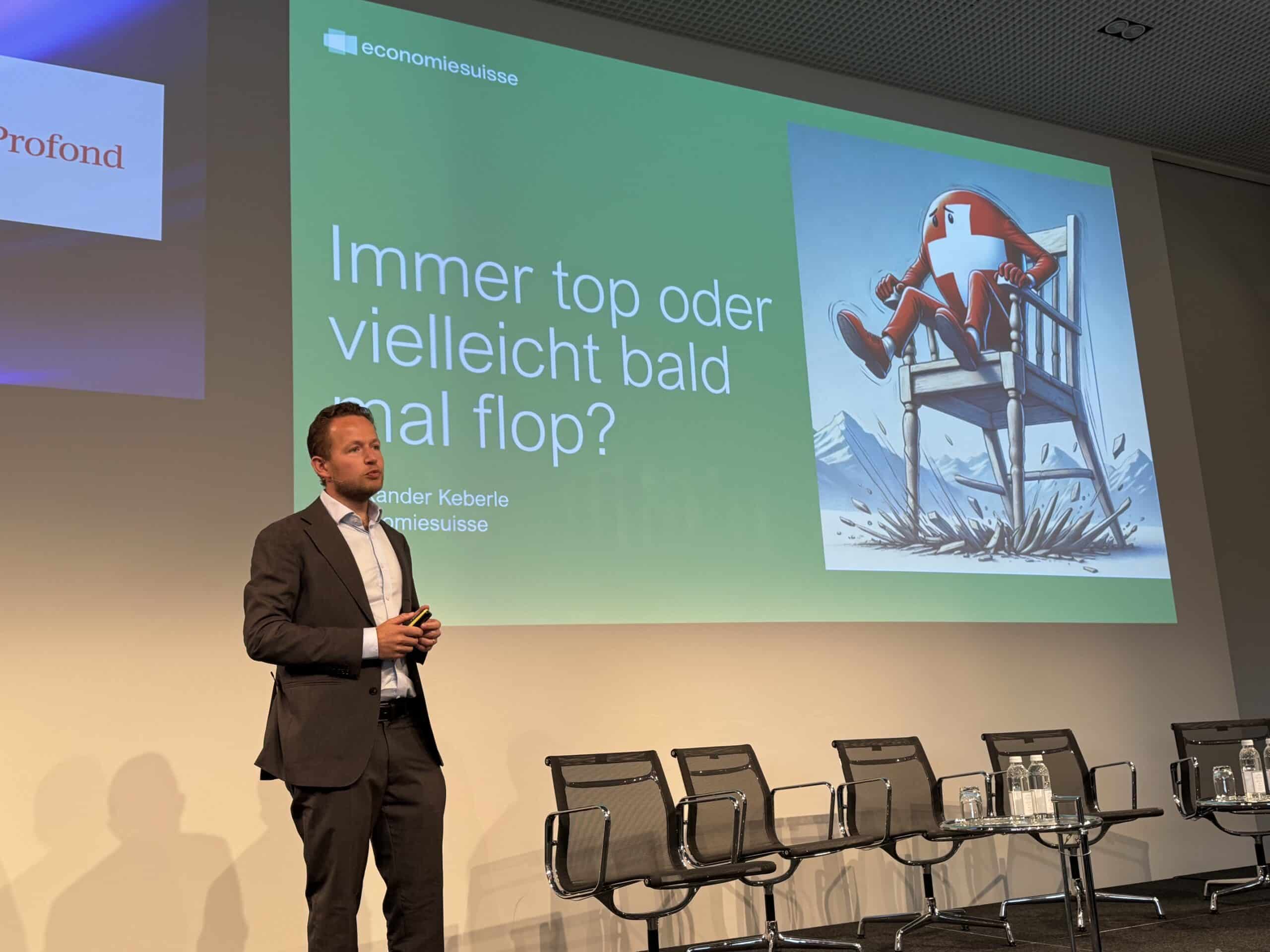
Alexander Keberle, Head of Government and Policy at economiesuisse, kicked things off. His message was unmistakable: Switzerland is still one of the absolute leaders in the OECD, ranking between third and fifth in terms of real wages, economic output and productivity. But in terms of development over the last ten years, it is at the back of the pack. Economic output is growing at almost the slowest rate of all developed countries.
Keberle spoke of a “bacon belt” that Switzerland is drawing on from past decades without realizing how its lead is shrinking. Particularly alarming: government spending is growing significantly faster than the economy. Since the introduction of the debt brake, per capita federal spending has risen by 30 to 40 percent adjusted for purchasing power, while economic growth has been significantly weaker over the same period.
Keberle cited bureaucracy as the biggest concern for companies, which according to surveys is the number one concern for both large corporations and SMEs. He put the follow-up costs of regulation at around CHF 80 billion per year, almost as much as the entire federal budget. 95 percent of regulatory growth does not come from parliament, but from administrative ordinances.
He also warned about the energy supply: Switzerland’s industrial electricity prices are among the highest in Europe, two to three times higher than in the USA or China. Without new nuclear power plants, it will not be possible to secure the winter electricity supply until 2050. Keberle put the implicit national debt, i.e. promised but unfunded benefits such as the 13th AHV, at 350 percent of GDP. The nominal national debt, on the other hand, is only 18 percent.
In response to questions from the audience, he also spoke about the popular initiatives and tariffs: US tariffs are anchored across party lines and will not disappear even after Trump. Switzerland must consistently focus on diversification and finally get free trade agreements such as the one with Mercosur over the finish line.
VAG partial revision: a lot of effort, many question marks
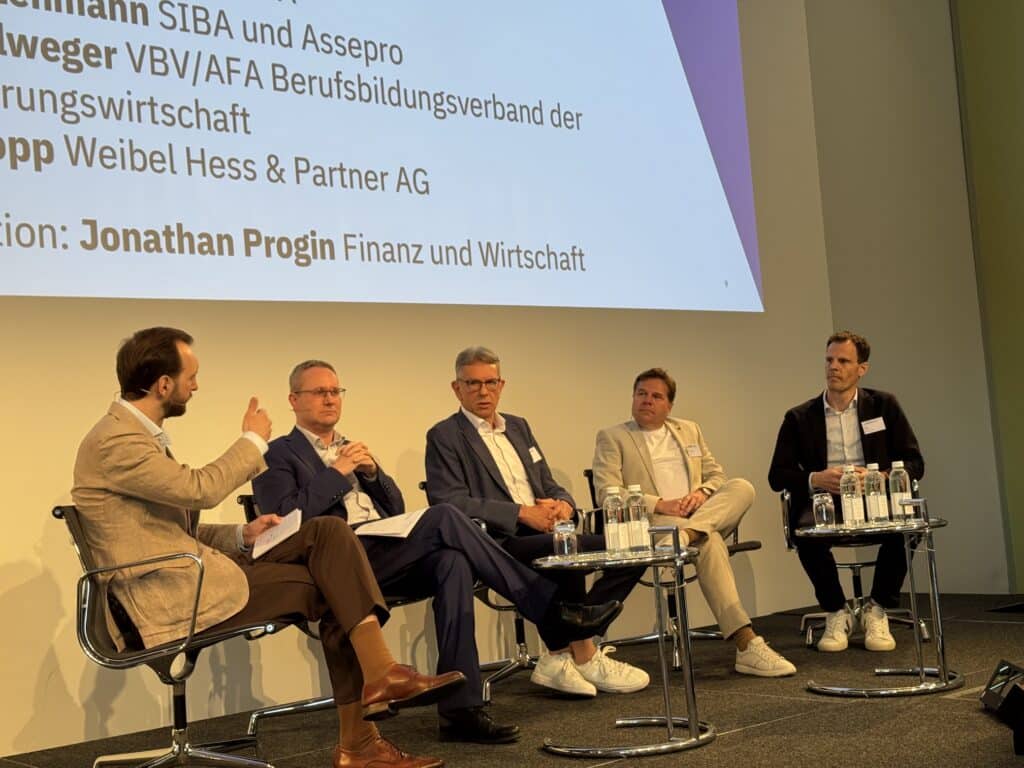
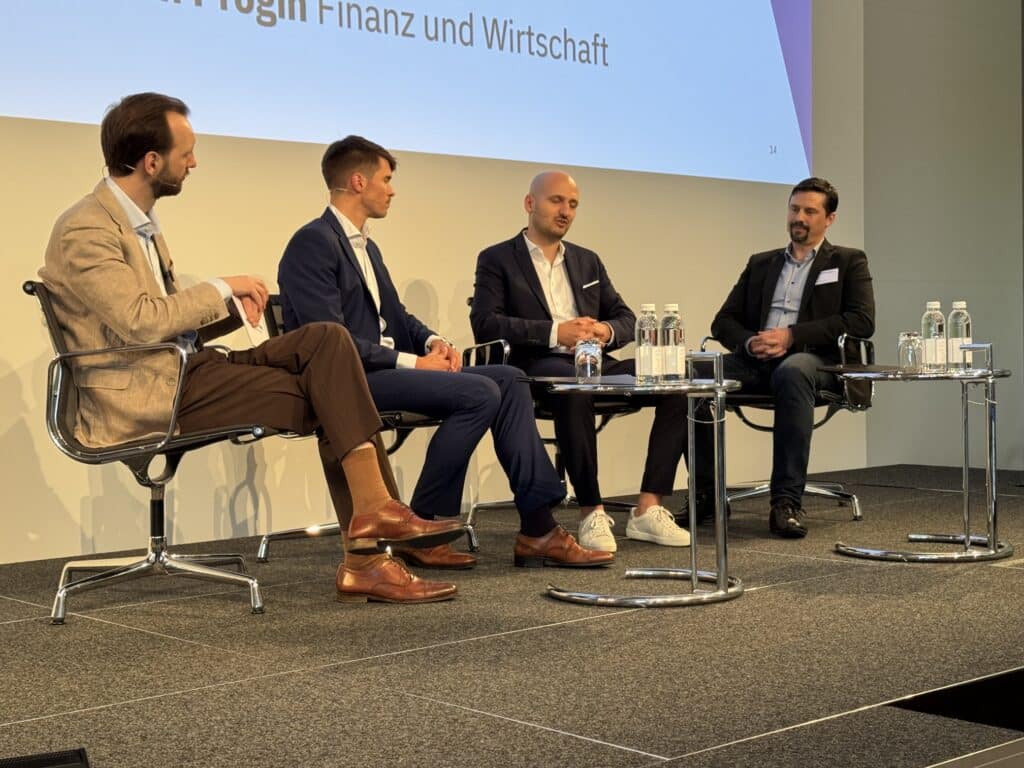
The first panel discussion was dedicated to the partial revision of the ISA, two and a half years after it came into force. The survey in the room revealed a clear picture: 83 to 84 percent of those present reported “significantly more” administrative work.
Markus Geissbühler from FINMA admitted that setting up the supervisory authority was enormously time-consuming. He presented a sobering figure: Around 10 percent of untied intermediaries, or over a thousand out of around eleven and a half thousand registered market participants, were operating completely detached from regulation: unlicensed, unregistered and unqualified. FINMA has also received over 3,000 complaints and opened 300 investigations. The focus is on life and health insurance, where the potential for abuse is greatest.
Markus Lehmann, President of the SIBA broker association, did not have a good opinion of the implementation: the idea behind the ISA revision was good, but the implementation was “poor to say the least”. He was not aware of any complaints from reputable brokers and said that the real problem lay with the health insurance brokers.
Jürg Zellweger from the VBV vocational training association explained the new examination system: of around 12,000 people who had never taken a certification examination before, 3,000 have passed the exam so far. The pass rate is 80 percent. The format is a 30-minute online check. There was criticism of the weighting: too many health insurance questions for brokers who work exclusively in the non-life sector. Improvements are to be made here by the fall.
The preferential treatment of British brokers was a particular source of excitement in the room. Thanks to the bilateral treaty between Bern and London, UK brokers in Switzerland do not have to fulfill any establishment requirements and are exempt from local education and training requirements. Lehmann described this as a “disadvantage for Swiss nationals” and reported that they had been “lied to black and white” in Bern. An English-language version of the exam specifically for British industrial brokers is currently being developed.
Digitalization: It’s not the tool that counts, but the support
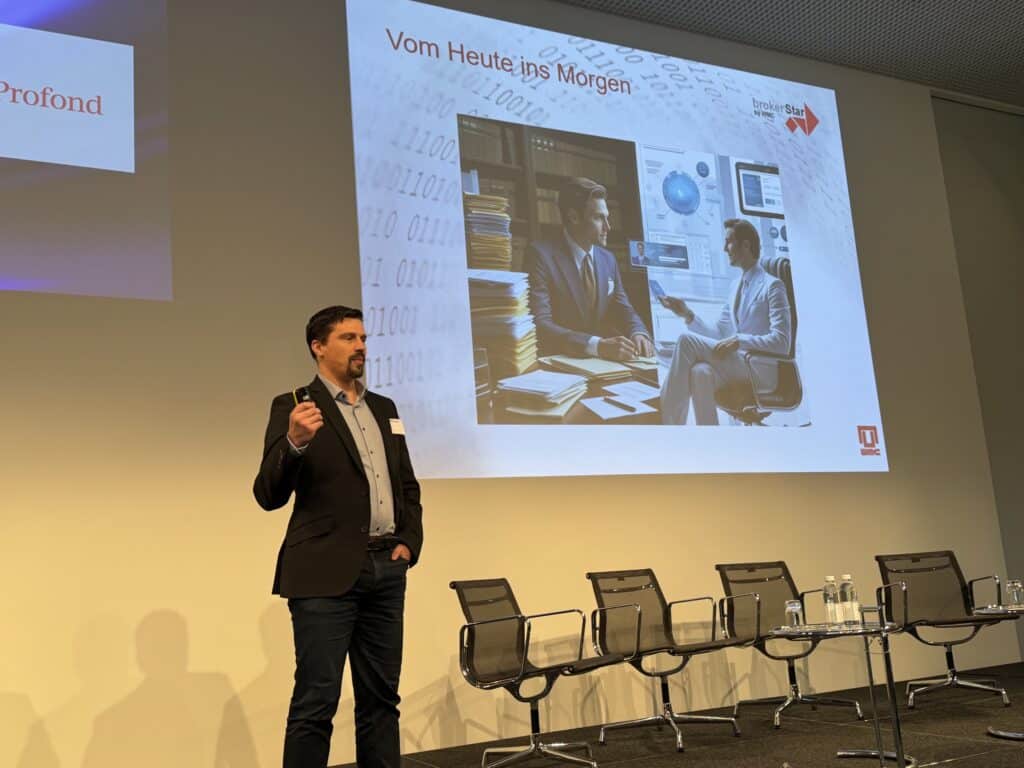
In the spotlight format, three speakers presented digital solutions for broker practice. Thomas Bürki from WMC IT Solutions AG showed how a modern customer portal must go beyond pure document management: with case-specific communication directly in the portal, seamless integration into the customer’s IT ecosystem and API openness as a basic requirement. Today, communication after a customer inquiry via the portal usually leaves the telephone or email channel immediately. This leads to information chaos and a lack of traceability.
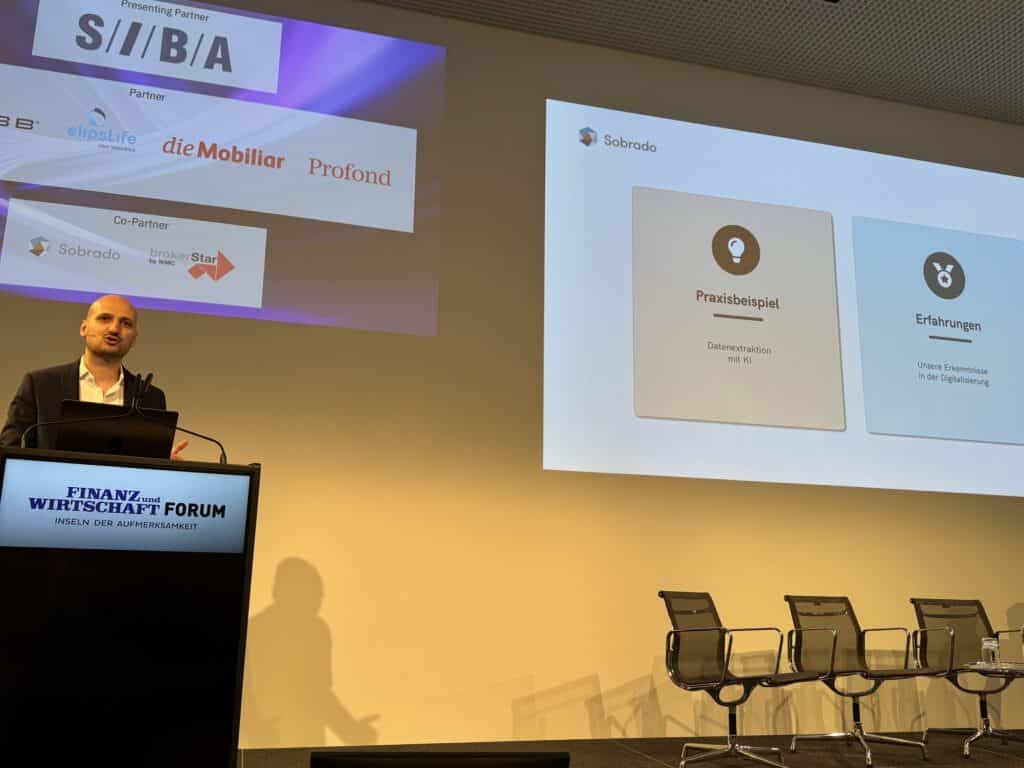
Philipp Klossner from Sobrado presented the results of 15 years of digitization experience. Today, Sobrado extracts 97 percent of all AKD documents completely error-free with the help of AI, data that flows directly into tendering processes and automates annual reports. His central conclusion: it is not the tool that determines the success of digitalization, but change management, which does not take place in a structured manner in most companies. According to the broker’s own survey, 54 percent of users have achieved time savings of over 50 percent.
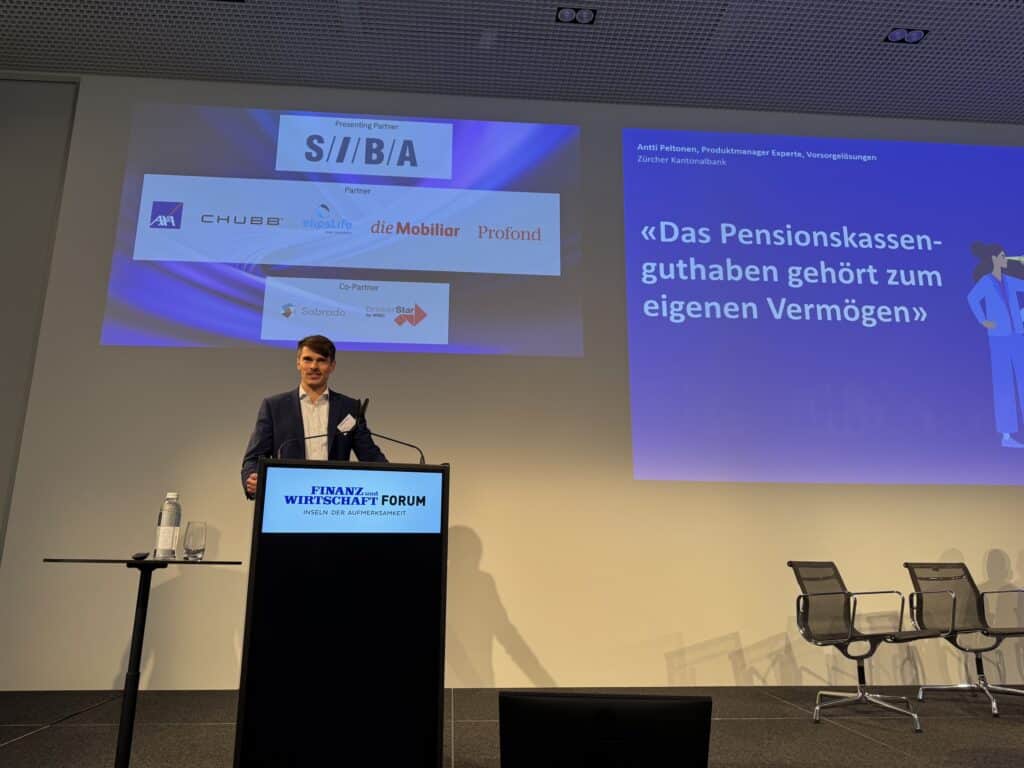
ZKB, led by Antti Peltonen, in collaboration with Profond and M&S Software Engineering, introduced a digital retirement planning tool—the first Swiss offering to directly link pension fund data with online banking. Starting in the third quarter of 2026, ZKB customers who hold their pension fund assets with Profond will be able to use the tool to simulate and understand their retirement planning situation, including automatic data synchronization.
Cyberattacks: Two cases, a difference of millionsO
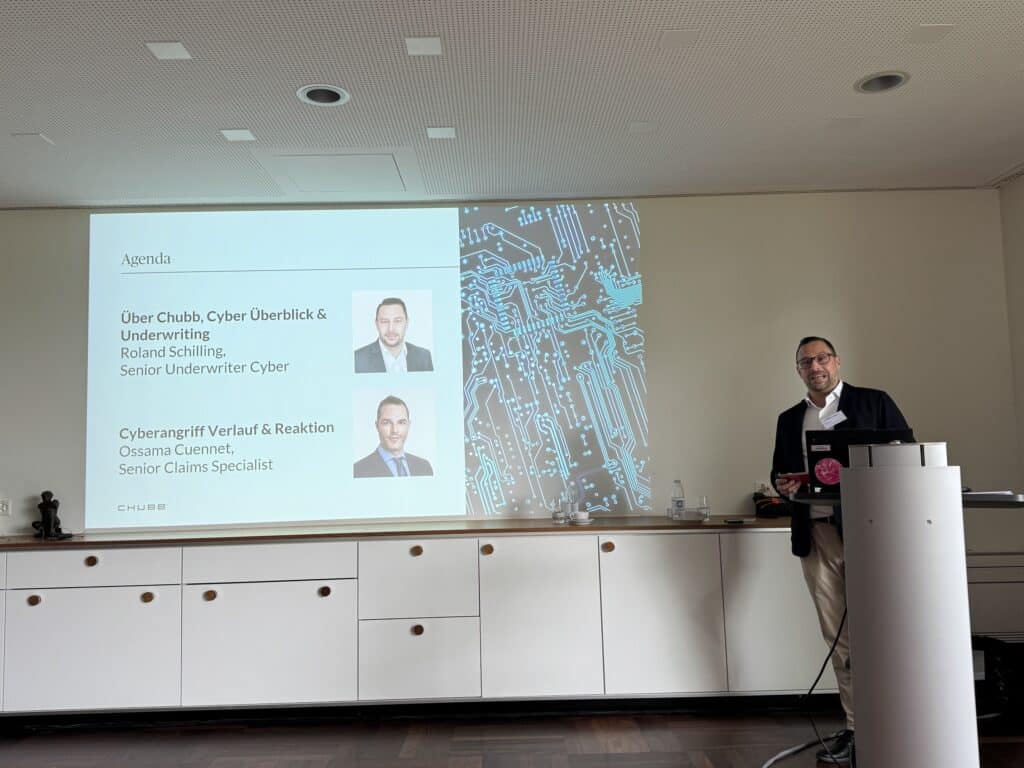
Chubb presented two anonymized cases of damage from practice and the difference was drastic. In the first case, a Swiss production company, the internal incident response team reacted in an exemplary manner: within 48 hours, the network was isolated, the IT forensic experts were on site and the insurance company was informed. The total loss amounted to around 250,000 Swiss francs.
In the second case, a Swiss online retailer with a holding structure, pretty much everything went wrong. The internal IT service provider was overwhelmed, the network segmentation specified in the insurance form did not exist in reality, and malware alerts went unheeded for four days. Over 600 gigabytes of data were exfiltrated before the ransomware struck. The damage amounted to around one million Swiss francs, four times higher than in the first case.
The most important findings from both cases: Multi-factor authentication for all external access is essential. Backups must be kept physically separate. Admin accounts do not belong in the VPN. And incident response plans must be practiced regularly and not only exist in writing.
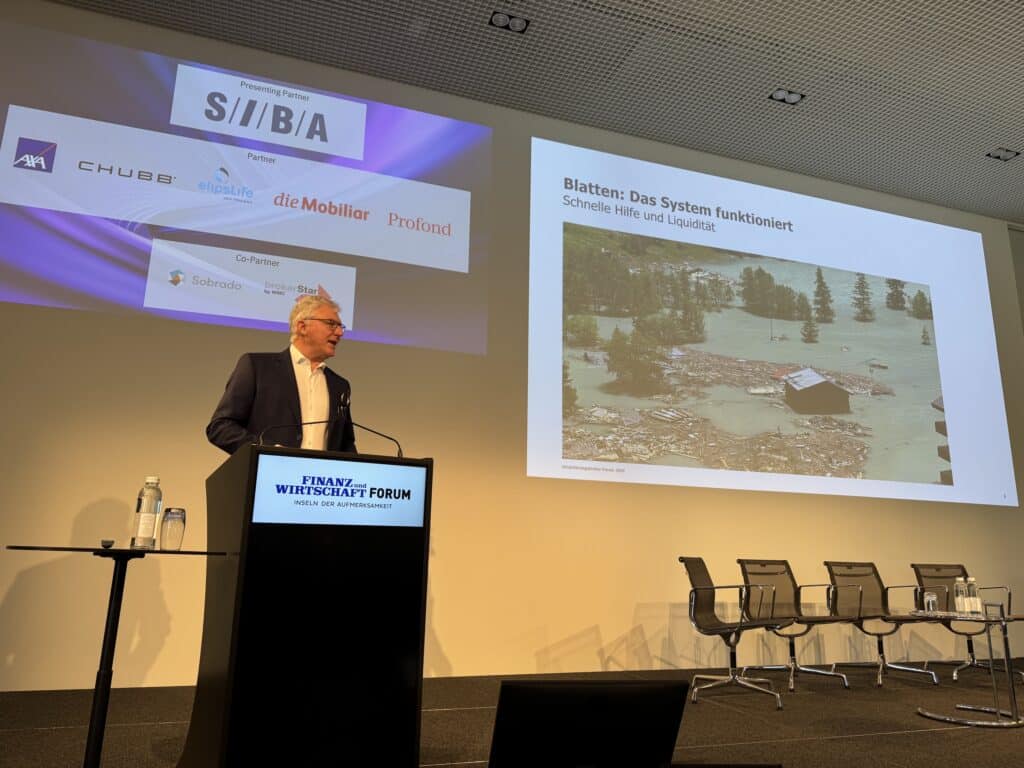
Blatten and Valais: tests for the industry
Urs Arbter from the Swiss Insurance Association SIA reported on the two major loss events of the past year: the rockfall in Blatten in the canton of Valais and the tragedy in Crans Montana.
The system worked in Blatten. Within 48 hours, the industry decided to pay out 75 percent of the damage immediately and the remaining 25 percent upon reconstruction, not only within the municipality but throughout the canton, within five years instead of two. Over 90 percent of the buildings were insured. What was missing was the communal infrastructure, which is traditionally not insured in Switzerland and is a gap that Arbter described as urgently worthy of discussion.
In the case of the incident in Crans Montana, the liability situation has not yet been conclusively clarified. AXA, as the insurer of the operators, has clearly acknowledged its obligation to pay benefits. However, the total amount of damages, including recourse claims from social insurers and long-term disability benefits, will only be known years from now.
Arbter rejected the call for cantonal building insurance in the canton of Valais: the problem was not the form of insurance, but the enforcement of fire protection regulations. Private insurers reacted quickly and efficiently, as the example shows.
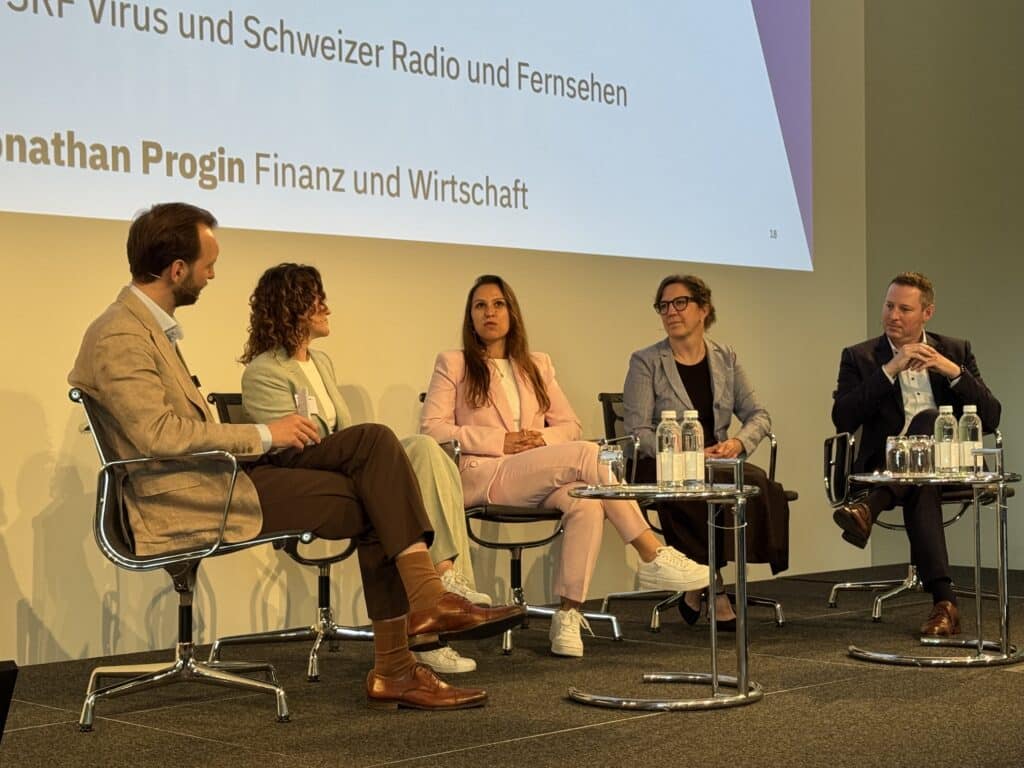
Gen Z: Flexibility yes, but not a concert of wishes
Another point was a panel discussion about Generation Z in broking. TV presenter Mira Weingart, representing the younger generation, Professor Alexandra Cloots from the University of Applied Sciences of Eastern Switzerland, Head of HR Meliha Sabotic from Verlingue and Yves Krismer from Kessler discussed working from home, careers and work ethic.
The core message: the differences within a generation are greater than those between generations. Flexibility is not a generational issue, but a life-stage issue. And if you want to attract young talent, there is no way around a genuine dialog at eye level, even if it is uncomfortable.
Binci Heeb
Read also: Insurance Broker Forum 2026 Finance and Economy
Search:
Sponsors: