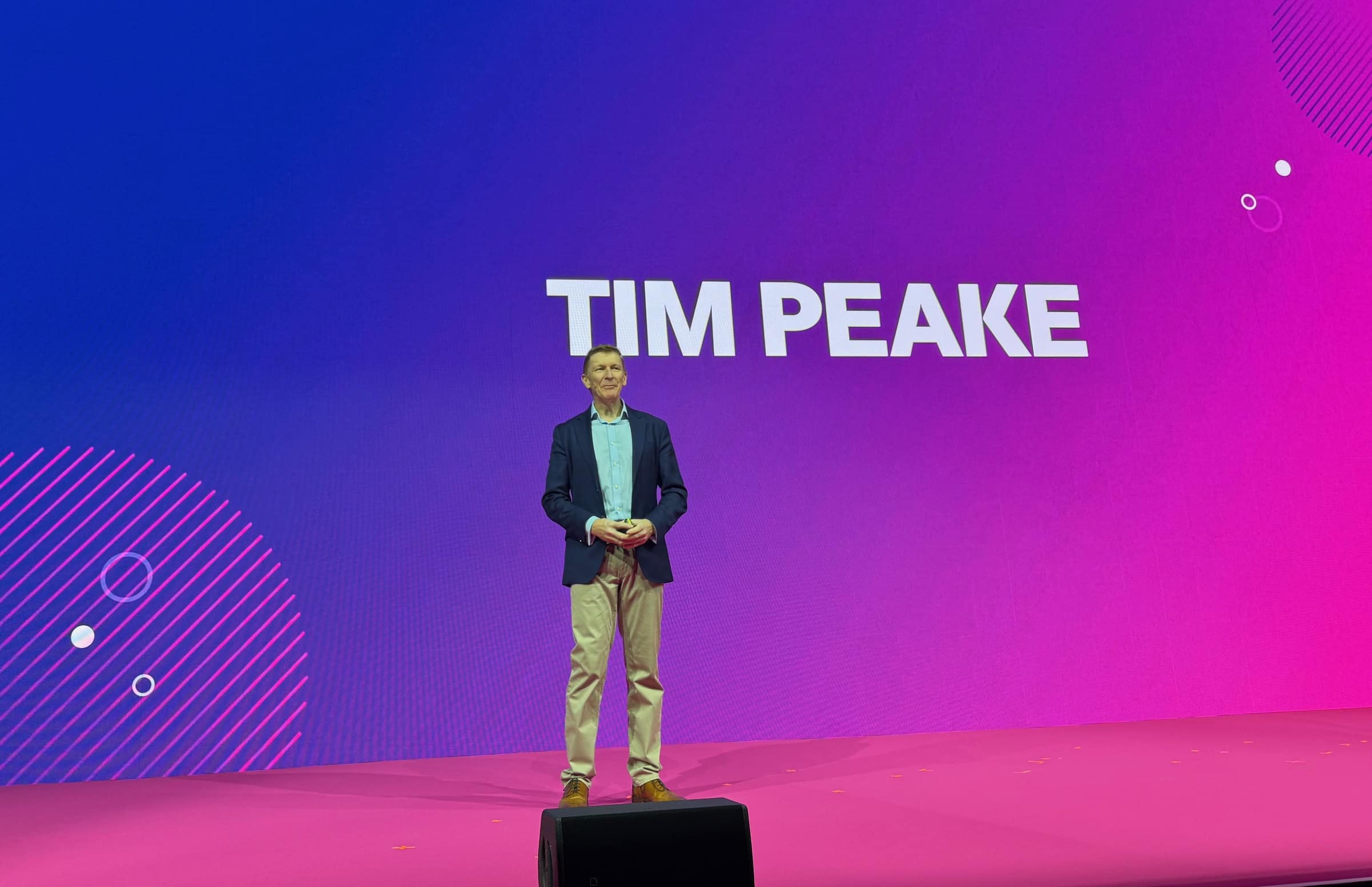
186 days on the International Space Station, 3,000 orbits around the Earth, training in caves and underwater: at the Health.Tech Global Summit, astronaut Tim Peake took to the event’s biggest stage to show how precision, teamwork and radical preparation work in extreme situations and why the findings from weightlessness feed directly back into the health debate on Earth.
Tim Peake begins with a change of perspective that is convincing in its simplicity. Science learns by changing parameters such as pressure, temperature or humidity. In space, something more fundamental changes: gravity. Life has evolved over billions of years under 1g (1g adjusted to the Earth’s gravity). In microgravity, this basic law is practically switched off. The result is phenomena that are not possible on Earth: filigree structures grow without sedimentation, protein crystals become larger and purer, alloys can be mixed differently without convection. For Peake, the space station, mankind’s greatest engineering achievement, is therefore not a symbol, but a laboratory that forces us to rethink familiar processes.
Astronauts as “test subjects”: Ageing in fast motion
It becomes even more impressive when Peake talks about humans. He describes astronauts in orbit as the guinea pigs, so to speak. He himself was involved in around 25 life science experiments on his own body. The changes sound like an accelerated ageing process of 20 years: The cardiovascular system changes, blood vessels stiffen, the skin and immune system react, eyesight can shift. The good news: back on earth, many effects are reversible within two to six months. This is precisely where the medical leverage lies. Anyone who understands what microgravity triggers in the body will gain clues as to how ageing processes, circulatory problems or immunological imbalances could be better recognized or treated on Earth.
Peake gets specific: in routine monitoring, blood samples, eye measurements, EEGs, respiratory monitoring and ultrasound are used not just as research, but as a safety net. An ultrasound once even made a deep vein thrombosis in the neck vein of an astronaut visible, which then had to be treated over 90 days in zero gravity. Microgravity, it was concluded, also changes the risk of thrombosis and is a finding that is being investigated further.
Selection and training: Hard skills are just the beginning
Peake demystifies the often romanticized astronaut role with details from the selection process. He was selected from over 8,000 applications by the European Space Agency (ESA). The first day of testing: twelve hours of cognitive diagnostics in front of screens on memory, concentration, spatial thinking, mathematics, technology and languages. After that, “soft skills” dominate, such as leadership, teamwork, followership, communication and collaboration. Peake makes it clear why: in a tight, multinational, potentially claustrophobic environment, personality conflicts are a systemic risk.
The medical checks are strict, but not designed for Olympic performance values. They are not looking for the super athlete, but the lowest risk of a medical problem in orbit. The logic is typical of high-risk systems, where robustness beats brilliance.
Mistakes as a training tool: dying in the simulator to survive
For Peake, space travel is above all a school of preparation. In simulators, failure becomes a tool. Emergencies can be played through safely and mistakes become a teaching method. In the beginning, he says, instructors often said: “If that had happened in real life, you’d be dead.” At some point, you stop dying. This is the moment that defines competence not as a feeling, but as trained behavior.
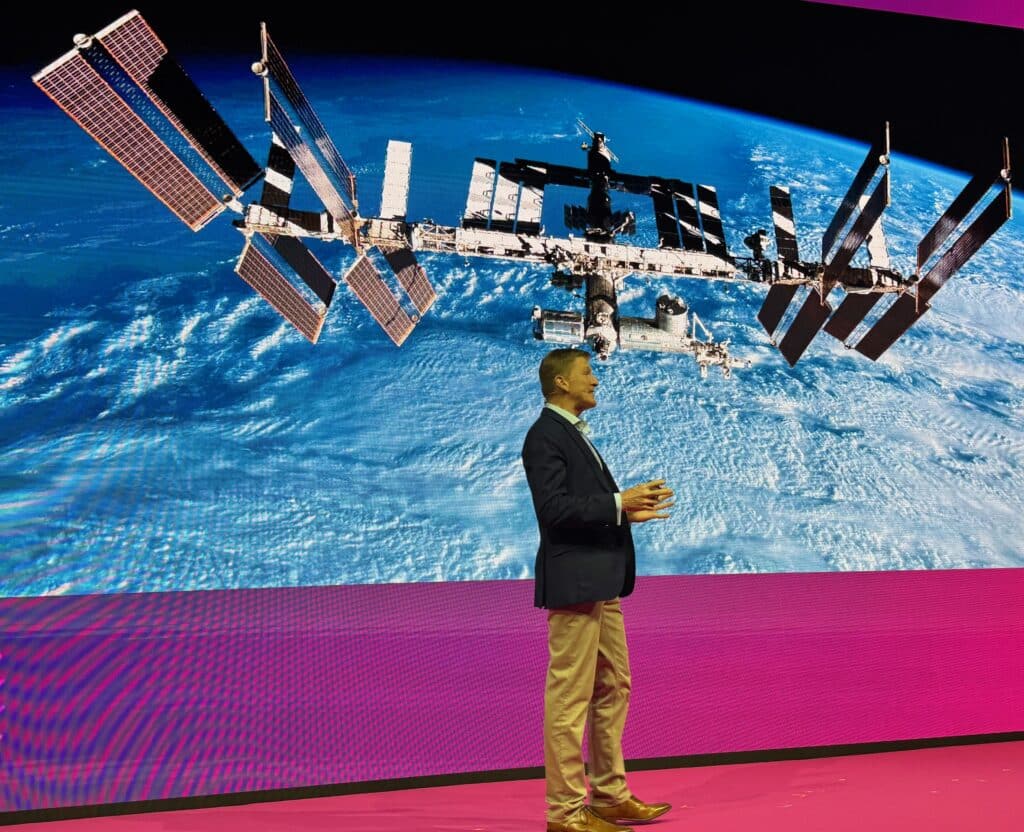
Peake also describes the EVA extravehicular activity as the biggest practical risk area. Training for this takes place in the Neutral Buoyancy Laboratory at NASA’s Johnson Space Center in Houston (Texas), a huge basin in which parts of the station are reconstructed under water. It is striking how the training logic has changed: In the past, a specific task was rehearsed repeatedly. Today, training is generic because no one knows what will break down next during six-month missions. This is a principle that also applies outside of space travel: systems are no longer optimized for an expectation, but for uncertainty.
Cave instead of seminar room: soft skills under stress
Peake becomes particularly vivid when he talks about cave training. There, watches are taken away, a sense of time is taken away, even sleep rhythms are manipulated. Cold, wetness, tiredness and hunger reveal character and thus also team dynamics. Instructors deliberately provoke friction in order to see how conflicts arise and are resolved. Not only self-knowledge is crucial, but also the ability to recognize stress signals in others and take countermeasures. In essence, this is a form of early error detection, not in the technical system, but in the human system.
Peake adds a social finding: we are increasingly risk-averse. However, completely risk-free training is dangerous for space travel because it creates a false sense of security. Trust arises from experienced, controlled danger and not from its absence.
Communication without drama: shorten, standardize, understand
The Q&A that follows deals with a question that is also often underestimated in companies: What is effective communication when mistakes become expensive? Peake answers soberly. Communication has to be developed, individually, in the team and by the environment. A 3,000-page manual is not automatically better than a 100-page manual. On the contrary, it needs to be consistently streamlined. In addition, international agencies in Japan, the USA, Europe, Canada and Russia are working on standardized logics for procedures. Standardization is not understood here as bureaucracy, but as a common language.
His reference to non-verbal communication is exciting: in cramped cockpits or space capsules, with helmets and limited visibility, hand signals can be crucial. This sounds banal, but it is a core principle of high-reliability organizations: When bandwidth decreases, meaning must become denser.
Health in orbit: Fitness, nutrition and time as the scarcest resource
Peake describes health not as a feel-good issue, but as an operating condition. Astronauts train for around two hours a day to limit muscle and bone loss. Treadmills, bicycles and the ARED resistance system are essential for this, but they are also bulky. For future missions, for example in the much narrower Orion capsule, this will be a problem. In his answer to the HealthTech question about future technologies, Peake therefore mentions two fields: more compact, more efficient training solutions and better nutrition technologies. Time is the most valuable resource in space: anything that makes training and nutrition management more effective improves mission capability.
He treats mental health just as pragmatically. A weekly private medical check-up with the flight physician, regular discussions with psychologists, and a simple but effective ritual of staying in touch with his family for 20 minutes every Sunday, which is morally more effective than any app. Even light is becoming a health factor: today, the International Space Station (ISS ) uses LED systems that become bluer during the day and redder in the evening to stabilize the circadian rhythm. Health is not a “lifestyle” here, but an interface between biology, technology and operations.
When the impossible happens: Almost drowning in space
Peake delivers the strongest passage with a story that shows how unexpected risks arise in complex systems. An Italian astronaut, Luca Parmitano, got water in his helmet during an outdoor mission, not from a drinking bag, but from the suit’s cooling system. In weightlessness, a helmet does not fill from below, but from above. Vision, breathing, communication: everything is at risk. Parmitano only found his way back to the airlock via a safety line. This near-disaster turned into two banal innovations: a breathing tube from the helmet to the torso and a diaper as an element in the helmet that binds water. Peake’s comments are dry, but the message is serious: resilience often comes from simple, functional solutions that are consistently implemented after an incident.
Three reasons for the cosmos and one benefit for the earth
Finally, Peake describes space travel philosophically, without becoming pathetic. He mentions three motives: scientific knowledge, inspiration and exploration. None of them alone is sufficient justification, but together they are strong. The subtext of the HealthTech event is clear: if you want to understand how people function under extreme conditions, you get a laboratory in space that is tougher and more honest than any simulation on Earth. And those who learn to perfect prevention, monitoring, training and communication there develop principles that also apply down here in clinics, in companies and in systems where mistakes are not only unpleasant, but expensive.
Binci Heeb
Read also: “The next pandemic is sure to come”: says long-time US health advisor
Search:
Sponsors: