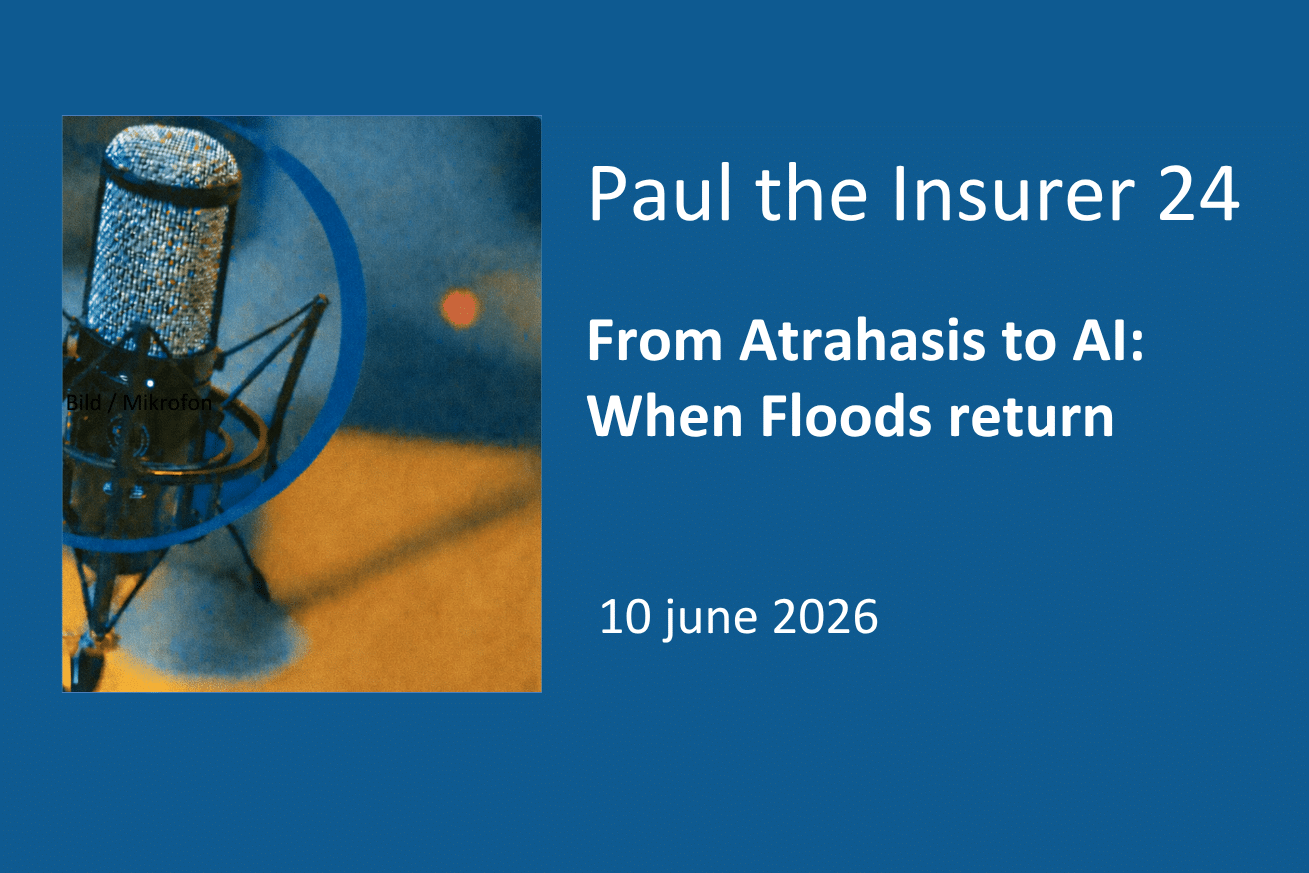
In its latest episode, the podcast “Paul the Insurer” draws a line from the Sumerian flood myth to the present day and asks whether artificial intelligence will be the next great flood or the next ark.
Long before the Epic of Gilgamesh and the story of Noah, the Epic of Atrahasis tells of a flood as a divine response to the noise and overpopulation of humanity. Only Atrahasis, secretly warned by the god Enki, survived on a boat. This dramatic story of anger and fragile survival, according to podcast host Paul, still resonates today in times of geopolitical conflict, climate change and political instability.
From divine intervention to risk management
What was once considered force majeure is now the subject of technological precision. Satellites track storms, AI models predict flood areas and a dense network of insurers, reinsurance markets and state disaster funds cushion economic losses. Public-private models such as the French Catnat system or the Spanish Consorcio de Compensación de Seguros show how organized prevention and loss coverage create social resilience. Where Atrahasis built a wooden ark, modernity has built financial arks.
The next flood or the next ark?
Nevertheless, the old message has not lost its poignancy: disasters follow when people overstep their boundaries. Climate change, uncontrolled development and unequal disaster preparedness are the contemporary equivalents. Paul poses the provocative question of whether artificial intelligence itself could become the next “flood” or whether it will instead be the ark that Atrahasis, Utnapishtim and Noah built to save humanity. And finally, could Elon Musk’s rocket to Mars be the ark of the 21st century?
Binci Heeb
Paul the Insurer has other content that may interest you, such as the series of interviews with insurance industry executives.
Read also: Viracocha and the architects of the future
Search:
Sponsors: