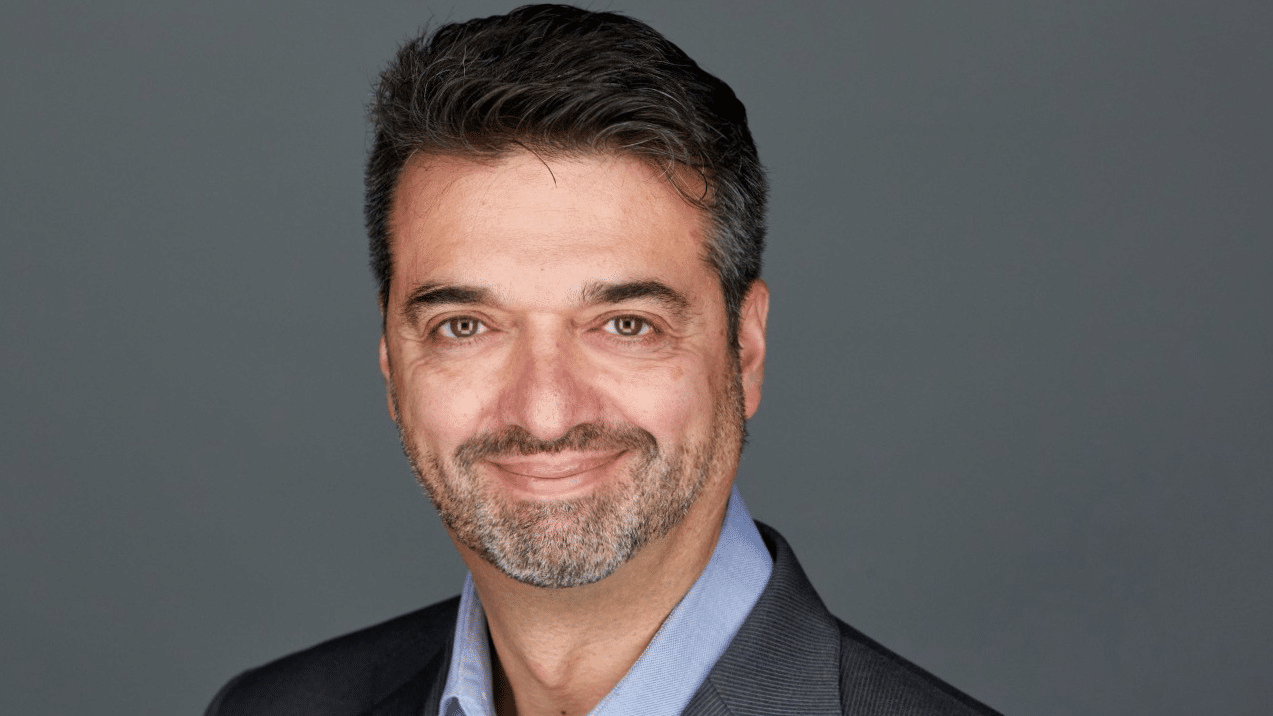
Fulvio Maccarone has spent over 12 years inside financial institutions and family offices and as a board director and restructuring specialist. His core conviction: the real problem behind failed investments is almost never a financial one. It’s a governance problem. Today he researches cognitive biases in boardroom decision-making and advises at the intersection
Fulvio Maccarone has built an unusual career not because he understands financial markets better than most, but because he recognised early on where the real problems lie. After roles at institutional investors and family office, he now works as a private markets investor’s advisor and independent Non-Executive Director. He also teaches governance to Swiss executives. In this conversation, he explains why intelligent, experienced people keep making the same avoidable mistakes — and what can actually be done about it.
Fulvio, you write that most investment problems are really governance problems in disguise. Was there a specific moment in your career when that became undeniably clear to you?
There was a specific moment, and I can point to it precisely because I lived through it. I was involved with a luxury company that had everything that should have worked. A renowned CEO with a strong public profile, a credible board, professional due diligence, and institutional investors who knew the sector. The first Series A round closed on what looked like solid foundations. Six months later, the CEO stood up at the first board meeting after the capital raise and announced that the Chinese and Russian clients had essentially disappeared overnight, the end of China’s gifting policy and the rouble collapse had wiped out the revenue base in one stroke.
What followed was the discovery that the capital hadn’t been used as planned, that the product had serious technical issues nobody had flagged, and that the markets the business plan had promised to open, the US, Japan, had never been touched. We replaced the CEO on the spot. Then came a second board meeting with a second round of bad news. Then a convertible. Then another. Then series B, C, D, E eventually 60 investors, 250 lines on the cap table, convertibles drafted on different templates, some not even countersigned. The company burned tens of millions trying to look attractive to a buyer who never came, in a market too small and too expensive to ever have justified the structure built around it. It ended in bankruptcy. Every investor lost everything.
What stays with me is not the external shocks, those were real but survivable. It’s that at every board meeting, with intelligent experienced people in the room, the decisions kept deferring the honest conversation. Nobody wanted to be the one to say the model was broken from the start. The governance failed not dramatically but incrementally, one deferred question at a time. That’s when I understood that the most dangerous boardroom failures don’t announce themselves, they accumulate quietly until there’s nothing left to save.
Your path has taken you from Pictet and BlueCrest Capital to family offices and board mandates. What fundamentally changed when you stopped advising from the outside and started getting involved operationally?
The question itself contains the answer, in a way. When you advise from the outside, you are always, at some level, protected. You bring your analysis, you make your recommendations, you present your views with conviction, and then you go home. If the client doesn’t follow the advice, or follows it badly, or the situation evolves in a direction you didn’t anticipate, there’s a professional distance that absorbs the impact. You learn, you adjust, but you don’t bear the full weight of it.
When I moved into operational roles, that distance disappeared. And what replaced it was something I hadn’t expected: a much sharper instinct for what actually mattered versus what merely looked important from the outside. In my previous roles, I had developed strong analytical frameworks. I knew how to read a situation, how to build a view, how to stress-test assumptions. What I didn’t fully appreciate until I was inside is how much of what drives outcomes has nothing to do with the quality of the analysis. It has to do with trust between people, with the unspoken rules about who can say what to whom, with the gap between what gets decided in a meeting and what actually happens afterward.
You can’t see that from the outside. You have to be in it, with your name attached to the outcome, before you really understand what you’re dealing with. That shift, from analyst to participant, is the most formative thing that happened to my professional judgment.
You operate at the intersection of capital, operations, and governance, three things most people keep separate. How do you explain to a traditional finance professional why that separation is a mistake?
I tell them to stop thinking about it as three disciplines and start thinking about it as one system with three pressure points. Pull on any one of them and the other two will move, whether you planned for it or not.
I was involved with a company where this played out as clearly as I’ve ever seen it. The lead investor structured a waterfall at Series A that was entirely defensible as a capital decision. Good downside protection, guaranteed hurdle rate, board seat. Textbook. What that waterfall then did, operationally, was drain the motivation of the founders the moment things got difficult, because the maths of the distribution meant they were effectively working for the investor’s return before they’d see a franc themselves. And what it did to governance was subtler but just as damaging; the board dynamic shifted from collective problem-solving to adversarial positioning, because the investor’s interests and everyone else’s were now structurally misaligned.
When the business hit external shocks, the board should have been able to have one honest conversation about what the company actually was and whether it was salvageable. Instead, it had a room full of people managing their own exposure. The governance structure that had become completely unworkable. Not because anyone made a single catastrophic decision, but because every capital decision had been made without asking what it would do to the people running the company or early investors. A traditional finance professional will tell you those are separate questions. They aren’t !
What is the biggest misconception board members have about their own role?
That they are there to validate. It’s rarely stated that explicitly, but it’s what the behaviour reveals. You see it in how board members prepare or don’t. You see it in how meetings are run, with management presenting and the board listening and nodding and asking the kind of questions that signal engagement without actually creating any friction.
And you see it most clearly in the moments that matter, when a decision is on the table that deserves to be challenged, and the challenge doesn’t come. I sat on a board where the chairman was also the founder, deeply respected, with a track record that made dissent feel almost impolite. Every major decision went through smoothly. Not because the decisions were always right but because the room had unconsciously agreed that his judgment was the ceiling and everyone else’s role was to help him execute it. That’s not a board. That’s an expensive advisory committee with legal liability.
The role I’ve come to believe in, and try to practice, is closer to what I’d call structured scepticism. Not opposition for its own sake, but a genuine commitment to asking the question that the room is trying to avoid. In a situation I lived through, the question nobody asked at the right moment was simple: is this market actually big enough to support the structure we are building around it? It wasn’t a complicated question. It didn’t require specialist knowledge. It just required someone to be willing to make the room uncomfortable. Nobody was. And that silence cost every investor at the table everything they had put in.
You train future board members. What capability is most often missing in candidates who look qualified on paper?
The ability to stay in the discomfort. That’s the thing you can’t see on a CV and can’t fake for long in a real boardroom. I’ve worked with board members who had everything on paper; the right credentials, the right experience, the right sector knowledge. They could analyse a situation, they could articulate a view, they could hold their own in a conversation. And then you put them in a room where the dynamic is difficult, where the founder is defensive, where the numbers don’t add up but nobody is saying it out loud, and they fold.
Often not dramatically, they don’t storm out or lose their temper. They just quietly find a way to not be the person who names what everyone can see. They ask a softer version of the question. They accept an incomplete answer. They tell themselves they’ll come back to it next quarter. I watched this happen repeatedly. The discomfort of confronting a charismatic CEO, of questioning a business plan that the chairman had championed, of being the voice that slows things down when everyone else wants to believe the next quarter will be different, that discomfort often is too much.
What I try to teach, and what I look for, is the capacity to sit with that discomfort and speak anyway. Not aggressively, not self-righteously, but clearly and without retreat. It is genuinely the rarest thing in a boardroom. And in my experience, its absence is more dangerous than any gap in technical knowledge.
You describe structures that “look solid on paper but collapse under pressure.” What are the early warning signs, things an outsider can actually spot before the collapse happens?
I watched every one of them appear in sequence in a situation I was directly involved in. The first sign was the gap between the story and the detail. The business plan was compelling at the headline level – new markets, strong brand, credible CEO – but when you pushed on the specifics, the US and Japanese market development that was central to the growth thesis had no concrete plan behind it. It was aspiration dressed as strategy.
The second sign was the CEO’s relationship with reality. He was genuinely charismatic, genuinely visionary, and genuinely more interested in the image of the company than in its operating fundamentals. That combination, charm over substance at the top, is one of the most reliable warning signs I know. The third was what I’d call selective transparency. Information flowed freely when it was good news. But when revenues started softening, nobody volunteered. You had to ask and then ask again. A board that is only informed of problems when they become unavoidable has already lost the ability to govern.
The fourth was the excessive use of expense capitalisation on the balance sheet, a flag that was visible at due diligence and quietly set aside. In my experience, when a company is generous in how it defines what counts as an asset, it is sometimes telling you something about how it manages inconvenient truths more broadly. None of these signs required inside information. They were all visible to anyone willing to look past the surface. The problem is that by the time a deal reaches the investment stage, there are powerful forces, momentum, social pressure, sunk time, the fear of missing out, that make looking past the surface feel like bad manners. Learning to do it anyway, politely but persistently, is one of the most valuable things I know.
Your research focuses on cognitive biases in board-level decision-making. Which bias do you consider the most dangerous, and why is it so rarely recognised in the room where it’s happening?
The one I keep coming back to is what I’d call expertise-driven overconfidence. Going back to my earlier example in the luxury goods, around that board table we had people who genuinely knew the sector, who had seen market cycles, who had built and sold companies. Real experience, real track records. And that collective credibility became the problem.
When the CEO presented a business plan that assumed rapid penetration of the US and Japanese markets, nobody pushed back hard enough, because everyone in the room had pattern-matched it to something they’d seen work before. When the R&D capitalisation raised a flag at due diligence, it was noted and moved past, because experienced investors had seen aggressive accounting before and the company had survived it. When the first signs of revenue concentration appeared, they were explained away, because people who have navigated emerging markets know that macro shocks happen and companies recover. Every time the room should have stopped and asked a harder question, experience provided a reason not to.
That’s the bias. It doesn’t feel like complacency. It feels like judgment. It looks like the calm of people who have been here before. The reason it’s almost never recognised in the room is that the people exhibiting it are the most credible voices at the table. Challenging it feels like challenging their track record, or being disrespectful, which nobody wants to do. In that company, by the time the first board meeting after the capital raise revealed the true situation, the pattern had already set. Experienced people had collectively talked themselves into a story, and the story had become more real to them than the numbers. That’s when experience stops being an asset and starts being the thing that blinds you.
Smart, experienced people keep making the same avoidable mistakes. In your view, is that a problem with decision-making structures or with the people themselves?
Honestly, both. What I’ve come to believe, after sitting on enough boards and watching enough smart people walk into the same walls, is that the structure shapes the person in the room. I’ve seen the same individual be genuinely courageous in one board setting and completely weak or passive in another. That tells you something important: it’s not about character, it’s about what the room permits. And most rooms are quietly designed often through habit and hierarchy, to permit agreement and discourage challenge. People adapt to that. They’re not weak; they’re human. The mistake is to build a room that rewards silence or strong passive consensus and then be surprised when you get it.
How does time pressure change the quality of boardroom decisions, and what should boards do differently when they genuinely cannot slow down?
Time pressure is where every good intention about process goes out the window. I’ve been in boards where a decision needed to be made in forty-eight hours and watched a board of genuinely capable people essentially hand the decision to whoever spoke first and sounded most confident. Not because they were lazy, because urgency creates a psychological permission to stop deliberating. It feels responsible to be decisive. It feels like leadership. What it actually is, most of the time, is the most senior, or loudest, voice in the room getting unchallenged airtime while everyone else tells themselves there’s no time for questions about a plan B.
The quality of the decision drops, and nobody notices because the speed feels like competence. What I’ve seen work is agreeing in advance on a one-sentence key question that has to be answered before any urgent decision is taken. Not a full process. Just one honest question that forces the room to pause for sixty seconds. That habit helps slow down and make better calls under pressure.
What actually happens after capital is deployed, and why do most investors pay too little attention to that phase?
What happens after deployment is that reality arrives. And reality is almost never what the investment memo described. I’ve seen this so many times that it no longer surprises me, but it still frustrates me. Investors spend months on due diligence, they negotiate every clause of the term sheet, they model the returns six different ways. And then the money goes in, and attention moves to the next deal.
The founders, who were impressive in a pitch room, are now running something three times more complex than they’ve run before, often without the right board, often without anyone to call when things get strange. And things always get strange. The first six to eighteen months after deployment are where companies either build the operating foundation that will carry them or develop the bad habits and governance gaps that will cost everyone dearly later.
I started paying much more attention to that phase after watching a perfectly structured deal deteriorate inside two years not because the thesis was wrong, but because nobody was minding the governance while the team was busy executing. The return on time invested in that post-deployment window is, in my experience, higher than almost anything you do at entry.
Family offices come with particular dynamics: family politics, generational differences, emotional attachment to assets. What governance principles matter most in that context?
Governance is fundamentally an emotional problem dressed up as a structural one. The frameworks matters but if you don’t understand what’s actually driving the people around the table, the frameworks are just paper. I’ve seen situations where a perfectly rational divestment decision became impossible because the asset in question was the company the grandfather built. I’ve watched generational transitions collapse not because the next generation was incompetent, but because nobody had ever had an honest conversation about who was actually in charge.
The principle I come back to most is separation or transition. Being clear about when you’re speaking as a family member and when you’re speaking as a shareholder or a fiduciary. Those are different roles and they pull in different directions, and pretending otherwise doesn’t make the tension disappear, it just makes it harder to name. The families I’ve seen navigate this well are the ones who had those uncomfortable conversations early, usually with an independent voice in the room who had no stake in keeping everyone happy. That role is the most valuable thing you can bring into a family office governance structure.
You have built private investment portfolios from scratch. What would you do differently today compared to early in your career?
Honestly, I would spend far less time on the financial engineering and far more time on the people and the governance, and I would do it before the money moved, not after. Early in my career I believed, like most people trained the way I was trained, that a well-structured deal protected you. Good terms, sensible valuation, clean documentation. And those things matter indeed. But I’ve watched well-structured deals go badly wrong because the board was an afterthought, and I’ve watched messy deals survive because the right people were around the table and could work through problems together. The structure doesn’t save you when things get difficult. The people do.
The other thing I would differently is being more honest, earlier, about situations that aren’t working. There’s a particular trap in private markets where you’ve invested significant time and capital into something, and the signs are there that it’s not going where it should, but you keep finding reasons to believe the next quarter will be different. I fell into that trap more than once. The sunk cost mixed with time pressure pulls at you in ways that are hard to describe until you’ve felt it. What I know now is that the moment you find yourself constructing reasons to stay rather than genuinely evaluating whether you should, you’ve already answered your own question. Getting out of your own way in those moments is harder than any financial model, and eventually more valuable.
What structural shifts in private markets are you watching right now that investors are not taking seriously enough?
The first element would be the speed at which deals are closing now. Competitive pressure has compressed due diligence to the point where you’re sometimes making commitments on information that would have been considered preliminary five years ago. Everyone knows this. Nobody wants to be the one who slows down and loses the deal. So, the market has collectively agreed to pretend that faster is fine, that experience compensates for thinner information and no plan B is really thought of. What it does is push all the governance work to after closing, when you have less leverage, less time, and a founder who just got the money and doesn’t particularly want a board telling them what to do.
The second thing is what’s happening in impact investing. There’s genuine capital flowing toward genuine problems, and I find that encouraging. But the governance infrastructure hasn’t kept up. You have idealistic founders, investors who are motivated by values rather than returns discipline, and boards that sometimes feel more like support groups than decision-making bodies. Nobody wants to be the one who introduces rigour because it feels like it’s against the spirit of the company or founders. That instinct is understandable and dangerous in equal measure. I’ve seen impact companies make decisions that a conventional portfolio company would never have survived, precisely because the shared values created a blind spot where critical thinking should have been.
You deliberately seek out mandates where something is broken or not working. What draws you to complexity and difficulty, and where do you find the energy to go into those situations?
I’m not sure I chose it as much as I discovered it was where I actually functioned best. Early in my career I had perfectly comfortable work objectives in well-run organisations with clear briefs and relatively predictable environments. And I did the work well enough. But I noticed I was more alive in more challenging situations. The ones where the diagnosis wasn’t obvious, where the people were under pressure, where the stakes were real. There’s something that happens in those situations that doesn’t happen anywhere else, people stop performing and start being honest or at least show their real personality. A board in genuine difficulty will have a more real conversation in one meeting than a comfortable board will have in a year. I find that clarifying rather than draining.
The other part of it is simpler: I genuinely believe that most broken situations are fixable, and that the thing standing between where they are and where they could be is usually not capital or strategy, it’s clarity. Clarity about what’s actually happening, what needs to change, and who needs to do what. Bringing that is something I know how to do and knowing you can help is its own kind of energy.
What I’ve learned to watch for is the situations that look fixable but aren’t, where the dysfunction is so embedded in the ownership or the personalities that no amount of clarity will shift it. I’ve walked into a few of those. You learn to read the weak signals earlier.
If you could give one piece of advice to a young finance professional, something that would have saved you real time and real mistakes, what would it be?
Learn to be comfortable with silence in a room. That sounds almost trivial, but I mean it seriously. Most of the mistakes I made early in my career happened because someone felt compelled to fill a silence with a position before they’d actually finished thinking. In finance, there’s enormous pressure to have a view, to project conviction, to be the person with the answer. That pressure is relentless and it starts very early. What it produces, if you’re not careful, is a habit of committing to positions before you’ve genuinely interrogated them, because the alternative, sitting with uncertainty, feels professionally dangerous.
The people I’ve respected most over thirty years are the ones who could say “I don’t know yet” without embarrassment, who could hold a question open longer than was comfortable, and who changed their mind without treating it as a defeat. That capacity, to stay genuinely uncertain is rarer than any technical skill I can think of, and more valuable in the long run than almost anything you’ll learn in a training programme or a business school. Nobody teaches it because it doesn’t look like a skill. It looks like hesitation. It isn’t.
The questions were asked by Binci Heeb.
Fulvio Maccarone, CFA, is a private markets investor and board member with over 30 years of experience at the intersection of capital, operations and governance. He has led the deployment of more than USD 2.5 billion into private investments across funds, co-investments, venture and growth capital, including senior roles at Pictet, BlueCrest and one of Europe’s largest family offices.
Today he invests in European deep tech and sustainability-driven companies — among them Woodoo, Enshift and Daphne Technology — and serves as a Non-Executive Director across companies in technology, healthcare, real estate and consumer sectors. He also teaches board governance to future directors at the Startup Board Academy and is completing doctoral research on cognitive biases in board-level decision-making.
Based in Geneva and working across five European languages, he advises financial institutions, family offices and boards on investment strategy, governance and complex restructuring.
See also: Fraud Isn’t Just Bad Luck—It’s the Consequence
Search:
Sponsors: